
Classroom lesson 路 Forests馃嚫馃嚜 Sweden

Sweden's forests - and the right to walk through them

Trees cover 70% of the country, and almost anyone is allowed to wander in

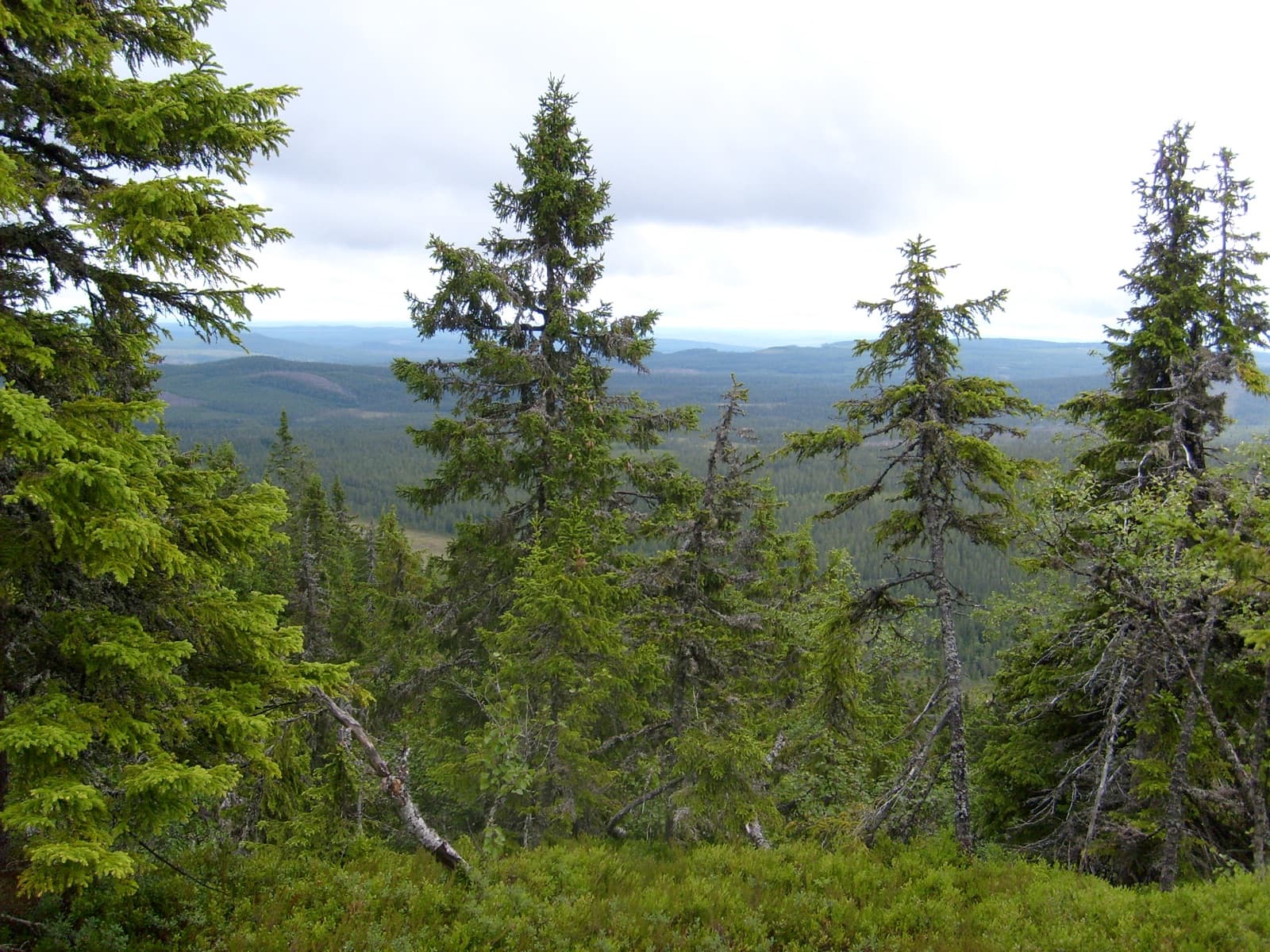
A view across the deep boreal forest of northern Sweden

Photo 路 Wikimedia Commons

What is it?

About 70% of Sweden is covered in forest. That is more forest than almost any other country in Europe. Most of it is pine and spruce - dark green needles that stay on the trees all year, even when everything else is buried in snow. And Sweden has a special rule: almost anyone is allowed to walk in these forests, even when they belong to someone else.

Tell me more

This special rule has a Swedish name: Allemansr盲tten. It means 'the right of everyone'. The idea is simple - the forests, lakes and mountains of Sweden are too beautiful to be locked away. So everyone is allowed to walk across most land, pick wild berries and mushrooms, swim in lakes, and even camp for a night under the trees. You just have to follow two rules: don't disturb, and don't destroy.

Swedish forests are full of food in late summer. There are wild blueberries by the million, lingonberries (a tangy red berry used in jam), and 'chanterelles' - golden mushrooms that taste like apricots. Many Swedish families spend whole weekends in the forest picking berries, then turning them into jam at home.

The forest is also full of animals. Moose wander between the trees. Brown bears sleep in dens for half the year. The lynx, Europe's only big cat, hides in the deep woods. Some areas have wolves. Most people walking in the forest never see any of them - the animals are shy and disappear before you arrive.

Swedish children grow up walking in the forest from very young. Many kindergartens are 'forest kindergartens' (called 'I ur och skur' - 'come rain or shine'), where children spend most of the day playing outside in the woods, even in winter. There's a Swedish saying: 'There is no bad weather - only bad clothes'.

In the classroom

Walk your class through this in 15 minutes.

Talk together

Discussion prompts

  1. 01Imagine being allowed to walk across any forest in your country. What would you do first?
  2. 02Why might it help children to spend lots of time outside, even when it's cold or wet?
  3. 03What do you think the rule 'don't disturb, don't destroy' means? How would you follow it on a walk?
Try this

Classroom activity

Plan an imaginary 'Allemansr盲tten walk'. On a sheet of A3, draw a forest. Mark: where you'd pick berries, where you'd stop for fika, where you'd pitch a tent for one night, and which routes you'd avoid because they go close to someone's house. Share your route with a partner.