
Classroom lesson 路 Wildlife馃嚫馃嚜 Sweden

The lynx - Europe's only big cat

A shy forest cat with tufted ears and snowshoe paws

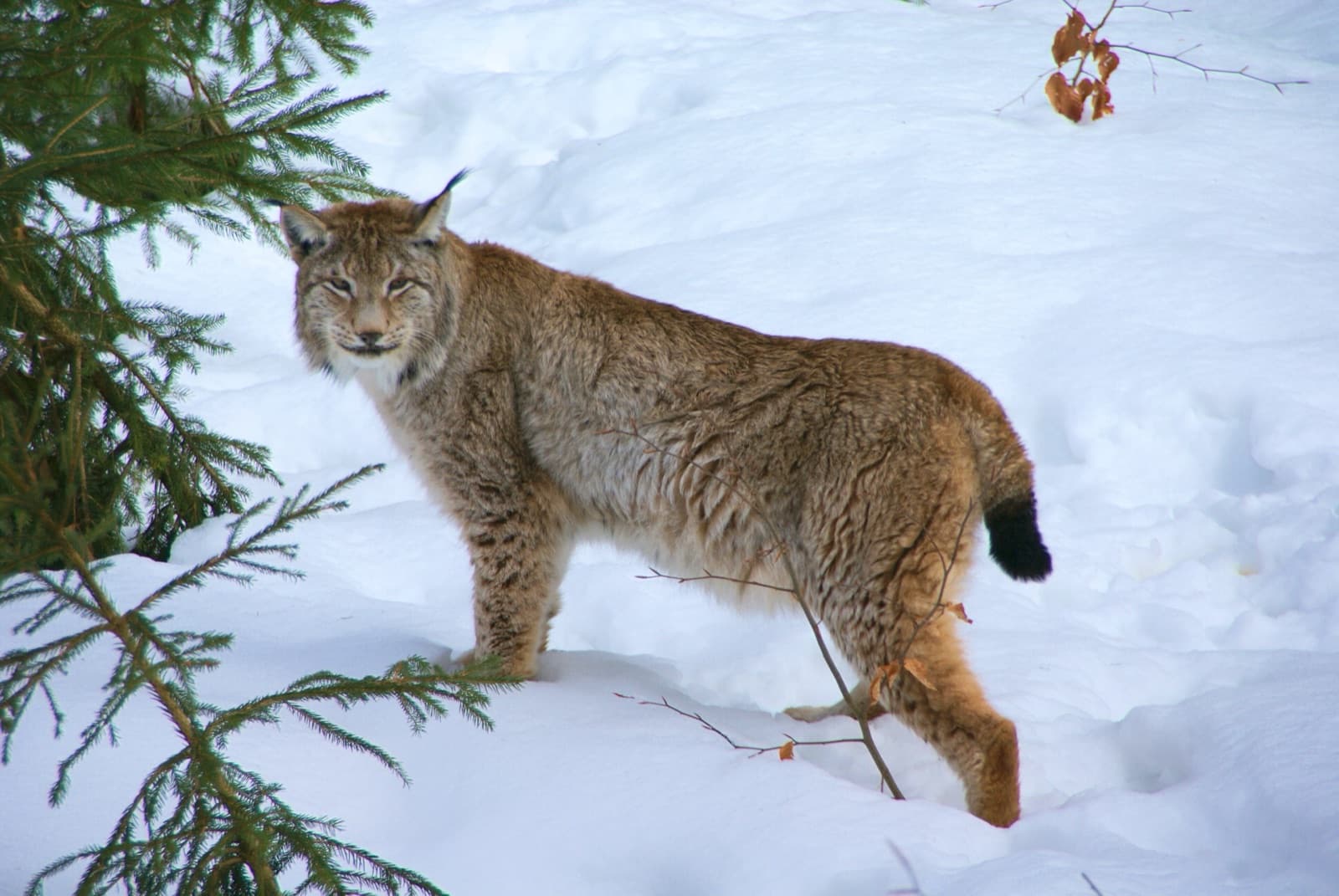
A Eurasian lynx standing in a snowy forest beside a pine tree

Photo 路 Wikimedia Commons

What is it?

The Eurasian lynx is the only big cat that lives wild in Europe. It is roughly twice the size of a pet cat - about the size of a Labrador dog - with a thick spotted coat, two black tufts on the tips of its ears and huge furry paws. Around 1,400 lynx live wild in Sweden, mostly in the northern forests.

Tell me more

Lynx are extraordinary hiders. Their spotted brown-and-cream coat looks exactly like dappled sunlight on the forest floor. They move so quietly that even people who study them for years often only see one a handful of times. Most photos of lynx are taken by hidden cameras set up in the woods.

Their paws are amazing. They are wide and covered in fur, so the lynx can pad across deep snow without sinking - like wearing built-in snowshoes. This is a huge advantage in Swedish winters, when smaller animals struggle to move and the lynx walks easily on top of the snow.

Those black tufts on the ears probably help the lynx hear better. Lynx can hear a tiny mouse moving under 30 centimetres of snow. They mostly hunt at night, sneaking up close to small deer or hares and pouncing in one quick leap.

A baby lynx is called a kitten, just like a house cat. The mum raises one or two kittens on her own. They stay with her for about a year, learning how to hunt and how to hide, before going off to find their own patch of forest.

In the classroom

Walk your class through this in 15 minutes.

Talk together

Discussion prompts

  1. 01Why might it help a lynx to look almost the same colour as the forest floor?
  2. 02Lynx ears have tufts that may help them hear. What other animals have unusual ears? What might those ears help with?
  3. 03Why might it be harder to count animals in the wild when they are very good at hiding?
Try this

Classroom activity

Pretend you are a forest scientist. On a sheet of paper, design your own camera trap - a hidden camera that takes a picture when an animal walks past. Decide where you would put it to spot a lynx, and explain why. Compare your locations with a partner.