
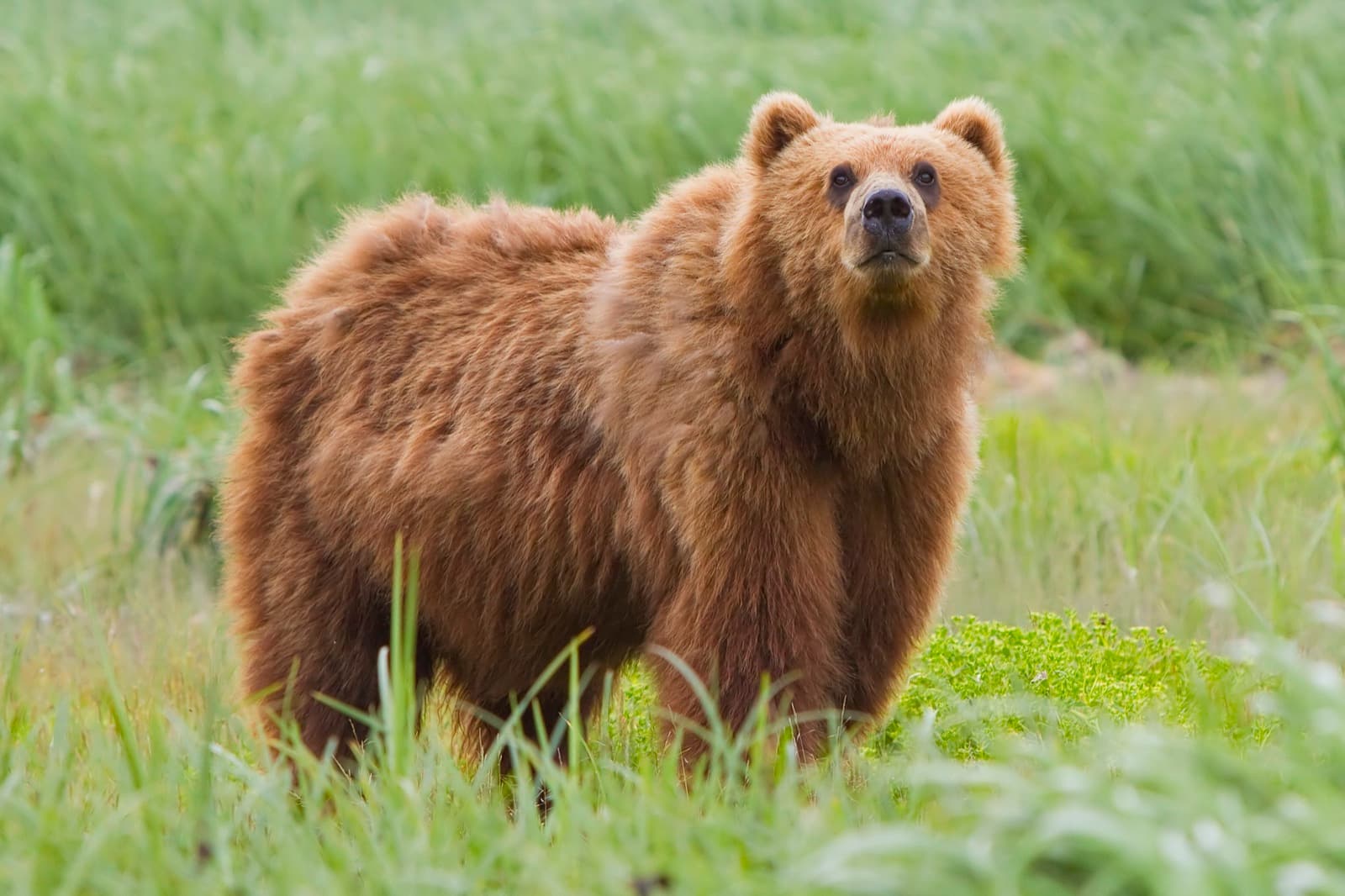
All summer, a brown bear eats as much as it can. It munches on berries, roots, ants, fish from rivers and the occasional moose. By autumn, the bear has put on about a third of its body weight in fat - imagine adding 50 kilos of padding to your jacket. It uses this fat to survive the long winter.
When the snow comes, the bear digs a den - sometimes in a hollow tree, sometimes under tree roots, sometimes in a small cave. It curls up and falls into a deep sleep called hibernation. Its heartbeat slows from about 50 beats a minute to just 8. Its body temperature drops. It barely moves.
Mother bears do something even more amazing: they give birth in the middle of hibernation. The cubs are born in midwinter, the size of a tennis ball each, and snuggle up to mum to feed and sleep until spring. When the family finally comes out of the den in April or May, the cubs are big enough to play in the snow.
Brown bears can stand on their back legs to look around, which makes them look as tall as a grown-up. But they don't usually fight. If they meet a human in the forest, they almost always walk the other way. Most Swedes who hike in bear country never see one.