
Classroom lesson · The Garden City · 🇸🇬 Singapore

The Garden City

How Singapore grew a whole city inside a tropical garden

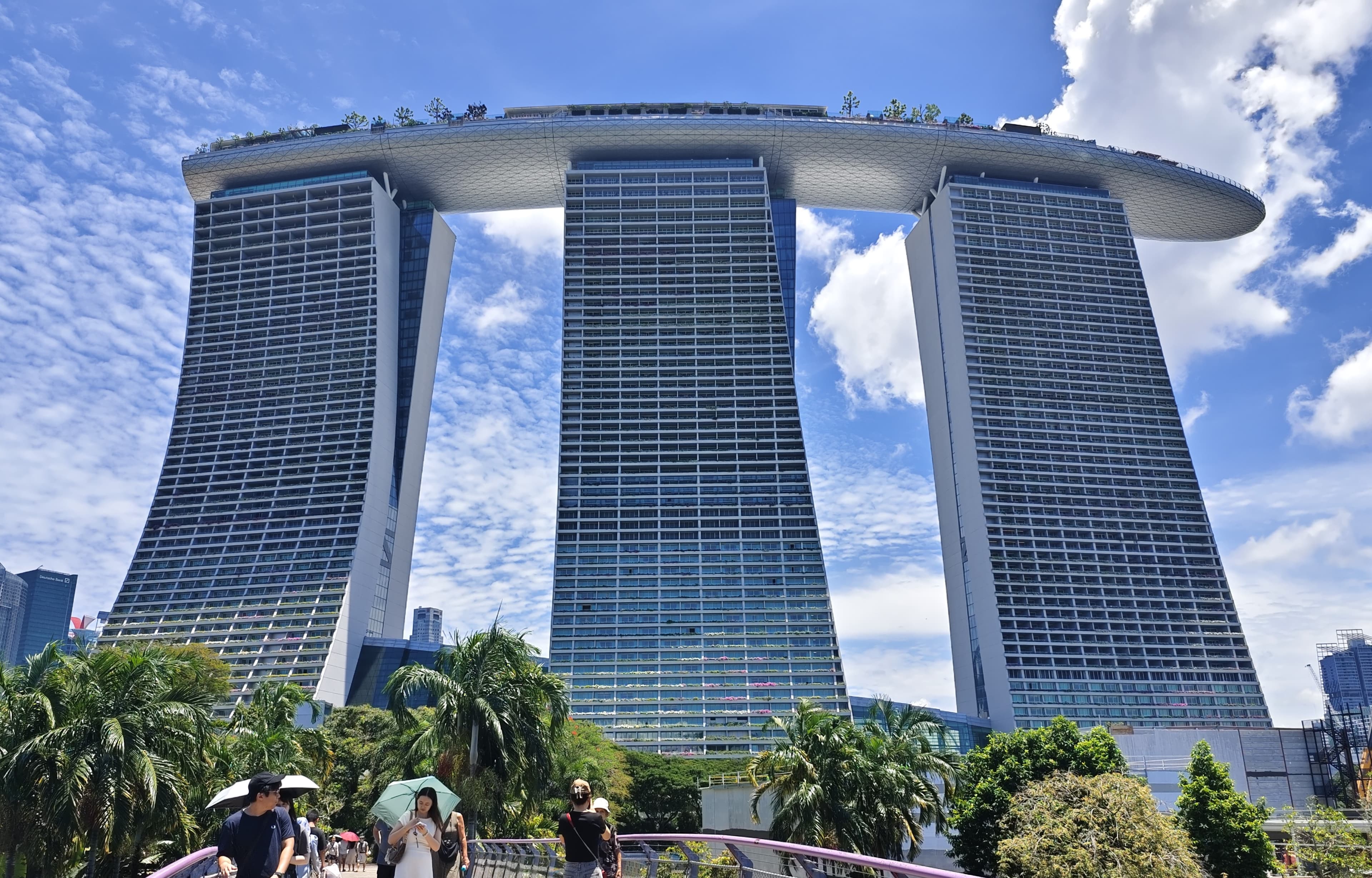
Singapore's skyline at Marina Bay with greenery in the foreground

Photo · Wikimedia Commons

What is it?

Singapore sits just 1° north of the equator - so close that every day is warm, every day has about 12 hours of sunshine, and rain showers can arrive at any moment. The country has used all that warmth and water to turn itself into a giant garden.

Tell me more

Because Singapore sits on the equator, there are no seasons like winter and summer. The temperature stays around 30°C all year. It rains often - sometimes hard, suddenly, and then it stops and the sun comes back. Perfect for plants.

Almost everywhere you look in Singapore, something is growing. Trees line every street. Skyscrapers have gardens on their balconies, on their roofs, and sometimes climbing up their walls. Even motorway bridges have plants tumbling off them.

Singapore made this happen on purpose. Decades ago the country decided that even a busy modern city could be packed with green. So thousands of trees were planted, building rules were changed, and parks were stitched together with leafy walking paths called 'Park Connectors'.

There is even an animal that has made the city its home. Smooth-coated otters - whole families of them - now swim through the canals and ponds of central Singapore. Sometimes a pack of otters will hold up traffic by crossing the road together. People stop to watch and take photos.

In the classroom

Walk your class through this in 15 minutes.

Talk together

Discussion prompts

  1. 01What would your life feel like if it was the same warm weather every day, with no seasons?
  2. 02Singapore decided to plant trees everywhere. What's one thing your school could decide to do to add more nature?
  3. 03Why might it be a good idea for wild animals (like otters) to live alongside people in a city?
Try this

Classroom activity

Walk around your school grounds and count every tree, every plant in a pot, every patch of grass. Mark them on a simple map. Then mark three more places where you could add a plant. Present your 'greener school' plan to the class.