
Classroom lesson 路 Wildlife馃嚫馃嚞 Singapore

Singapura - the Lion City

Why a tropical island ended up named after a lion

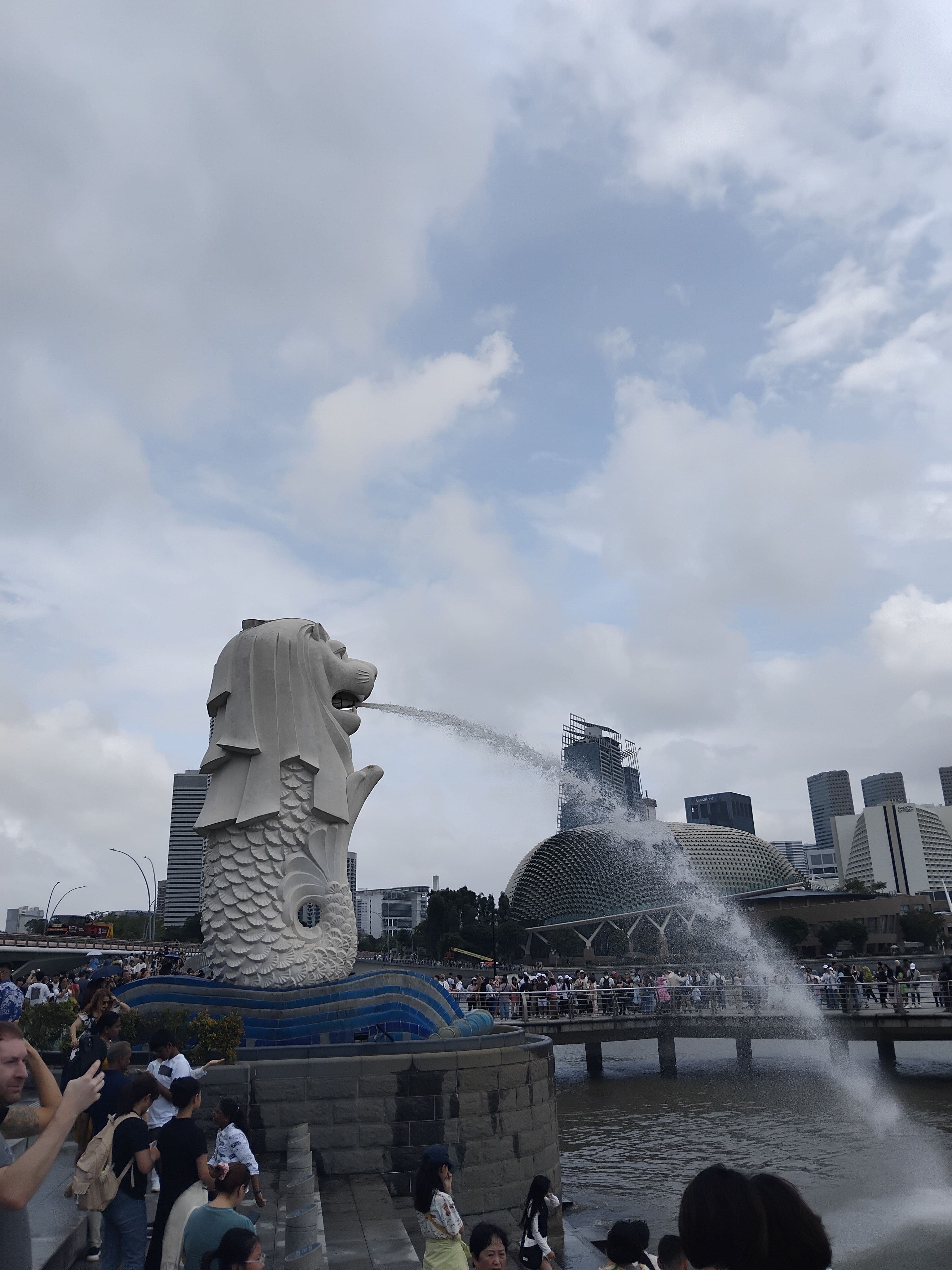
The Merlion statue spouting water at Merlion Park, Singapore

Photo 路 Wikimedia Commons

What is it?

The name 'Singapore' comes from two old Malay-Sanskrit words: singa (lion) and pura (city). Long ago, a prince is said to have landed on the island, spotted an unusual animal, and decided it was a lion. So 'Lion City' it became - even though no lions have ever actually lived there.

Tell me more

The animal the prince saw was probably a Malayan tiger, not a lion. There are no wild lions anywhere in Southeast Asia. But the name stuck, and over hundreds of years 'Singapura' became 'Singapore'.

Singapore today celebrates the story with a famous statue called the Merlion. It is half lion (for the name) and half fish (because Singapore was a fishing village before it became a busy city). The Merlion stands at the edge of the harbour, spouting water from its mouth.

Singapore is a tiny country - one main island plus around 60 smaller ones. The whole country is about the size of a single big-city region. You can drive from one end of Singapore to the other in under an hour.

Even though it is small, more than 6 million people live there. Many of them speak two, three or even four languages every day. Their families originally came from all over Asia, and that mix is part of what makes Singapore feel so special.

In the classroom

Walk your class through this in 15 minutes.

Talk together

Discussion prompts

  1. 01Singapore is named after an animal that doesn't live there. Are there any places near you named after something unusual?
  2. 02What might it feel like to live in a country small enough to cross in under an hour?
  3. 03If you had to design a 'mascot' for your town, what two animals would you mix together, and why?
Try this

Classroom activity

Each pupil designs their own 'mer-creature' for their school or town: half one animal, half another. Draw it, name it, and write one sentence explaining what each half says about the place.