
Classroom lesson 路 Wildlife馃嚫馃嚞 Singapore

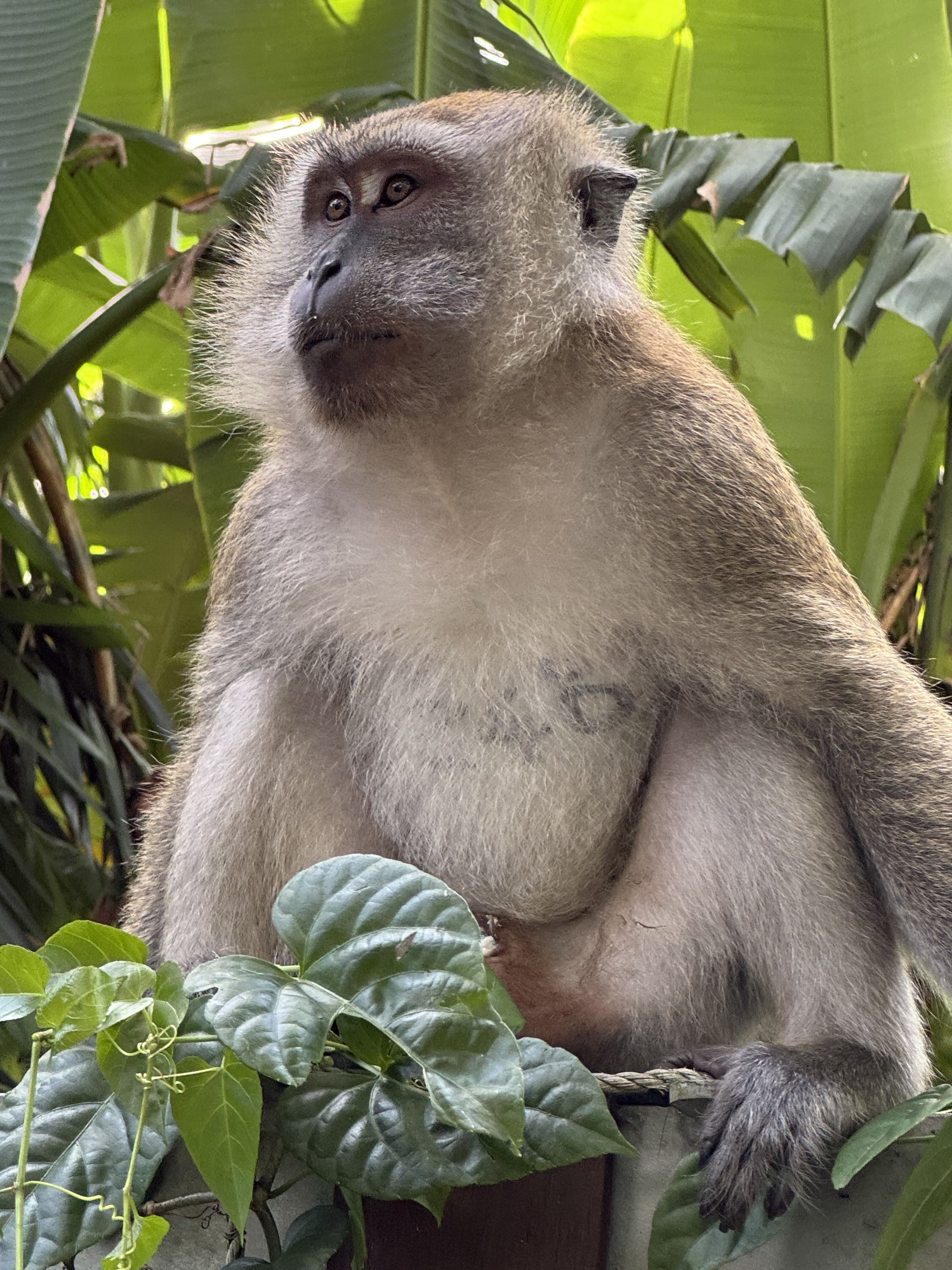
Long-tailed macaques

Singapore's clever, curious city monkeys

A long-tailed macaque sitting on a branch

Photo 路 Wikimedia Commons

What is it?

Long-tailed macaques are small, clever monkeys that live in the forests and parks around Singapore. They have - as the name says - a long tail, almost as long as their body. They live in big family groups of up to 30 monkeys and are surprisingly good at solving puzzles.

Tell me more

A macaque troop is one of the most organised groups in the animal world. There are grandmothers, mothers, aunties, cousins, and lots of babies. Older monkeys teach younger ones how to find food, how to be safe, and where the best trees are.

Macaques are excellent at watching how something is done and then copying it. In some forests, scientists have watched macaques wash sandy food in the sea to clean it - a trick one monkey worked out, and then others copied. Macaques in Singapore know which fruit trees ripen first, which ponds have water in dry weather, and which paths take them through the park most quickly.

Their long tail is mostly for balance. Macaques can run along thin branches without slipping, leap from tree to tree, and even swim if they have to. Babies cling to their mum's belly fur and ride along while she climbs.

Singapore's parks share signs reminding people not to feed the macaques. A monkey that learns to expect food from people stops finding its own, and that isn't good for the monkey. The advice is: enjoy watching, then walk on.

In the classroom

Walk your class through this in 15 minutes.

Talk together

Discussion prompts

  1. 01Macaques learn by copying each other. What is something you've learned by watching someone else do it?
  2. 02Why might it be better to NOT feed a wild animal, even when you could?
  3. 03If your school had a macaque troop in the trees, what rules would you write up about how to share the space?
Try this

Classroom activity

Each pupil writes one 'wildlife rule' for a park, in their own words: 'Don't ___' or 'Always ___'. As a class, vote for the top five rules and make a poster with them.