
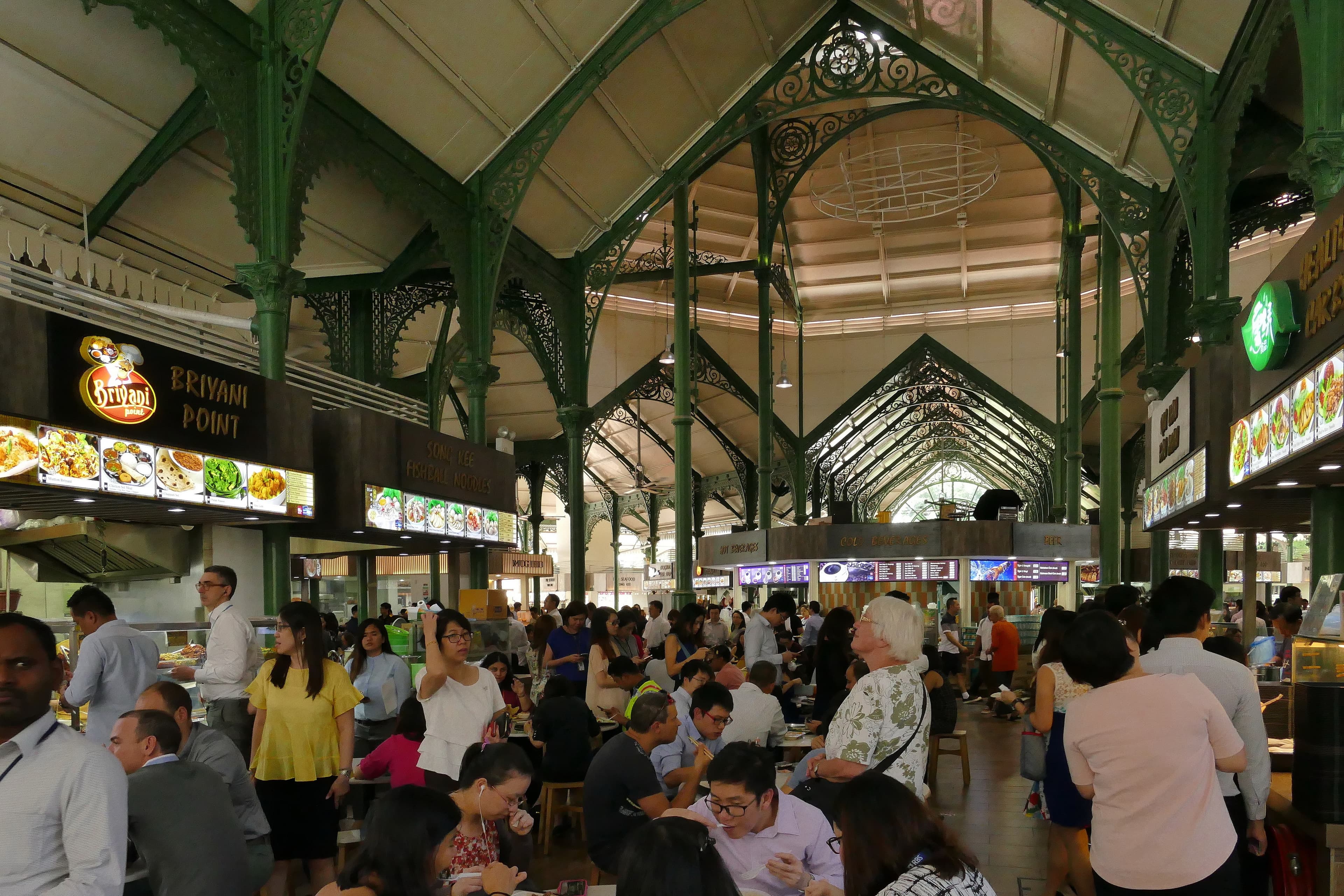
You order at the stall, pay a few dollars, and carry your tray to a shared table. A famous Singapore custom is 'choping': putting a packet of tissues on a chair to save it for your group while you go and queue. Everyone honours the tissue.
Lunch might be chicken rice from a Chinese-Hainanese stall, satay from a Malay stall, roti prata from an Indian stall, and a bowl of laksa from a Peranakan stall - all bought within a few metres of each other and eaten at the same table.
Hawker centres started a long time ago, when street-food cooks were given proper indoor spaces with sinks, shade and benches. Today there are over 100 hawker centres across Singapore. Many of them are listed by UNESCO as 'culture worth protecting' - their cooking is treated as a piece of world heritage.
Most dishes cost only a few dollars, which means everyone in Singapore can eat there - children after school, workers on a lunch break, grandparents meeting friends. Hawker centres aren't just for tourists. They are where the country actually eats.