
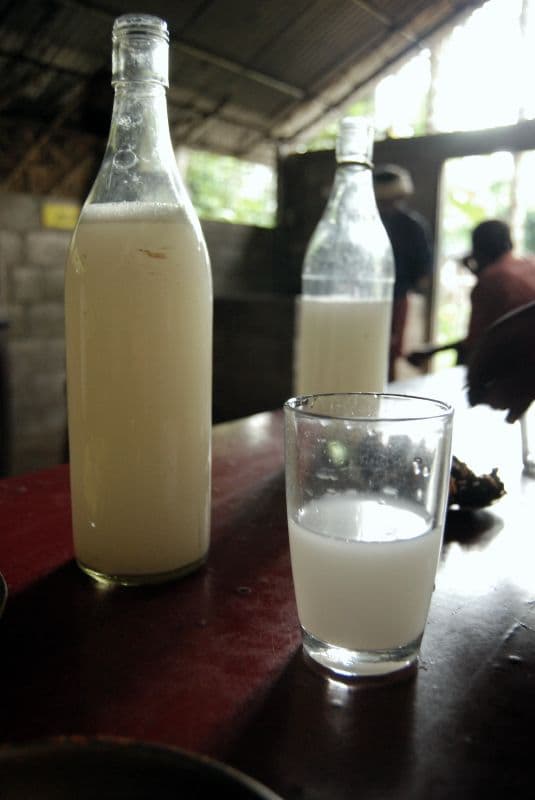
Climbing a tall palm tree to collect sap requires real skill and bravery. Tappers use a loop of rope or a climbing belt to inch their way up trunks that can be 15 to 20 metres tall - the height of a five or six-storey building. They work early in the morning, collecting the sap that has dripped into their container overnight, then making a fresh cut for the next day's collection.
Fresh palm sap is naturally sweet because it contains sugar. It tastes a bit like coconut water mixed with something more floral and complex. In Sierra Leone it is drunk fresh for its delicious flavour and is shared at community gatherings, festivals and family occasions. The sap is collected from the oil palm tree, which is one of the most important and versatile plants in Sierra Leone.
The oil palm is remarkable. Its fruit gives palm oil, used in cooking across Africa and in countless products worldwide. Its sap is drunk fresh. Its leaves are used to make baskets, brooms and thatch for roofing. Its kernels are processed for palm kernel oil. Almost no part of the tree goes to waste, making it one of the most useful plants that grows in Sierra Leone's tropical climate.