
Classroom lesson · Wildlife · 🇸🇨 Seychelles

Hawksbill sea turtle

A small graceful sea turtle that nests on Seychelles beaches

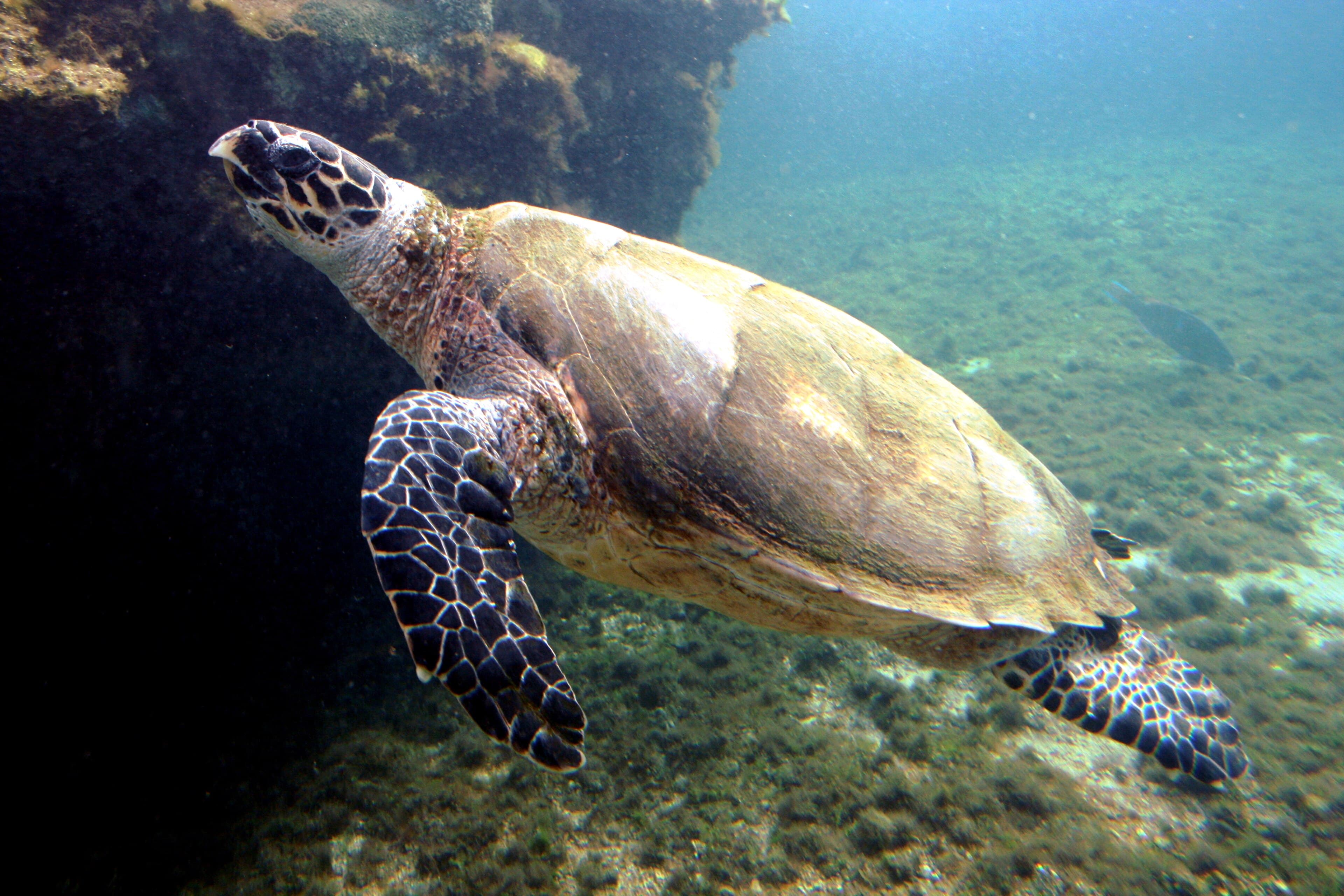
A hawksbill turtle swimming over a coral reef in clear blue water

Photo · Wikimedia Commons

What is it?

The hawksbill is a small, beautiful sea turtle that lives in the seas around Seychelles. Its shell has gorgeous patterns - rich brown with yellow and orange swirls, a bit like polished wood. Seychelles is one of the most important places in the whole Indian Ocean for hawksbills to lay their eggs.

Tell me more

Hawksbill turtles are named after their narrow, pointy beaks, which look a little like a hawk's. They use that beak to poke into cracks in the coral and find the sponges they love to eat. They are one of the few animals that can eat sponges, because sponges contain weird chemicals that make most other animals feel sick.

Every year, between October and February, female hawksbills come out of the sea at night and crawl up the warm Seychelles beaches. They dig deep holes with their flippers, lay around 100 eggs, cover the eggs with sand, and slip back into the sea before dawn. Then they leave the eggs to look after themselves.

About two months later, baby hawksbills hatch all together, scramble out of the sand, and race towards the sea. Each one is no bigger than the palm of your hand. They run as fast as they can to escape crabs and birds. Only a few from each nest will make it to grow up - which is why protecting the beaches matters so much.

Seychellois conservation teams patrol the nesting beaches, watch over the eggs, and gently guide confused hatchlings towards the sea. Children sometimes get to help, watching with torches kept very low so the babies don't get muddled by the wrong light.

In the classroom

Walk your class through this in 15 minutes.

Talk together

Discussion prompts

  1. 01Why might it be a good idea for turtles to lay so many eggs at once?
  2. 02Mother turtles never meet their babies. What other animals do you know that look after their young differently from humans?
  3. 03If you were on a beach at night and saw turtle hatchlings, what would you do?
Try this

Classroom activity

On a long strip of paper, draw the journey of a baby hawksbill: nest in the sand → run to the sea → swim past the coral → grow up in the ocean → years later, the female comes back to the same beach to lay her own eggs. Mark each stage with a label.