
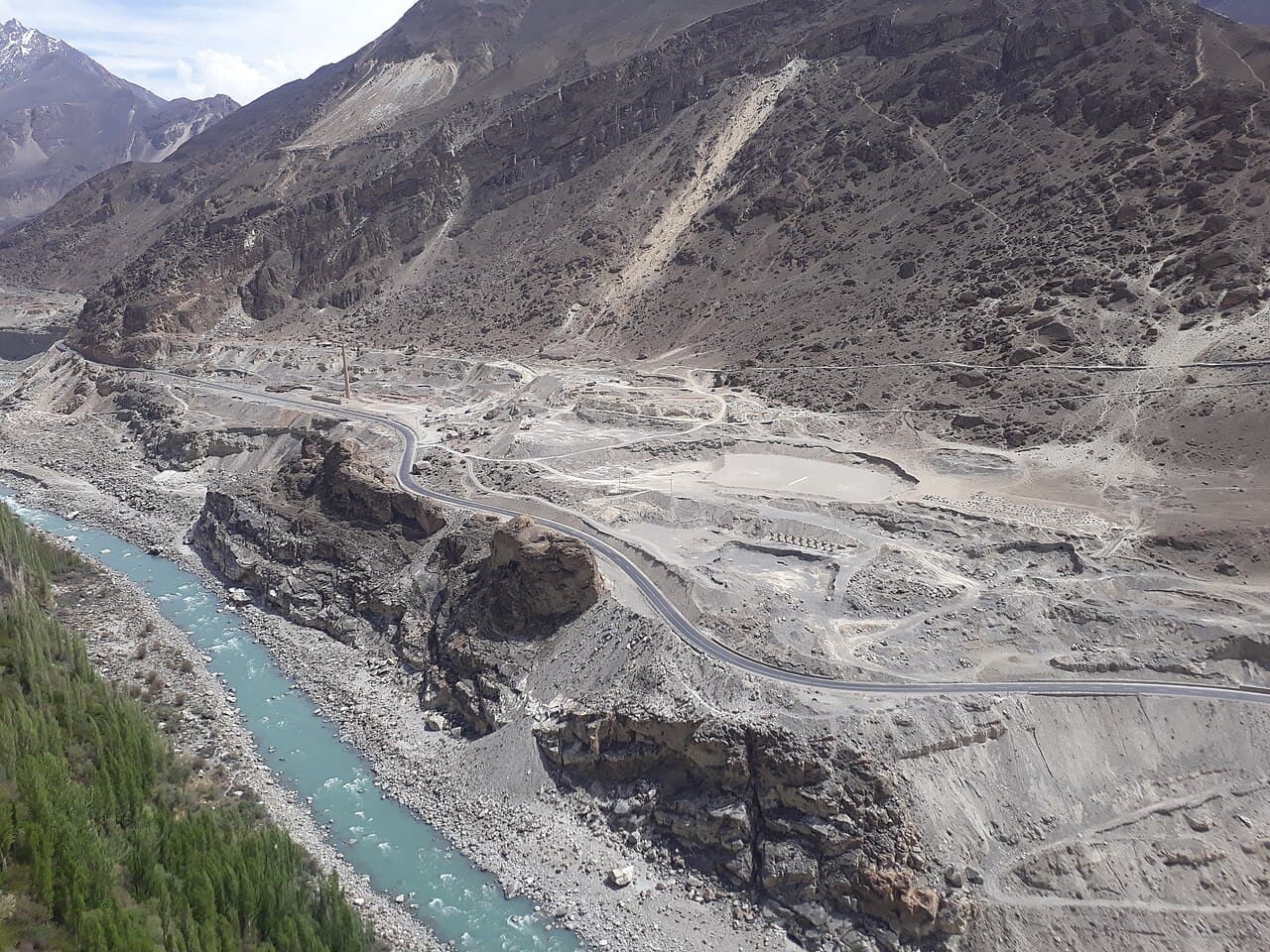
Building the road took about 20 years. It crosses some of the most difficult mountain country anywhere on Earth - deep gorges, glaciers and steep rock faces. In some places, workers had to cut the road right into the side of a cliff. The view from a car window is often a straight drop down to a turquoise river.
The road follows the same paths that traders used for thousands of years on a route called the Silk Road. Long before lorries existed, camels carried silk, spices, paper and ideas back and forth between China and the lands to the west. The new road follows the camel tracks almost exactly.
At the Khunjerab Pass, the air is thin and the weather can be wild. Snow can fall in any month of the year. There are wild markhor goats and snow leopards in the mountains around it. Drivers usually take it slowly, stopping at little villages and tea houses tucked into the valleys.
Many of the people who live along the Karakoram Highway are famous for living to a very old age. The Hunza Valley, halfway along the road, is known for its apricots, its mountain views and its grandparents - many of whom are still hiking up steep slopes well into their 90s.