
Classroom lesson 路 The Indus Valley - one of the world's oldest cities馃嚨馃嚢 Pakistan

The Indus Valley - one of the world's oldest cities

Brick-built towns from around 5,000 years ago

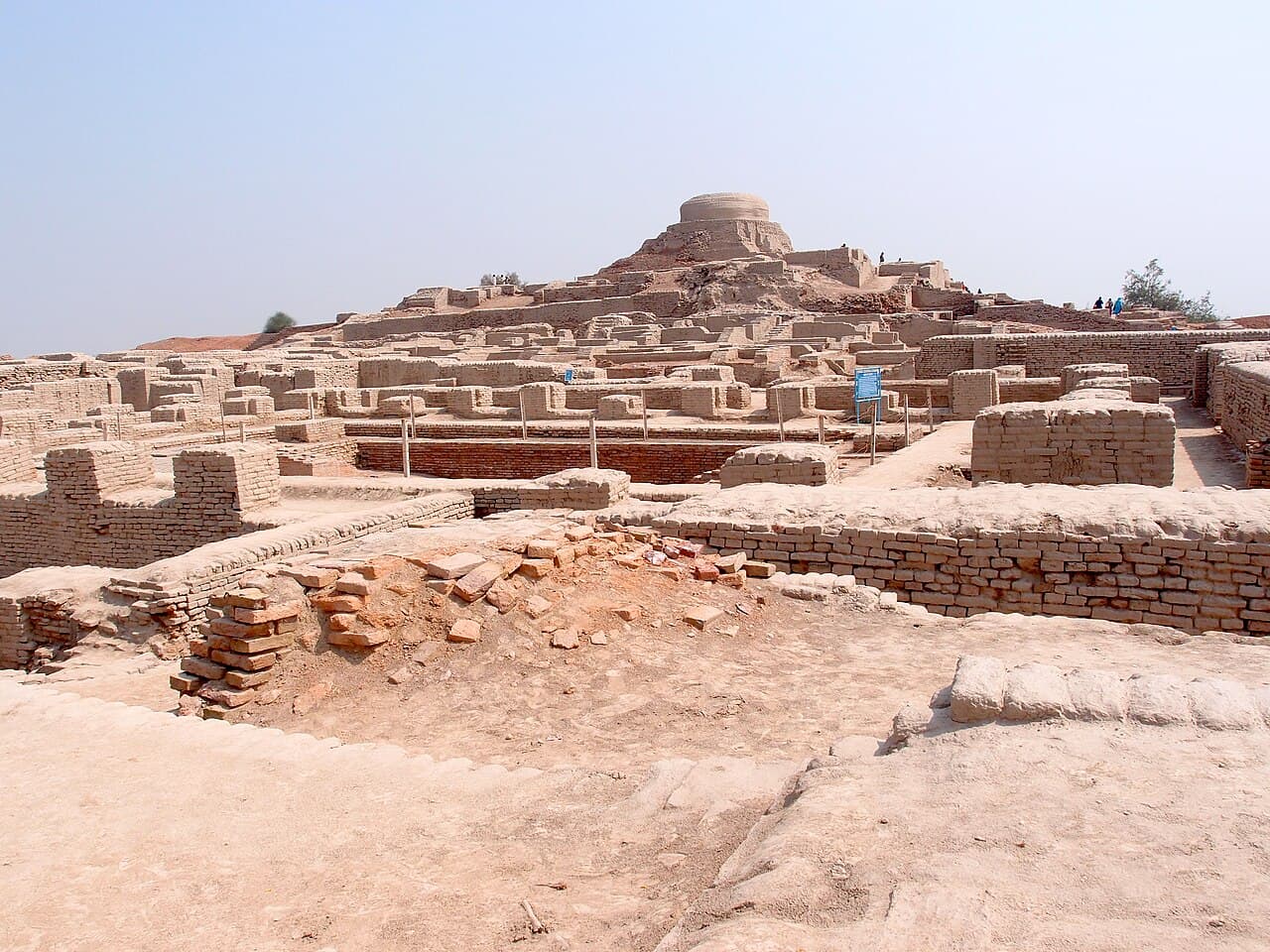
The ancient ruins of Mohenjo-daro, with brick walls and a domed stupa rising above

Photo 路 Wikimedia Commons

What is it?

Around 5,000 years ago - long before pyramids were finished in Egypt and long before any country we know today existed - people in what is now Pakistan built some of the world's first big cities. They are called the Indus Valley cities, and their two most famous sites are Mohenjo-daro and Harappa.

Tell me more

The Indus Valley people were brilliant city planners. Their streets were laid out in neat grids, like a modern town. Each house had its own bathroom with a clay pipe carrying water away into a covered drain under the street. That is something most cities in Europe didn't have until thousands of years later.

They built everything out of bricks - millions and millions of bricks, all the same size. Each brick is exactly 1 unit wide, 2 units long, and half a unit thick. The bricks were so well made that you can still see the walls standing today, baked hard by the sun for fifty centuries.

Archaeologists have dug up beautiful things from these cities: tiny clay toys with wheels (so children played with toy carts even then), jewellery made of shells, board games with playing pieces, and little stone seals carved with pictures of animals. We have not yet worked out how to read their writing - it is one of the world's great unsolved puzzles.

Mohenjo-daro had a great public swimming pool right in the middle of the city, called the Great Bath. It was made of brick and lined with a special kind of waterproof plaster. Imagine a town centre with a public pool 4,500 years ago - they invented the modern lido before anyone else.

In the classroom

Walk your class through this in 15 minutes.

Talk together

Discussion prompts

  1. 01If you found a clay toy 5,000 years from now, what might it tell people about you?
  2. 02Why might it be useful to plan a city as a grid of streets?
  3. 03We still cannot read the Indus Valley writing. How might we go about cracking the code?
Try this

Classroom activity

Each pupil designs a tiny carved 'seal' (on cardboard or clay) to represent themselves - one animal, one shape, and a personal symbol. As a class, swap seals and see if you can guess whose is whose. That is exactly what archaeologists try to do with the real Indus seals.