
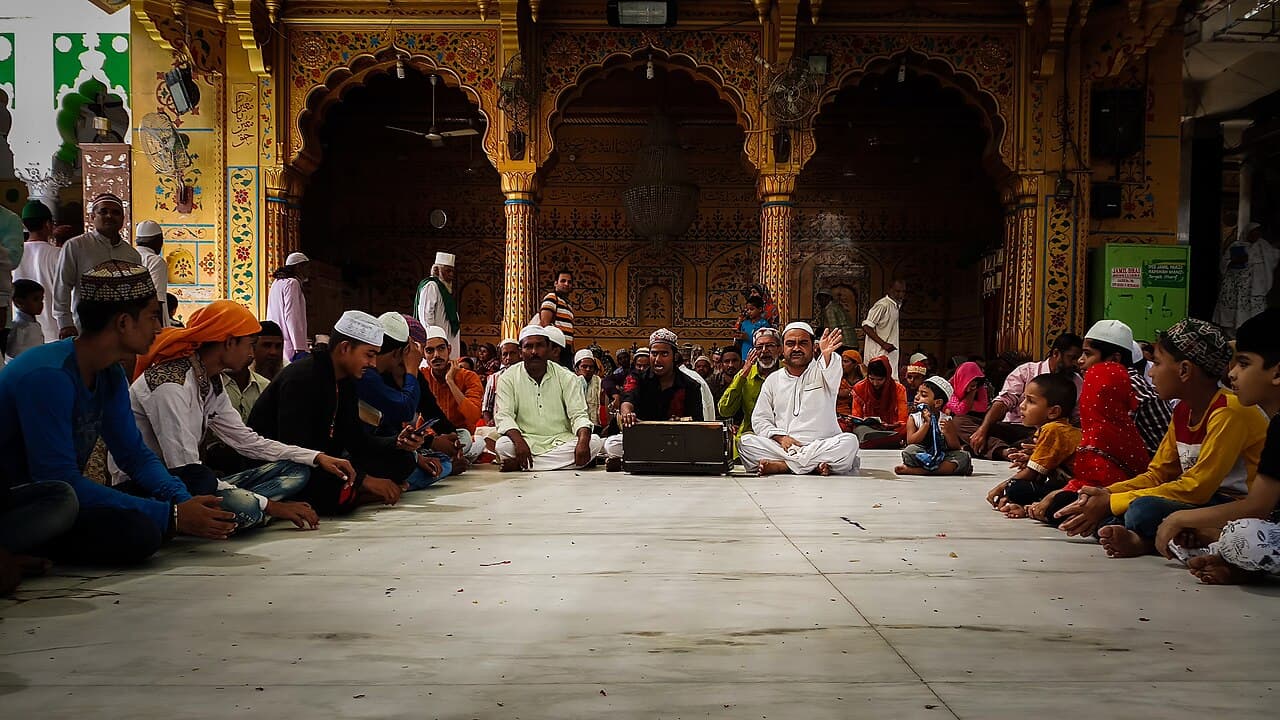
A qawwali performance can last for an hour or more, slowly building from quiet beginnings to a loud, fast, joyful finish. The lead singer takes a line of poetry and sings it. The group repeats it. Then the lead changes it slightly. The group repeats again. Bit by bit, the whole thing speeds up until everyone in the room is clapping and feeling the music.
The most famous qawwali singer of all time was a man called Nusrat Fateh Ali Khan, from Faisalabad in Pakistan. His voice was so powerful and his music so beautiful that he became famous all over the world. Musicians from Hollywood to Bollywood to the BBC asked to record with him. People who don't speak Urdu say his music still moves them.
Qawwali instruments are simple but very clever. The harmonium has rows of small reeds that hum when you press a key, and a bellows on the back that you pump in and out with one hand while playing notes with the other. The tabla is two drums - one with a higher voice, one with a deeper voice. Some performers also use just hand-clapping, no instruments at all.
Qawwali started over 700 years ago at the shrines of Sufi poets and saints. Today it is performed in all kinds of places - at family weddings, in concert halls, in film soundtracks, even at outdoor festivals. Its real magic is in the live performance: you have to be in the room to feel how loud and joyful it can get.