
Classroom lesson 路 Wildlife馃嚦馃嚨 Nepal

The one-horned rhinoceros

A tank-like grass-eater that swims and snorkels

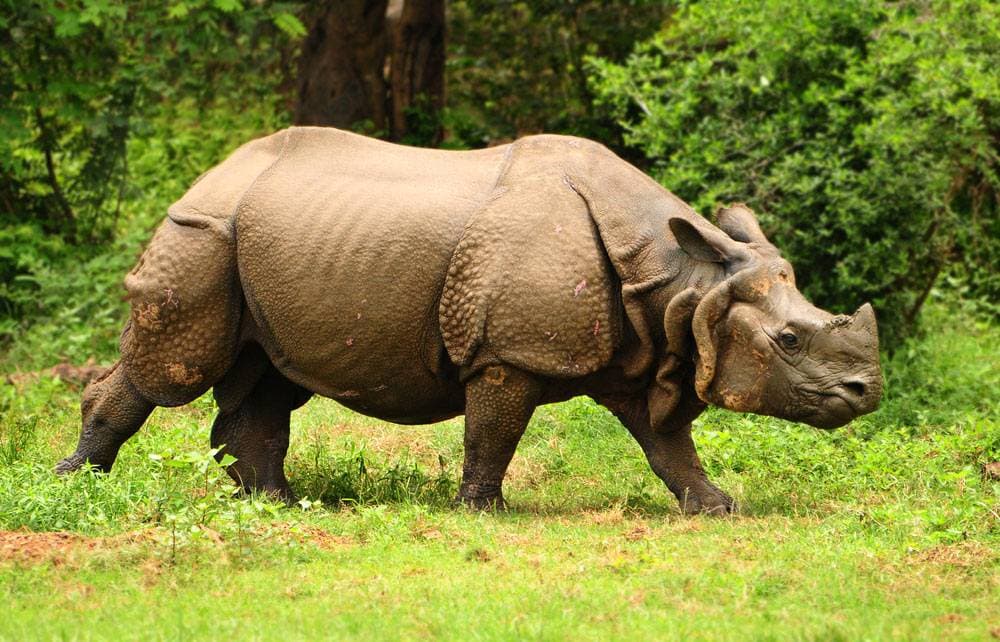
A one-horned rhinoceros wading through tall grass in Chitwan National Park

Photo 路 Wikimedia Commons

What is it?

The greater one-horned rhinoceros lives in the warm grasslands of southern Nepal. Most rhinos have two horns - this one has just a single big horn on its nose. Its skin is thick and folded, like grey armour plates. From a distance it really does look like a small tank wandering through the grass.

Tell me more

These rhinos can weigh more than two and a half tonnes - about the weight of a small car. But they are surprisingly fast over short distances and can outrun a person without breaking into a sweat. They are also great swimmers and can stay underwater for long periods, like a snorkel - peeking just their eyes and nostrils above the surface.

Most of the day a rhino spends grazing on grass. They eat huge amounts of it - over 50 kilograms a day. They also love a good mud bath, which cools them down and keeps their skin healthy and free of biting insects.

Mother rhinos look after their babies for a long time - up to three years. The calf walks close to its mum's side, and if anything seems dangerous, the mum stands between her baby and whatever it is. Rhino mums are famously protective.

In Nepal, you can sometimes see rhinos from a safe distance in Chitwan National Park. Park rangers work day and night to look after them. Around forty years ago there were very few left, but careful protection means there are now more than 700 in Nepal.

In the classroom

Walk your class through this in 15 minutes.

Talk together

Discussion prompts

  1. 01Why might it be helpful for a rhino to be able to stay underwater?
  2. 02Rhino babies stay with their mum for three years. What animals can you think of that stay close to their parents for a long time?
  3. 03Nepal's rhinos almost disappeared. Why might it be important to bring an animal back from the edge?
Try this

Classroom activity

Find Chitwan on a map of Nepal. Compare it to where Everest is - notice that one is hot grassland, one is cold mountain. As a class, list the wildly different landscapes you'd find in your own country.