
Classroom lesson · The Gobi Desert · 🇲🇳 Mongolia

The Gobi Desert

A vast stony desert of sand dunes, fossils and frozen winters

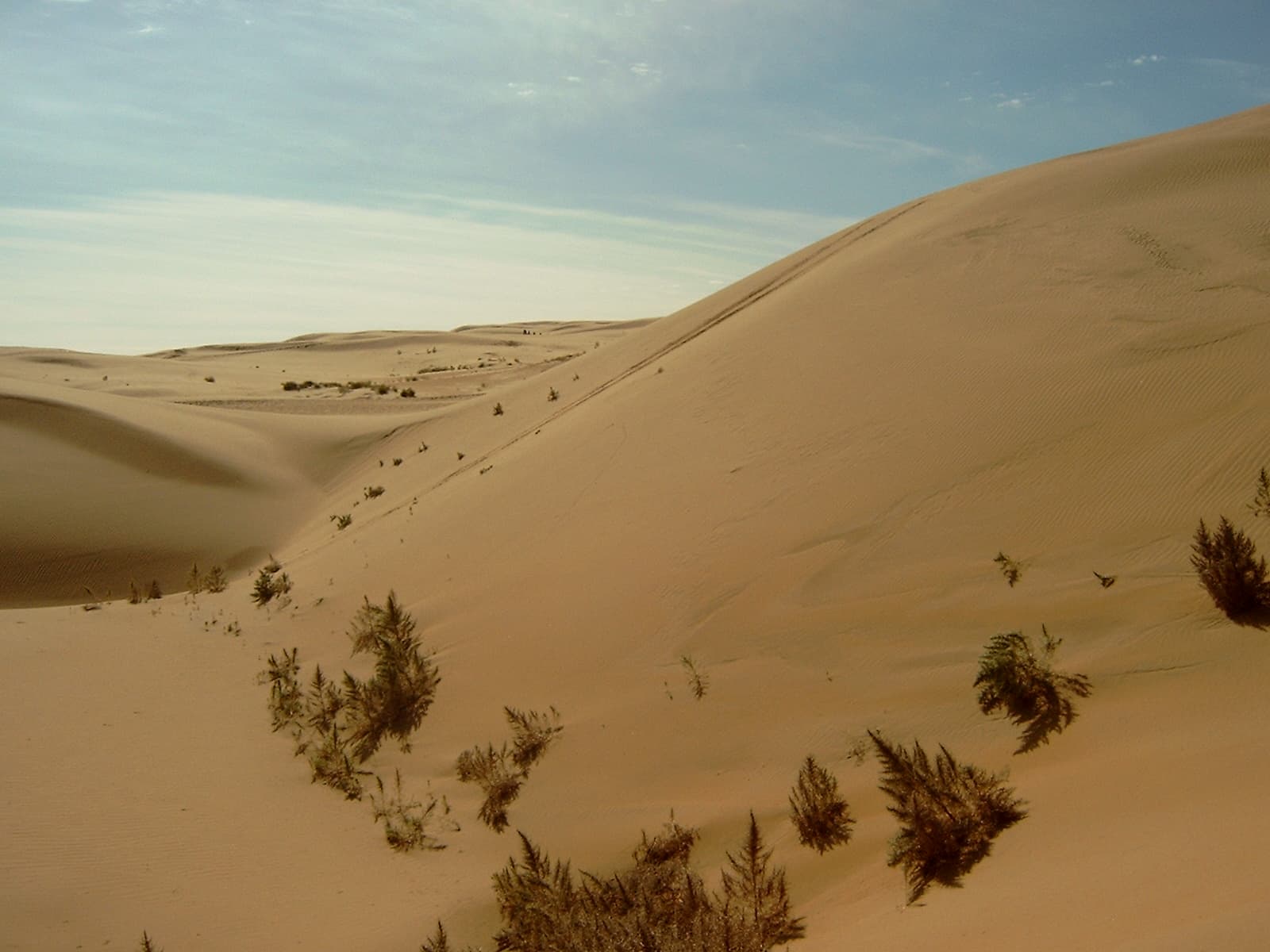
Sweeping orange sand dunes in the Gobi Desert under a blue sky

Photo · Wikimedia Commons

What is it?

The Gobi Desert is one of the biggest deserts in the world, stretching across southern Mongolia and into China. Unlike most deserts, the Gobi is not all sand - much of it is bare rock, gravel and wide open plains. It is famous for dinosaur fossils, dramatic sand dunes and temperatures that swing from very hot in summer to bitterly cold in winter.

Tell me more

The Gobi covers about 1.3 million square kilometres - roughly five times the size of the United Kingdom. Most of it is not sandy at all. Instead you find flat stony plains, jagged cliffs and rolling hills. The famous Khongoryn Els sand dunes rise up to 300 metres tall and stretch for 100 kilometres, earning the nickname 'Singing Sands' because the wind makes them hum.

Scientists have found incredible dinosaur fossils buried in the Gobi's red sandstone cliffs. Whole dinosaur eggs, nesting mothers and animals that lived 80 million years ago have been uncovered here. The Flaming Cliffs, called Bayanzag in Mongolian, glow orange and red at sunset and are one of the world's most famous fossil sites.

Despite being a desert, the Gobi is home to many animals. Bactrian camels roam the plains, snow leopards live in the rocky mountains at its edges, and Gobi bears - one of the rarest bears on Earth - pad quietly through the scrub. Nomadic families herd animals across the desert's grassier fringes, moving with the seasons to find fresh pasture.

In the classroom

Walk your class through this in 15 minutes.

Talk together

Discussion prompts

  1. 01Most people picture a desert as hot and sandy. What surprised you most about the Gobi?
  2. 02Why do you think scientists get so excited about finding dinosaur fossils in the desert?
  3. 03How would life be different if you lived near the Gobi compared to living near the sea?
  4. 04Animals like camels and snow leopards can survive in the Gobi. What special features might help them cope?
Try this

Classroom activity

Draw a split postcard of the Gobi. On the left side, draw the desert in summer (hot, sunny, wide open). On the right, draw it in winter (frosty, icy, white-tipped rocks). Label three animals or features you might spot in each season.