
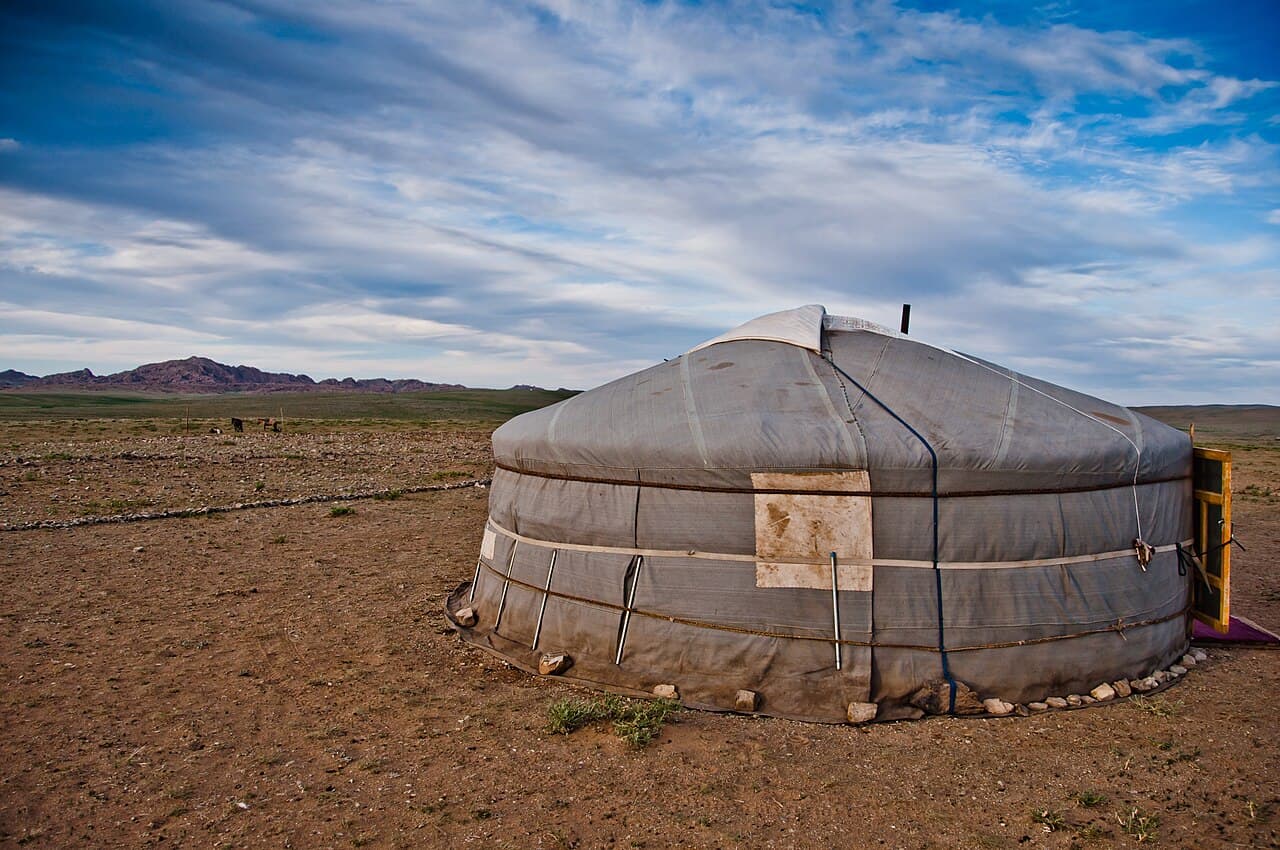
A ger is perfectly designed for life on the move. The wooden lattice walls fold like a concertina, and the felt covering rolls up into bundles. Inside, a small stove in the centre heats the whole space. The door always faces south - towards the sun - which means the inside stays warm and bright. The smoke from the stove goes out through a round hole at the very top, called the toono.
Inside a ger, everything has its place. The back of the ger - opposite the door - is the most honoured spot, where the family altar and special objects are kept. Guests are always offered a seat in the right-hand side of the ger. The left side is where the kitchen and the woman of the house work. Children know that running in circles inside is bad luck (it confuses the direction of the home!), and guests must step over the threshold, never on it.
Even in the capital city of Ulaanbaatar, many families live in gers in special ger districts on the city's edge. Gers can be found from the frozen north to the Gobi Desert - they work beautifully in every climate. Modern gers sometimes have solar panels on the roof for electricity and satellite dishes outside. Old traditions and new technology live side by side very comfortably.