
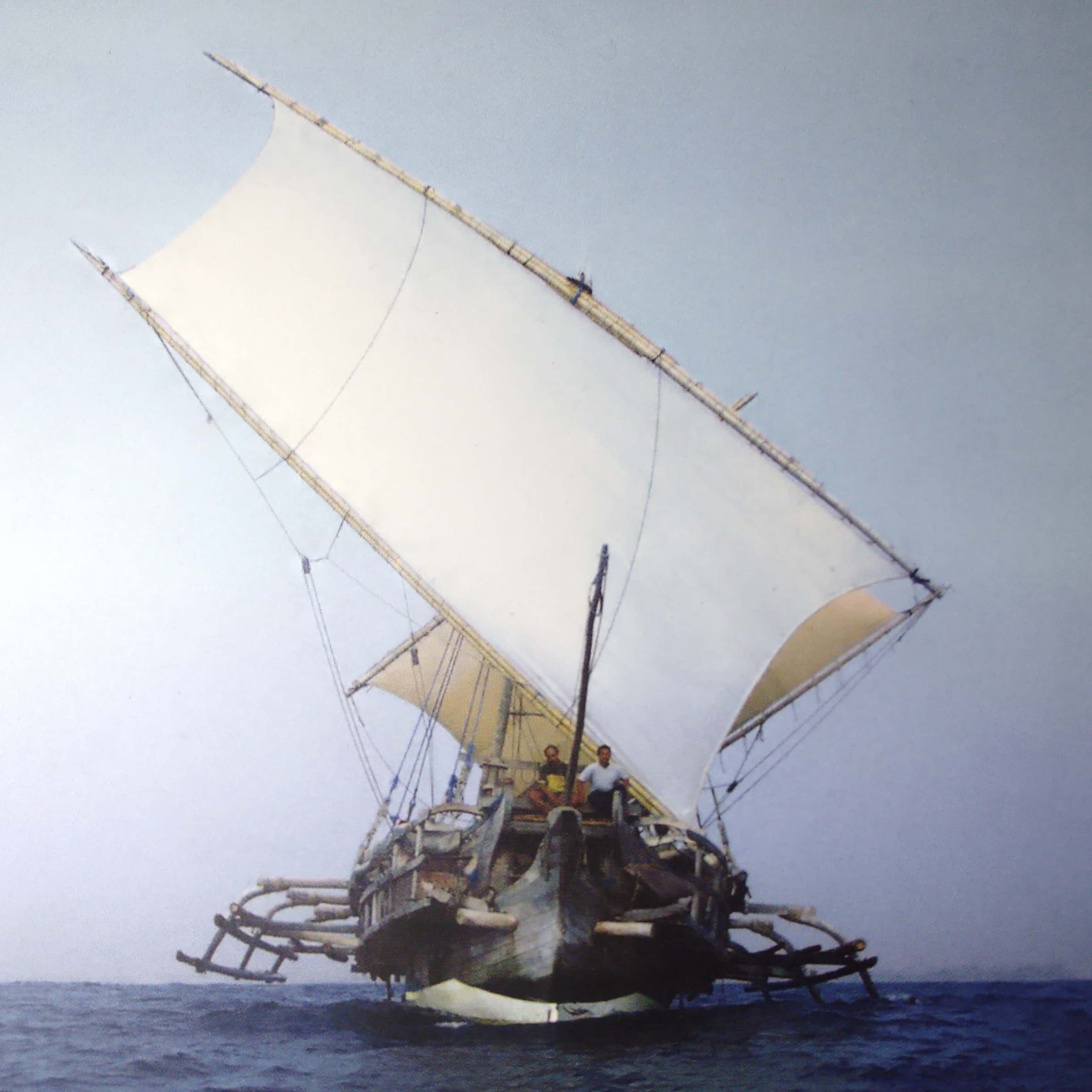
An outrigger canoe is a long, narrow boat with a smaller hull (called an ama) connected by two arms sticking out to the side. The ama floats on the water and acts like a balance beam, keeping the canoe steady even when a big wave hits. It is a brilliantly clever design that Pacific peoples invented independently.
Micronesian navigators did not use maps or compasses. Instead, they memorised the stars, watched the direction of ocean swells, noticed how birds fly and where they rest, and felt how the wind changed near islands. The knowledge was passed from parent to child over many generations. Navigating the whole Pacific Ocean this way is one of the great human achievements.
Traditional Micronesian canoes are shaped to go very fast. A well-built canoe can sail faster than the wind by angling its sail. That sounds impossible, but it works because of the way air pushes against the sail from the side, like a wing on an aeroplane. Micronesian canoes are so fast that sailing teams still race them today.
On the island of Yap, a special type of canoe called a 'proa' is still built by hand using traditional tools and methods. Learning to build one is considered a great skill, and the knowledge is carefully taught by experienced builders to young people who want to keep the tradition alive.