
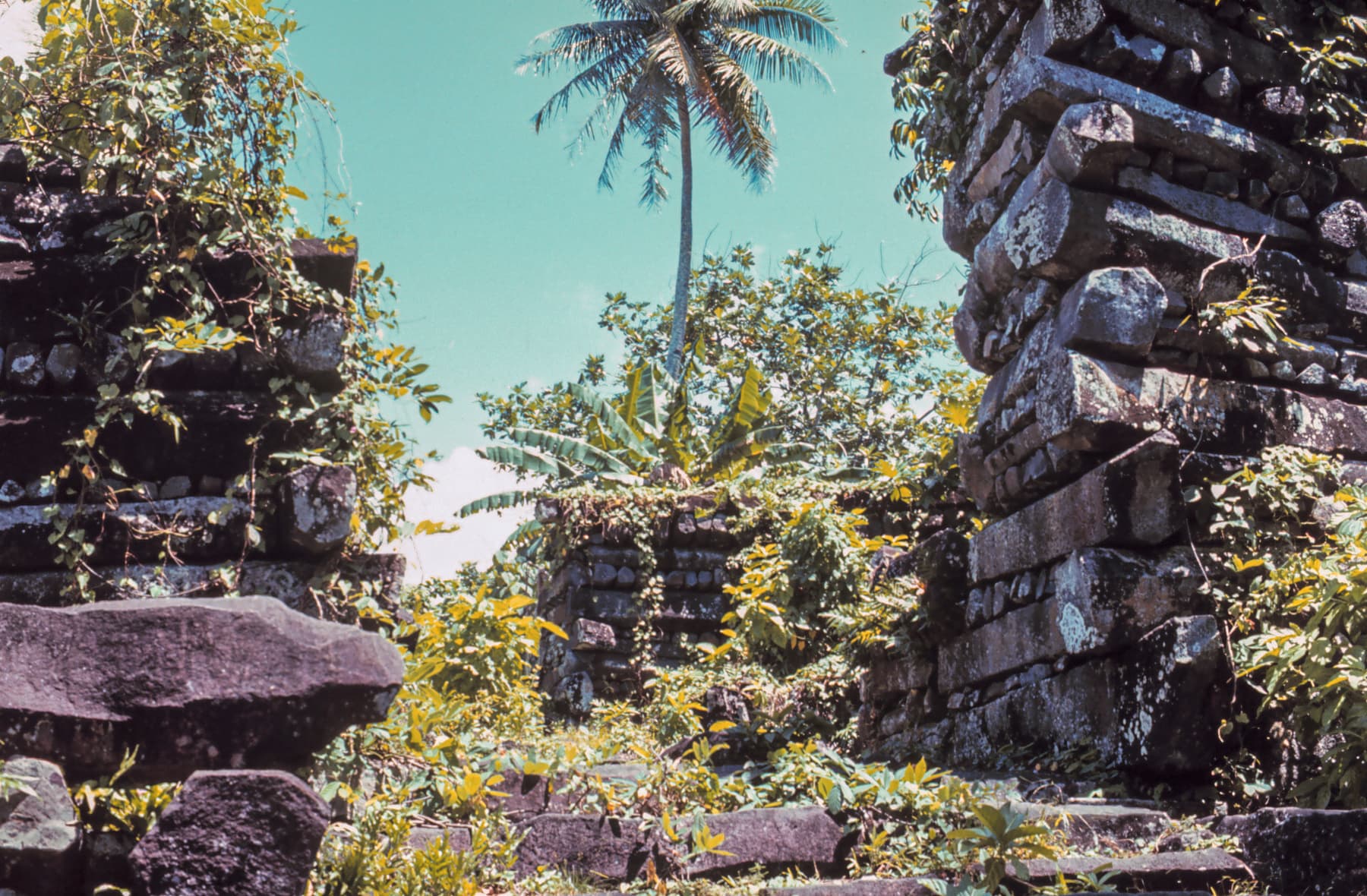
Nan Madol means 'the space between' - a name that perfectly describes it, because the whole city is a maze of stone walls and watery canals. It covers about 18 square kilometres and has about 100 artificial islands, each one built by piling up thousands of large stone columns. At high tide, the sea fills the canals between the islands and you must travel by canoe.
The rock columns used to build Nan Madol are called basalt - a kind of volcanic rock that breaks naturally into long, straight pieces, a bit like giant pencils. The builders fitted these columns together like a giant log-cabin puzzle, without any cement. Some single blocks weigh 50 tonnes - that is heavier than six elephants.
Scientists and local storytellers are still not entirely sure how those huge stones were moved across the reef and stacked so neatly. Local legends say the builders had magical powers that let them fly the stones through the air. Today, historians think they used wooden rafts, ropes and hundreds of people working together.
In 2016, the United Nations put Nan Madol on its list of World Heritage Sites - places so special and important that the whole world agrees they should be looked after. Nan Madol is one of the only such sites built entirely on the sea.