
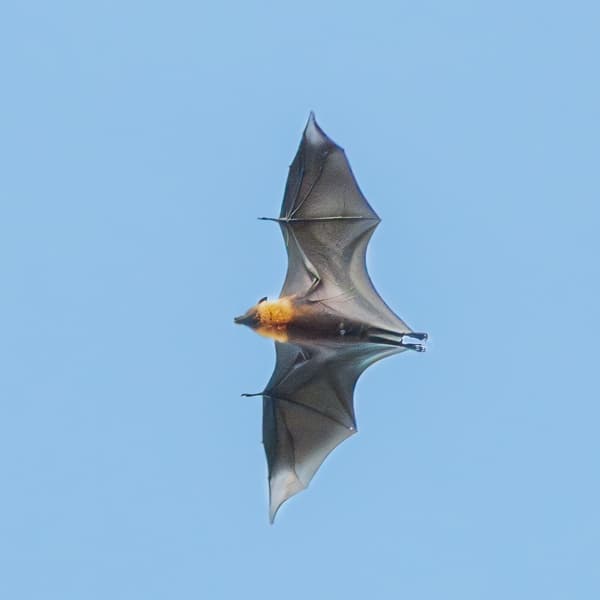
Fruit bats are pollinators and seed-spreaders. When they visit a flower to drink nectar, pollen sticks to their fur and gets carried to the next flower - pollinating it, just like a bee would. When they eat fruit, they carry the seeds inside them and drop them somewhere new when they poo. Some island trees cannot grow without fruit bats doing this job.
Micronesian fruit bats fly many kilometres each night between feeding trees. This means they carry seeds over distances that would be impossible for birds or insects. On islands where the jungle has been damaged in a patch, fruit bats help new trees grow back more quickly than if the forest had to wait for seeds to blow in on the wind.
Unlike small insect-eating bats, fruit bats do not use echolocation (sending out sounds and listening for the echo). They navigate mainly with their large eyes and a sharp sense of smell. Their faces look almost like little foxes, which is why the local name on many Pacific islands translates as 'flying fox'.
Fruit bats are social animals. During the day they roost in large groups in tall trees, called 'camps'. The sound of a camp of thousands of fruit bats can be noisy and dramatic. Young bats stay with their mothers for several months, learning which fruits are good to eat and which routes to take between the best trees.