
Classroom lesson · Wildlife · 🇲🇻 Maldives

Whale Sharks

The biggest fish in the ocean - and it only eats tiny things

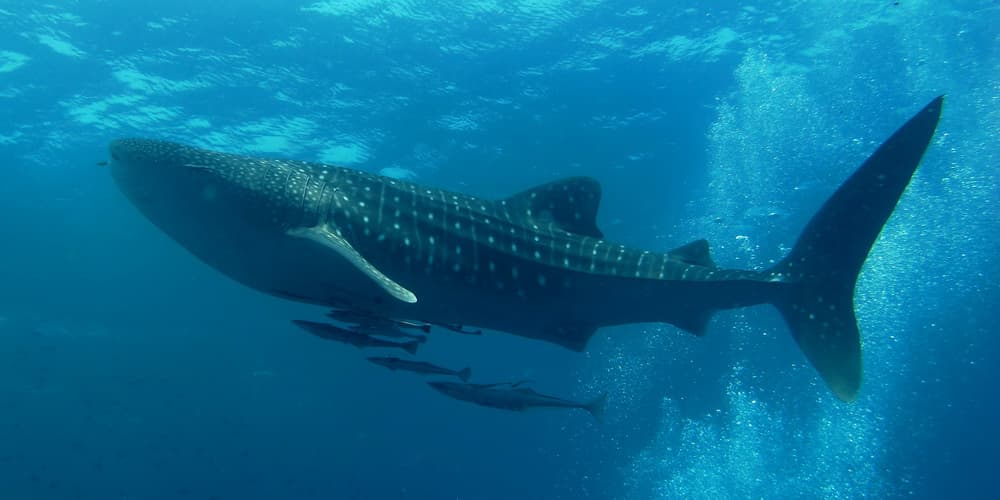
A huge spotted whale shark swimming just below the ocean surface

Photo · Wikimedia Commons

What is it?

The whale shark is the largest fish in the world - it can grow as long as a school bus! Despite its enormous size, it is completely harmless to people. It swims slowly through the water with its huge mouth open, filtering out tiny plankton and small fish to eat. The Maldives is one of the best places on Earth to see these gentle giants.

Tell me more

Whale sharks can grow up to 12 metres long and weigh as much as 20 tonnes - heavier than three African elephants. Their mouths can be over a metre wide, but their throat is only the size of a tennis ball, so there is no chance of swallowing anything larger than a small fish. They are filter feeders, meaning they gather food by swimming forward with their mouths open and sieving water through hundreds of tiny filter pads.

Their skin is dark grey or blue-grey, covered with a beautiful pattern of pale spots and stripes that is unique to each individual - like a fingerprint. Researchers photograph the spot patterns of whale sharks and use computer software to recognise and track individual animals over many years.

South Ari Atoll in the Maldives is famous for having whale sharks year-round, making it one of the few places in the world where you can almost always find them. Scientists think the plankton-rich waters around Ari Atoll provide a reliable food source that keeps the sharks coming back.

Whale sharks swim slowly - about 5 kilometres per hour - and are generally not bothered by snorkellers swimming nearby. Meeting a whale shark in the water is described by many people as one of the most peaceful and awe-inspiring experiences in the ocean.

In the classroom

Walk your class through this in 15 minutes.

Talk together

Discussion prompts

  1. 01The whale shark is enormous but only eats tiny plankton. Can you think of other animals that are big but eat small food?
  2. 02Scientists identify whale sharks by their spot patterns. How do scientists identify other animals in the wild?
  3. 03Why do you think people find swimming near a whale shark peaceful rather than frightening, even though it is so big?
Try this

Classroom activity

Make a life-size whale shark mouth! A whale shark's mouth is about 1.5 metres wide. Use two metre rulers or a long tape measure to mark the width on the classroom floor. Stand two children at each end - does it fit? Now measure your own mouth width and compare. How many of your mouths fit inside a whale shark's?