
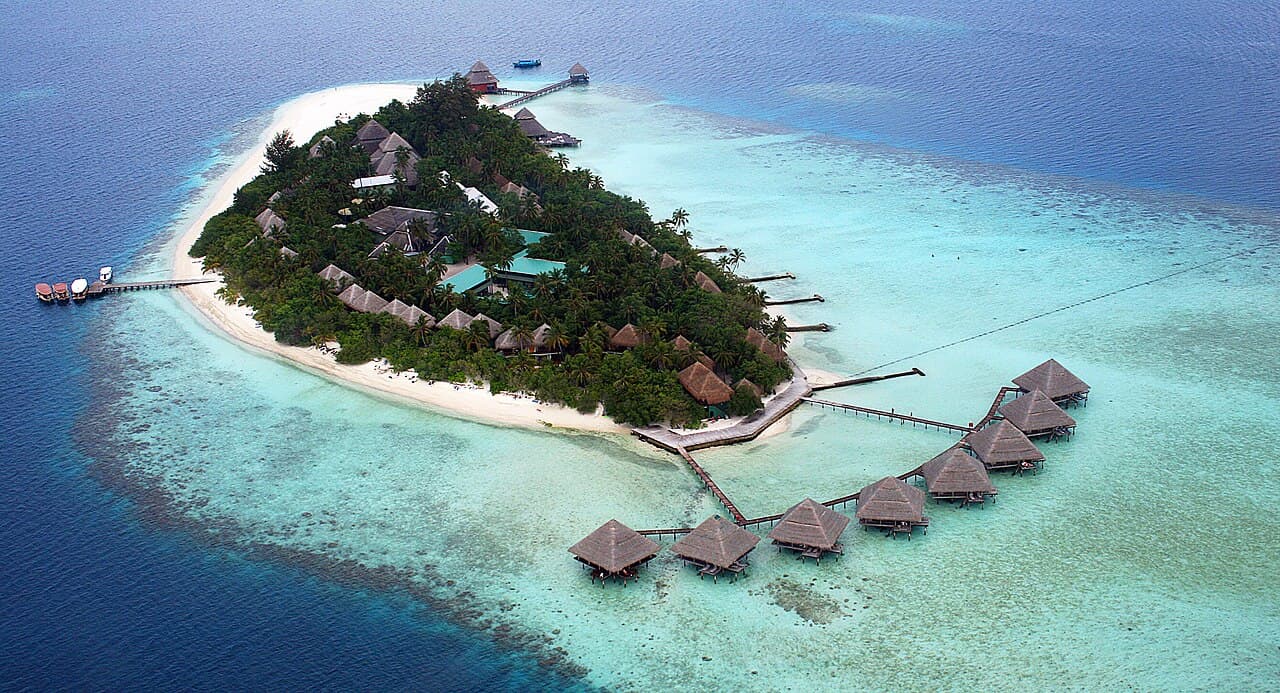
The Maldives is one of the most spread-out countries in the world. If you laid all its islands end to end, the chain would stretch nearly 900 kilometres, yet the total land area is smaller than the city of Los Angeles. Imagine picking up a handful of confetti, throwing it into the ocean, and each piece being its own island - that is a little what it looks like from space.
The islands sit on top of coral reefs, which are huge underwater structures built by tiny animals called coral polyps over thousands of years. The reefs give the islands their shapes, and the lagoons inside the atolls glow every shade of blue and green imaginable, from deep navy far out to brilliant turquoise in the shallows.
Because the islands are so flat and low, Maldivian engineers and communities are already working on clever solutions - like planting coral to strengthen reefs and building walls that calm the waves. Scientists and local fishermen work side by side, and many Maldivians are proud leaders in protecting their ocean home.
Only about 200 of the 1,200 islands have people living on them. The rest are used for fishing, farming coconut palms, or left completely wild for birds and turtles. Each inhabited island is its own tiny village floating in the sea.