
Classroom lesson 路 Wildlife馃嚥馃嚞 Madagascar

Ring-tailed lemur - the sunbather of Madagascar

Black-and-white striped tail, big golden eyes, and a love of morning sunshine

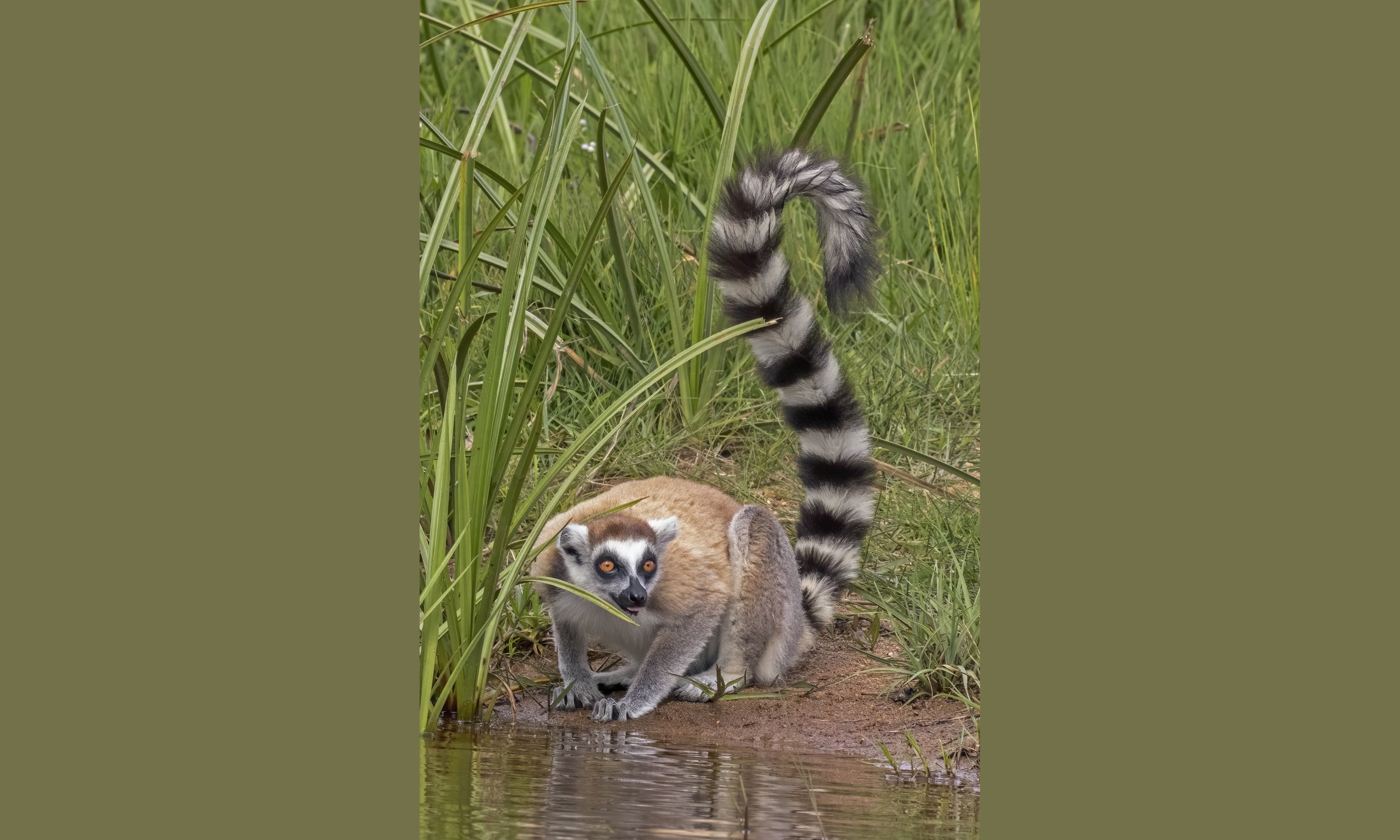
A ring-tailed lemur with its long black-and-white striped tail looped over its back

Photo 路 Wikimedia Commons

What is it?

The ring-tailed lemur is probably the most famous lemur in the world. It is grey and white, about the size of a small cat, with a long stripy tail and bright golden eyes. It lives in the dry forests in the south of Madagascar.

Tell me more

Ring-tailed lemurs live in big family groups of about 15 to 30, led by the mum. Yes - in lemur families, the females are in charge. They decide where to find food, when to move on, and who eats first. The dads and uncles follow along behind.

Their famous striped tail is not just for looks. They use it to stay in touch when the group is moving through the forest - holding it up like a flag so everyone can see each other. They also use it to send messages, waving it slowly or wrapping it around their bodies.

Each morning, when the sun comes up, ring-tailed lemurs do something very funny. They sit up on a rock or branch, stretch their arms out wide, and turn their bellies to the sun. They look like tiny statues meditating. They are warming up after the chilly night.

Ring-tailed lemurs do not actually spend much time in trees compared with other lemurs. They walk on the ground a lot, often in long lines with their tails held straight up. People in Madagascar say a passing troop of ring-tails looks like a furry parade.

In the classroom

Walk your class through this in 15 minutes.

Talk together

Discussion prompts

  1. 01Why might it be useful for a group of animals to all walk with their tails held up high?
  2. 02Ring-tail families are led by mums. What other animals have you heard of where the females lead?
  3. 03What do you do to wake yourself up in the morning? How does it compare to a lemur sunbathing?
Try this

Classroom activity

Make a class line of 'ring-tails'. Each child holds up a striped strip of paper (their 'tail'). Walk in a line round the playground keeping your tail up. Can the line stay together if the leader changes direction without looking back? Now try it without tails. Which works better?