
Classroom lesson 路 Baobabs - the upside-down trees馃嚥馃嚞 Madagascar

Baobabs - the upside-down trees

Huge swollen trunks that hold water - some are over 1,000 years old

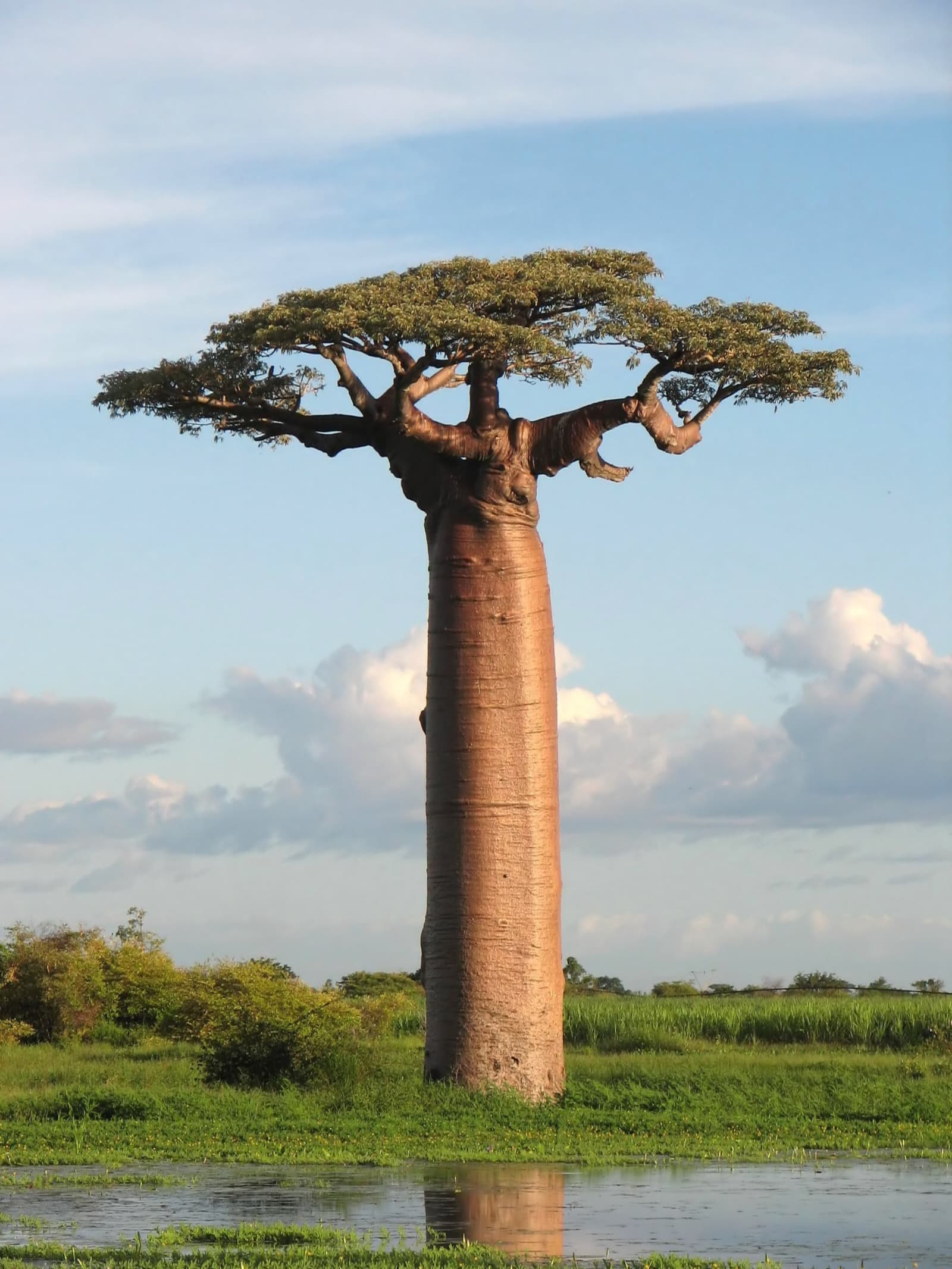
A giant Grandidier's baobab with its enormous trunk and small leafy crown

Photo 路 Wikimedia Commons

What is it?

Baobabs are giant trees with fat, barrel-shaped trunks and a tiny tuft of branches on top - which is why people call them 'upside-down trees'. Six of the world's eight kinds of baobab live in Madagascar, and some of them have been growing for more than 1,000 years.

Tell me more

A baobab's trunk is huge. The biggest ones are wider than a small house, and you would need ten or more children holding hands in a circle to reach all the way around. Inside, the trunk works like a giant water bottle - it stores hundreds of litres of water to help the tree survive long dry seasons.

When you look up at a baobab, the branches look like roots pointing at the sky. A Malagasy story says that long ago the trees were so proud that the spirits picked them up and replanted them upside down to keep them humble. Scientists now know the shape just helps them store water and lose less heat.

Baobabs grow incredibly slowly. Some of the biggest ones in Madagascar were already big when your great-great-great-grandparents were children. People in Madagascar look after these old baobabs the way other countries look after their oldest buildings.

Baobabs are home to lots of life. Birds nest in their hollows, bats sip nectar from their huge white flowers at night, and lemurs sometimes shelter inside an old trunk during storms. The fruit, called 'monkey bread', is full of vitamins.

In the classroom

Walk your class through this in 15 minutes.

Talk together

Discussion prompts

  1. 01Why might a tree need to store water inside its own trunk?
  2. 02What other living things last more than a thousand years? What does it feel like to imagine something that old?
  3. 03If you could give a baobab a name and a story, what would yours be?
Try this

Classroom activity

Find out the widest tree near your school. As a class, hold hands in a ring around it and count how many of you it takes. Now look up the widest known baobab (around 30 metres around). How many classes of children would it take to reach all the way around that one?