
Classroom lesson 路 Wildlife馃嚥馃嚞 Madagascar

Fossa - the top predator of Madagascar

Looks like a cat, climbs like a monkey, and hunts lemurs in the treetops

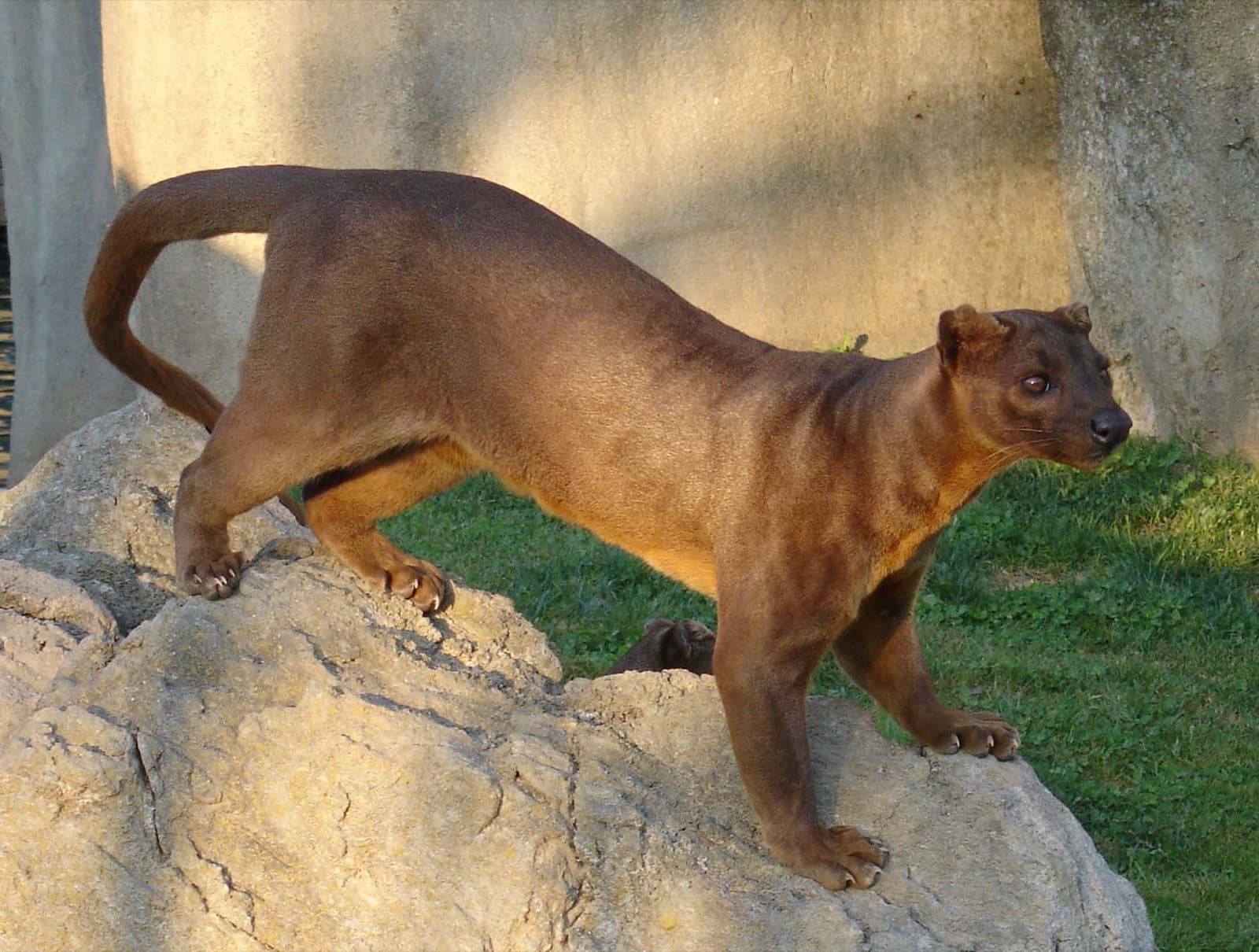
A fossa with reddish-brown fur and a long tail, walking through the forest

Photo 路 Wikimedia Commons

What is it?

The fossa (say it 'FOO-sa') is Madagascar's biggest meat-eating animal and the top predator on the island. It looks like a cat crossed with a small puma, but it is actually most closely related to the mongoose. Because Madagascar has no lions or leopards, the fossa is the king of the forest.

Tell me more

A fossa is about the size of a medium dog - around 80 centimetres long, plus a tail just as long. Its fur is a reddish-brown colour and very smooth. It has a long body, short legs and a long tail it uses for balance.

Fossas are amazing climbers. They have ankles that twist all the way around, like an owl's neck, so they can run down a tree trunk head-first. Most cats and dogs cannot do that. It means a fossa can chase a lemur up into the canopy and through the branches without ever slowing down.

Because Madagascar has been alone for so long, no other big predators ever arrived to compete with the fossa. No lions, no leopards, no wolves. The fossa filled the 'top predator' job all on its own and got very good at it.

Fossas are shy and rarely seen by people. They mostly hunt at night and rest during the day. Even in Madagascar, you can spend weeks in the forest and not catch a glimpse of one. Scientists who study them often track them using tiny cameras tied to trees.

In the classroom

Walk your class through this in 15 minutes.

Talk together

Discussion prompts

  1. 01Why might Madagascar have ended up with a top predator that no other country has?
  2. 02If you could run head-first down a tree, what would you use that for?
  3. 03What is the 'top predator' near where you live? How do you know?
Try this

Classroom activity

Draw a 'food map' of Madagascar's forest. At the top: fossa. Below: ring-tailed lemur, indri, other lemurs. Below them: insects, fruit, leaves. Add arrows showing who eats what. Then compare it to a food map for the country you live in. What's different?