
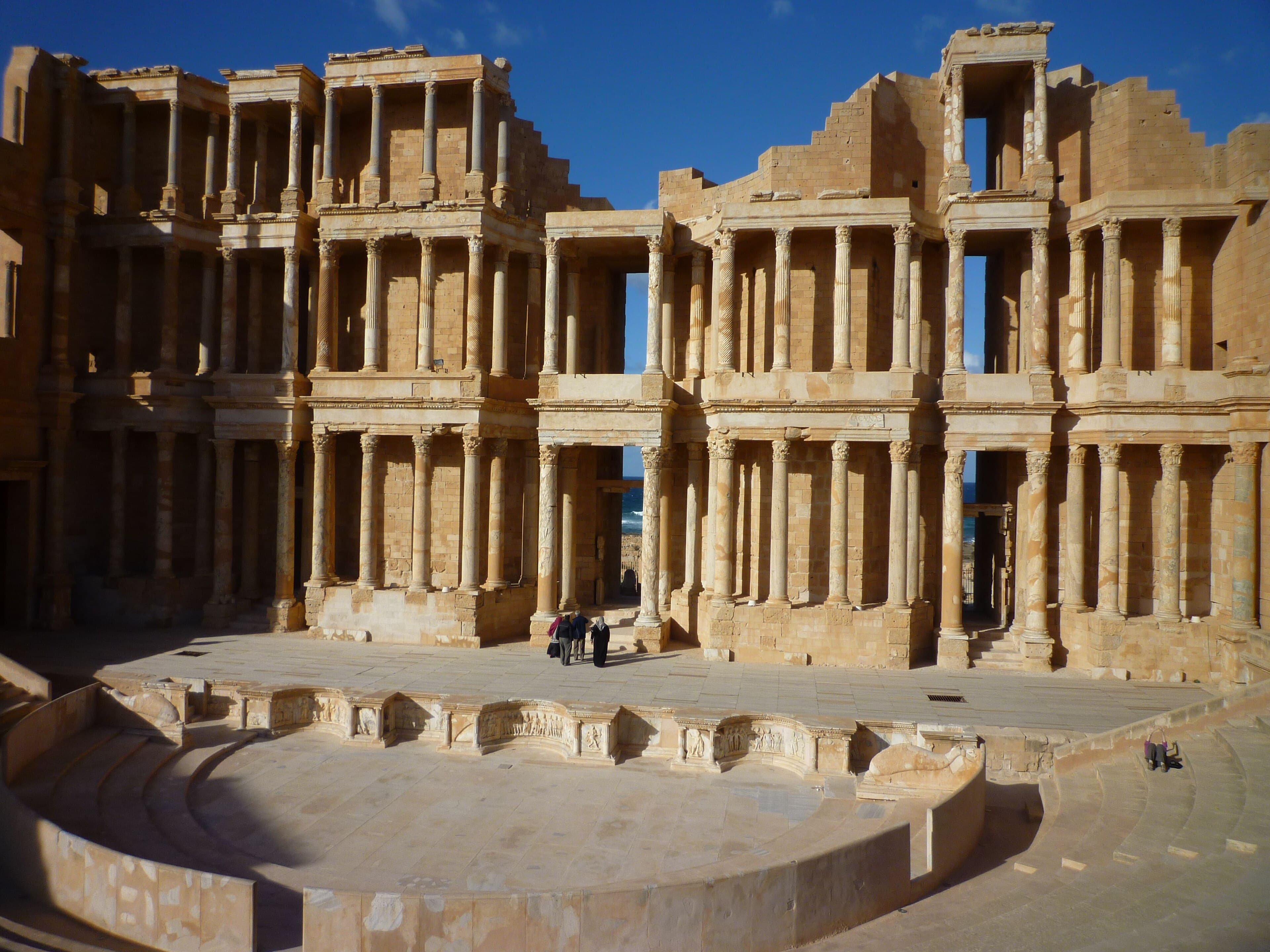
Roman theatres were not like cinemas today. Actors performed on an open-air stage in daylight, wearing big masks to show different characters - happy faces or sad faces. The audience sat on curved stone seats going up in tiers, so everyone had a clear view of the stage below.
The back wall of Sabratha's theatre is what makes it so special. It is decorated with carved columns and niches (little alcove shelves) that once held statues. Standing in front of it, with the sea breeze behind you, it is easy to imagine the crowds who once filled those stone seats to watch plays and music performances.
Sabratha itself started out as a Phoenician trading post thousands of years ago, long before the Romans arrived. The Phoenicians were great sailors and merchants from what is now Lebanon. So the city has layers of history - Phoenician, then Roman, each adding to the story of the place.
Archaeologists have also found mosaics and statues at Sabratha. One of the finest mosaics shows figures dancing and performing - a fitting decoration for a city that loved its theatre.