
Classroom lesson · Ubari Sand Sea & Lakes · 🇱🇾 Libya

Ubari Sand Sea & Lakes

Shimmering blue lakes hidden among giant golden dunes

A turquoise lake edged with salt crystals and palm trees, surrounded by enormous sand dunes

Photo · Wikimedia Commons

What is it?

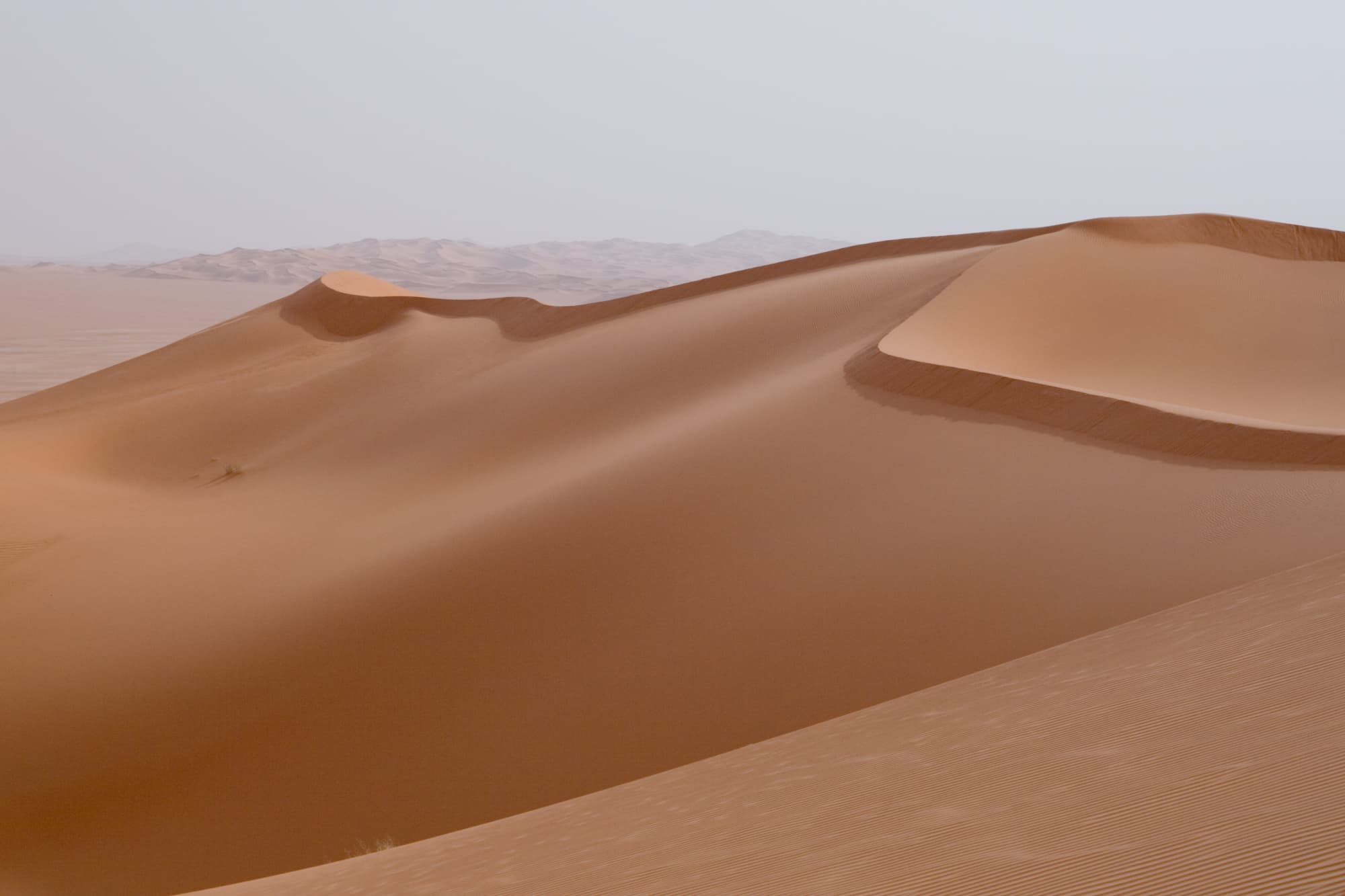
In the middle of one of the world's biggest deserts, a surprise is waiting. The Ubari Sand Sea is an enormous stretch of giant golden sand dunes in southern Libya - and hidden among those dunes are several sparkling blue-green lakes. The lakes sit in hollows between the dunes, fringed with palm trees and white salt crystals.

Tell me more

The lakes formed thousands of years ago when underground water, left over from the time when the Sahara was wet and green, seeped up to the surface. Today the water is very salty - more salty than the sea - which means very few creatures can live in it, but the colour it creates is a brilliant turquoise that looks almost unreal against the pale orange sand.

The sand dunes surrounding the lakes are some of the tallest in the Sahara. Some rise more than 100 metres high - taller than a 30-storey building. Sand dunes of this size make a low, humming sound as the wind moves sand grains down their steep sides. Locals sometimes call it 'singing sand'.

The Tuareg people - desert nomads who have lived across the Sahara for thousands of years - know the Ubari region well. They have navigated its dunes using the stars, traded goods across the empty desert, and made their camps near the palm-fringed lakes for generations.

Visitors who reach the lakes often float on the surface because the very salty water makes you extra buoyant - similar to the Dead Sea. The salt crystals around the edges sparkle in the sunshine like frost.

In the classroom

Walk your class through this in 15 minutes.

Talk together

Discussion prompts

  1. 01Would you expect to find lakes inside a desert? What else might be hidden in places that seem empty?
  2. 02Why do you think very salty water makes you float more easily than fresh water?
  3. 03The Tuareg people navigate using stars. What would it be like to travel across a desert with no roads or signs?
Try this

Classroom activity

Dissolve as much salt as possible in a cup of warm water (the teacher can prepare this). Drop a small piece of modelling clay in it - it should float better than in plain water. Now draw and label a diagram showing why extra salt makes floating easier.