
Classroom lesson 路 Volcanoes馃嚡馃嚨 Japan

Japan's volcanoes

Over 100 active volcanoes, and the hot springs they create

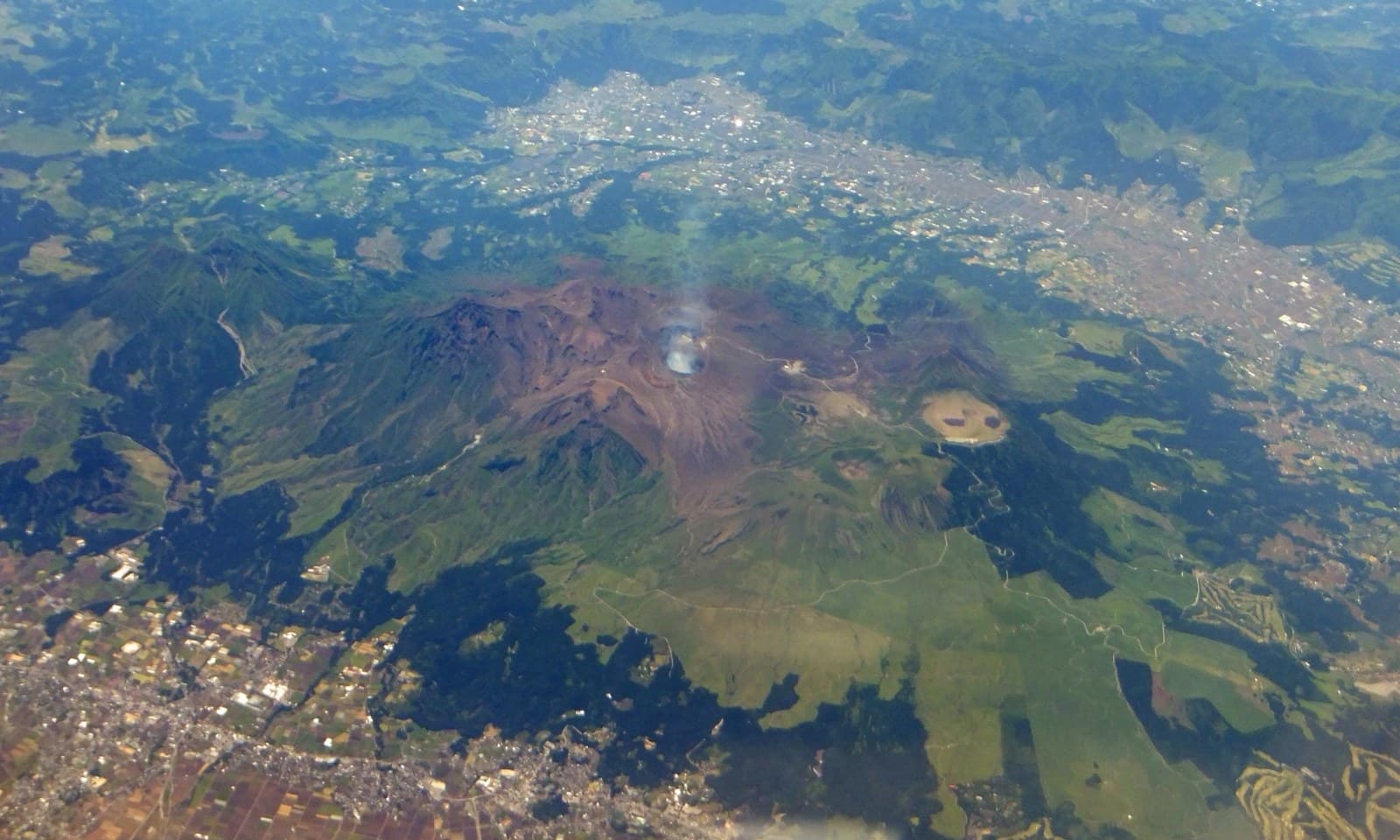
An aerial view of Mount Aso, an enormous Japanese volcano with steam rising from its crater

Photo 路 Wikimedia Commons

What is it?

Japan sits on top of a meeting point of four giant pieces of the Earth's crust. Where they push against each other, the ground heats up - and volcanoes form. Japan has over 100 active volcanoes. Some are quiet for centuries. Others let out small puffs of steam every day.

Tell me more

A volcano is a sort of giant chimney for the inside of the Earth. Deep down, the rock is so hot it has melted. Where two parts of the Earth's crust meet, that hot liquid sometimes finds a way to the surface. When it comes out, we call it lava.

Mount Aso, on the island of Kyushu, is one of Japan's biggest active volcanoes. Its crater is enormous - over 25 km across. Towns and farms sit inside the crater, and you can stand at the edge and watch a smaller volcano in the middle puff out steam.

Japan's volcanoes have given the country one of its best-loved things: onsen, the natural hot springs. Underground water heated by the volcanoes bubbles up to the surface at the perfect temperature for a warm bath. There are thousands of onsen around the country. Even the snow monkeys use them.

Living near volcanoes means Japan also gets earthquakes. Japanese children practise earthquake drills at school, the same way other countries practise fire drills. Many buildings are specially designed to wobble and bend instead of breaking when the ground shakes.

In the classroom

Walk your class through this in 15 minutes.

Talk together

Discussion prompts

  1. 01Why do you think people choose to live near volcanoes, even though they can be dangerous?
  2. 02What good things and what tricky things might come from living somewhere with lots of volcanoes?
  3. 03What do you practise drills for at your school? Why is practising important?
Try this

Classroom activity

Build a paper-m芒ch茅 or modelling-clay volcano in groups. Inside, mix baking soda and a little washing-up liquid. Then add red-coloured vinegar - and watch your volcano erupt safely. Label the parts: crater, magma, lava, slope.