
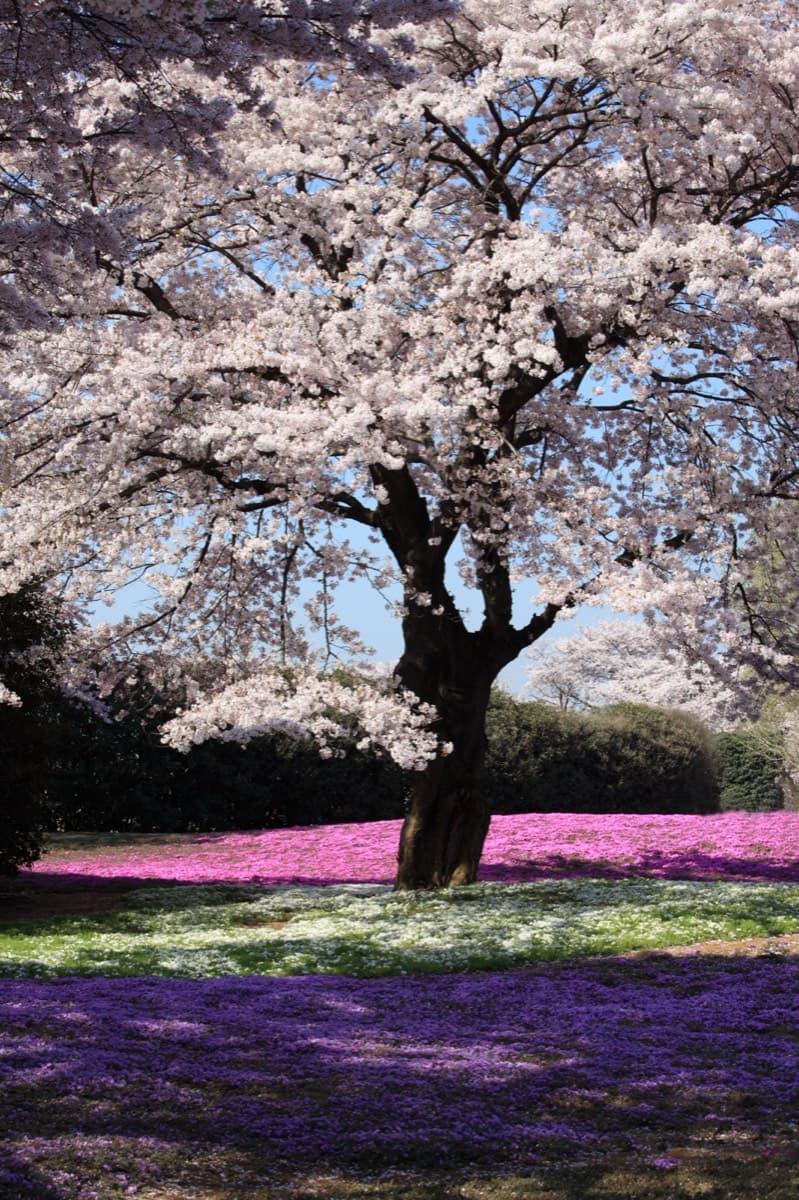
Sakura blooms slowly across Japan from south to north. The warm south (like Okinawa) sees the first flowers in January or February. The cold north (like Hokkaido) doesn't see them until May. Watching the 'cherry blossom front' move up the country is a national event, like watching the weather.
When the flowers are at their best, families and friends go out for hanami, which means 'flower viewing'. They take picnic blankets, food and games, and sit under the trees together. Schools often have hanami trips. Parks can be so full that people get up at dawn to save a good spot.
Most cherry trees only bloom for about 7 to 10 days. When the wind blows, pink petals fall like snow. The Japanese have a word for this falling-petal moment - sakura fubuki, which literally means 'cherry blossom snowstorm'. Children try to catch the petals as they drift past.
Sakura have become a symbol of Japan around the world. Japan has given thousands of cherry trees as gifts to other countries. The cherry trees around the river in Washington, D.C. were a gift from Tokyo in 1912. There are also Japanese-gifted cherry trees in London, Berlin and Stockholm.