
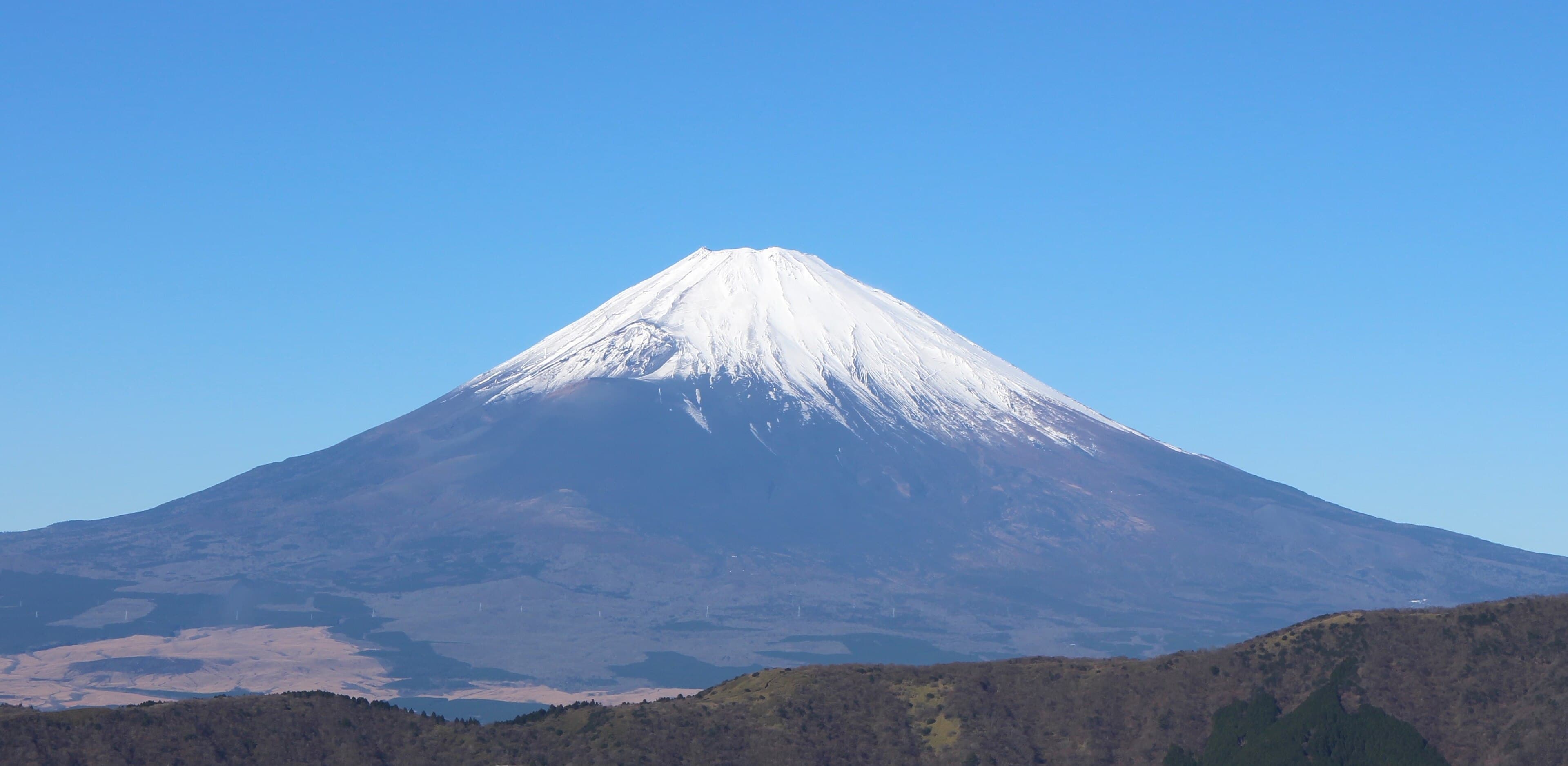
Mount Fuji is famous for its shape. The sides slope down at almost exactly the same angle on every side, making an almost-perfect triangle. That shape, with a snowy top, has been drawn and painted in Japan for hundreds of years - it is one of the most recognisable mountains in the world.
Every summer, around 300,000 people climb Fuji. Most start in the afternoon, sleep in a wooden mountain hut halfway up, and then wake at 3 a.m. to walk to the top for sunrise. The first light at the summit is so special in Japan that it has its own name: goraikō, meaning 'the arrival of light'.
Fuji is part of the 'Ring of Fire' - the chain of volcanoes that runs all the way around the edge of the Pacific Ocean. Most of Japan's mountains were made by volcanoes. Fuji's last big eruption was in 1707. Scientists watch it carefully, but it has been sleeping for a very long time.
The mountain is a UNESCO World Heritage Site - recognised as important for the whole world. It is also seen as one of Japan's 'Three Holy Mountains', and many old paintings and woodblock prints, like Hokusai's famous Thirty-Six Views of Mount Fuji, feature it.