
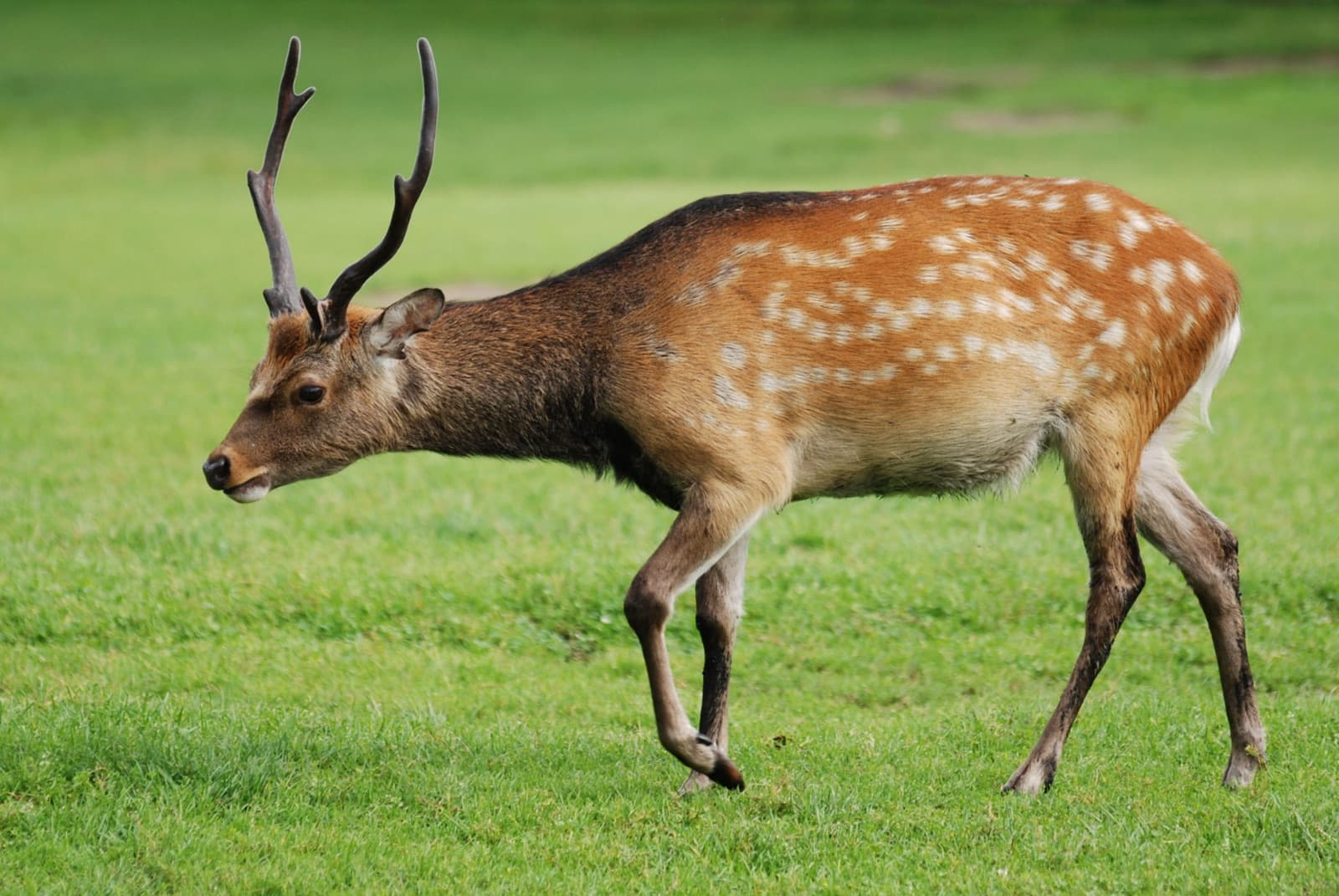
Nara was Japan's capital city about 1,300 years ago. The deer have wandered the city for nearly as long. They are protected as a 'national natural treasure', which means it is against the rules to harm them. Locals see them every day, walking past shops, sitting outside temples, even crossing roads at zebra crossings.
The bowing is real. Tourists buy special biscuits called shika senbei from stalls in the park. If you hold one up, the deer dip their heads, often again and again, until you hand it over. Scientists think the deer learned that bowing makes humans give them food faster - so they keep doing it.
Sika deer keep their spotty pattern even as grown-ups, which is unusual - most deer lose their spots after they grow up. The males also grow new antlers every spring, which means a sika stag can carry around a fresh pair of antlers each year, like a new hat.
Sika deer also live in other parts of Japan, in the forests of Hokkaido and Honshu. They have become so popular that they have been moved to Britain, Ireland, the United States and Australia. So if you ever see a small spotty deer outside Japan, it might have Japanese cousins.