
Classroom lesson 路 Castles馃嚡馃嚨 Japan

The castles of Japan

Wooden castles with curved roofs, over 100 still standing

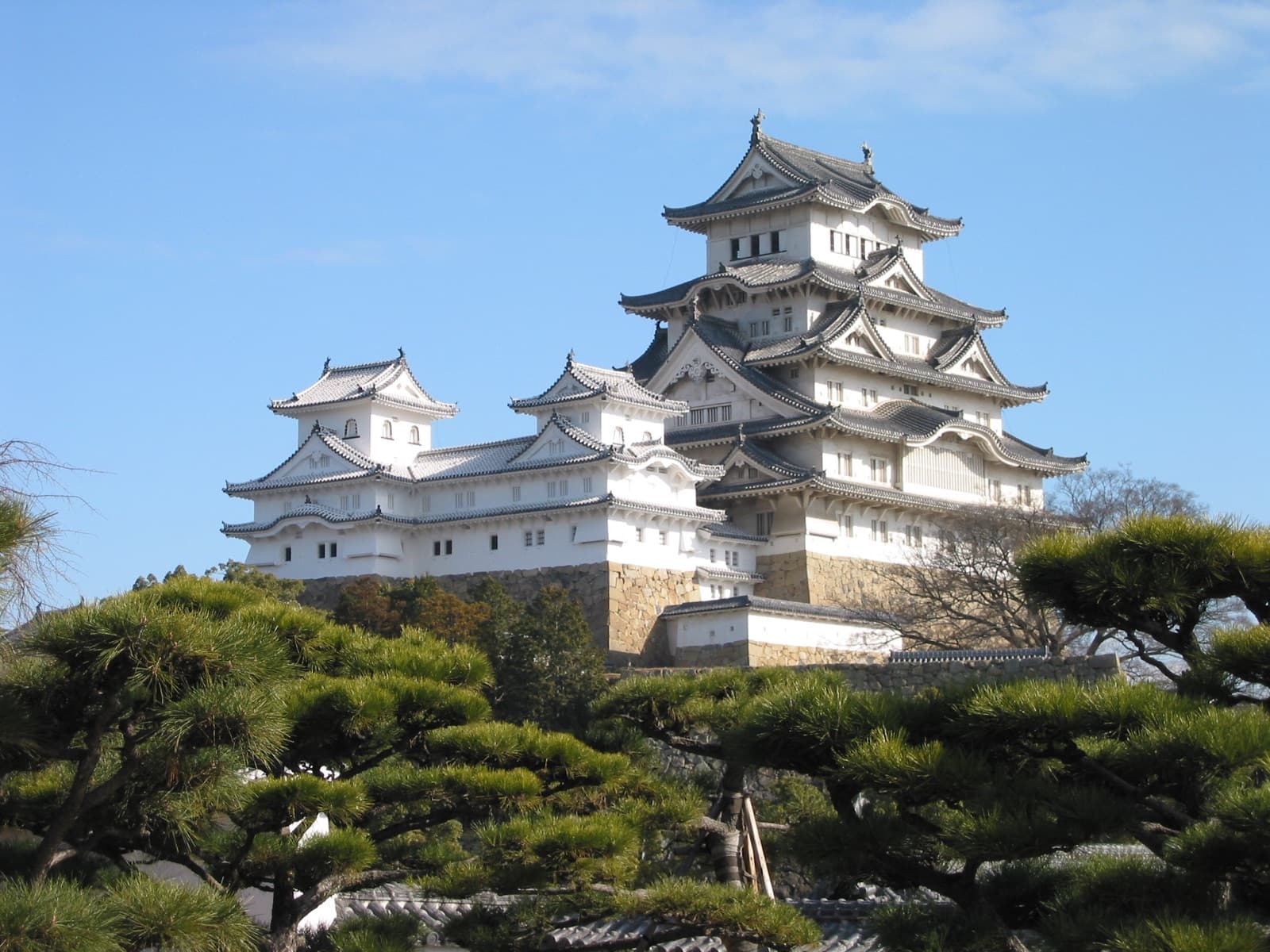
Himeji Castle, a brilliant white Japanese castle with stacked curved roofs

Photo 路 Wikimedia Commons

What is it?

Japan has more than 100 castles still standing today. They look very different from the stone castles of Europe. Japanese castles are mostly made of wood and have stacked roofs that curve up at the corners. Many sit on huge stone foundations that look like giant staircases of rock.

Tell me more

The most famous is Himeji Castle, in the city of Himeji. It is so brilliantly white that people call it 'the white heron' - because it looks like a big white bird about to take off. It has six floors and 83 different rooms. Most of the building has been standing for over 400 years.

Japanese castles were built on top of enormous stone bases. The stones weren't cemented together - they were carefully shaped to fit like a puzzle. This 'cyclopean masonry' is so cleverly made that the bases have survived hundreds of earthquakes.

Inside, the castles have winding stairways, hidden rooms and gentle wooden floors that creak when you step on them. Some floors were built to creak on purpose, like a wooden alarm system. They're called 'nightingale floors' because the sound is a bit like a bird singing.

Today, the castles aren't homes anymore. Most have been turned into museums where children visit on school trips. You take off your shoes at the door, just like at a Japanese home, and walk around in socks. Some castles have free 'try on a kimono' days for kids.

In the classroom

Walk your class through this in 15 minutes.

Talk together

Discussion prompts

  1. 01Why might it be useful to have floors that make a noise when you walk on them?
  2. 02Japanese castles are made of wood. European castles are mostly stone. Why might that be?
  3. 03If you could design your own castle, what one clever feature would you add?
Try this

Classroom activity

On A3 paper, design your own castle. It must have: 1) a stone base; 2) stacked roofs that curve up at the corners; 3) one secret feature (a hidden room, a nightingale floor, a sliding wall). Give your castle a name and a nickname (like 'The White Heron').