
Classroom lesson 路 Wildlife馃嚡馃嚨 Japan

The red-crowned crane

A tall, elegant white bird with a red dot on its head, said to bring luck

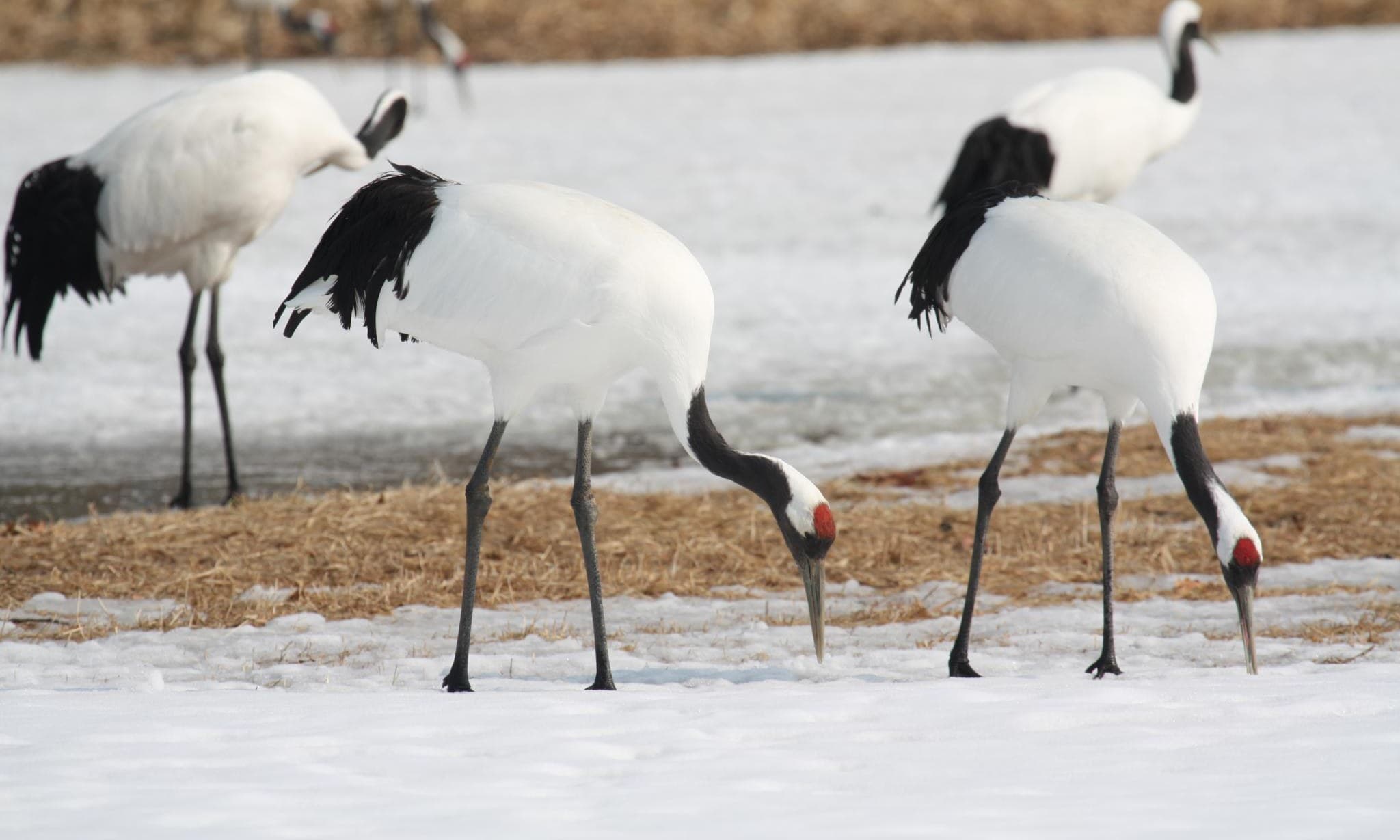
Red-crowned cranes - large white-and-black birds with a red patch on the head - standing on snow

Photo 路 Wikimedia Commons

What is it?

The red-crowned crane is one of the tallest birds that fly. It stands almost 1.6 metres high - taller than many adults - and has bright white feathers, black wing-tips and a small red patch on top of its head, like a little crown. In Japan it is a symbol of long life and good luck.

Tell me more

Red-crowned cranes live mostly on the snowy island of Hokkaido in northern Japan. They walk slowly through marshes looking for fish, frogs and small water creatures. In winter, the cold air freezes the marshes, so the cranes gather where warm streams keep the water open.

Cranes are famous for their dance. When a pair likes each other, they do a courtship dance together - jumping, bowing, flapping their huge wings and tossing twigs into the air. Crane pairs often stay together their whole lives. They greet each other with their dance each spring.

In Japanese tradition, the crane has long been a sign of good fortune. There is an old folk story that anyone who folds 1,000 paper cranes (origami cranes) will be granted a wish. Even today, in Japan, children fold strings of paper cranes to give as get-well-soon presents.

Red-crowned cranes are rare. Long ago there were only about 20 left in Japan. Today, thanks to people protecting their marshes and feeding them in deep winter, there are around 1,800. Many fly between Japan, China and Korea - they don't notice borders, just where the food is.

In the classroom

Walk your class through this in 15 minutes.

Talk together

Discussion prompts

  1. 01Why do you think people in many countries see cranes and other tall birds as special?
  2. 02What would the world feel like if a wish was granted for every 1,000 paper cranes?
  3. 03What's a small thing you could do to help wild birds where you live?
Try this

Classroom activity

Learn to fold one origami crane as a class (there are video guides online). Each pupil folds one. As the cranes pile up, count how many you have together. How many would you need before you reached 1,000? How long would that take?