
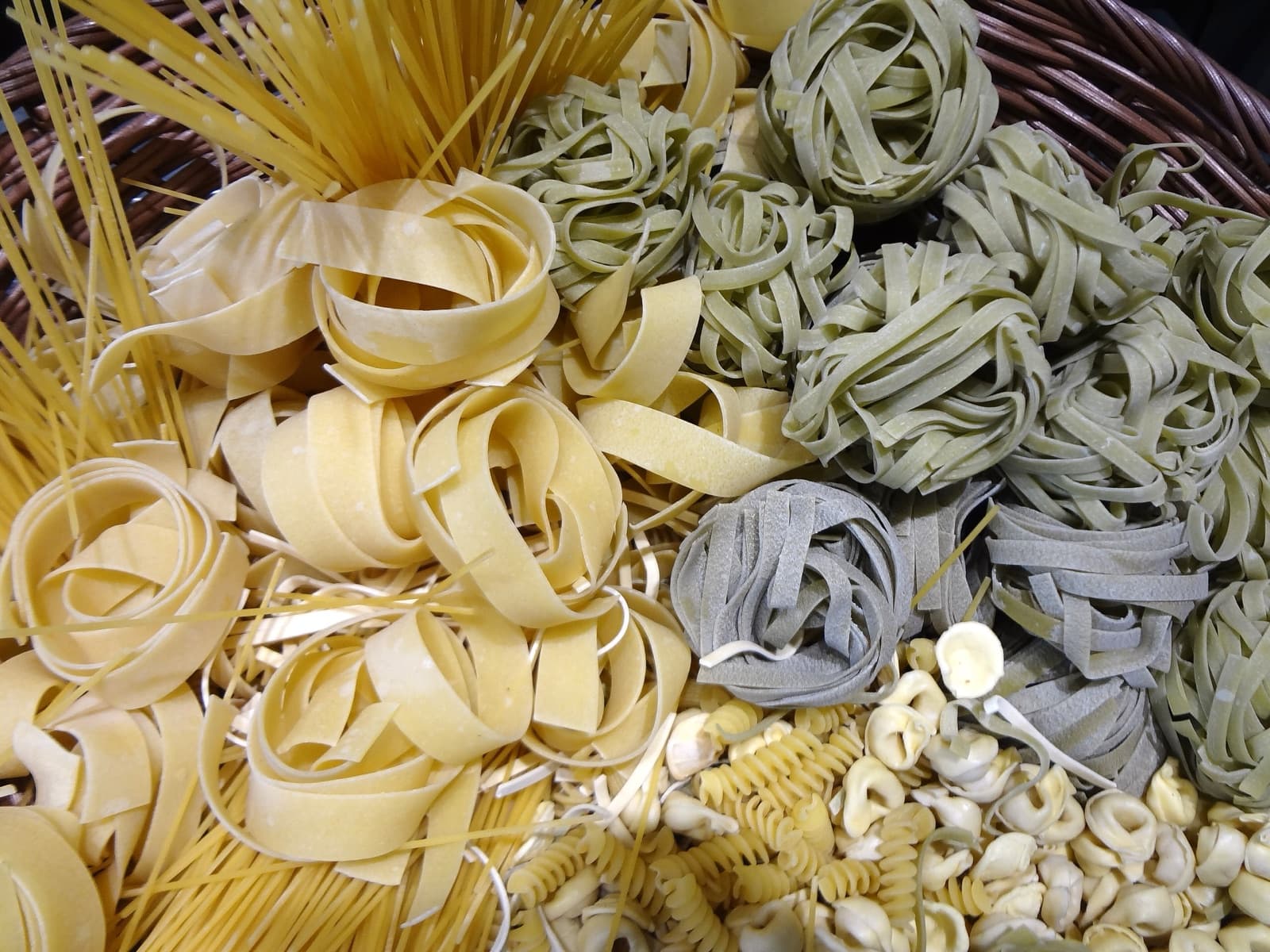
Different shapes hold sauce in different ways. Long, smooth shapes like spaghetti are best with smooth, slippery sauces. Twisty shapes like fusilli have lots of little nooks where chunky sauce gets trapped. Tubes like penne are perfect for thick sauces that can sneak inside. Even tiny pasta - so small it looks like rice - is used in soups.
Many shapes are named after what they look like. Farfalle means 'butterflies'. Conchiglie means 'shells'. Orecchiette means 'little ears'. Lumache means 'snails'. Capelli d'angelo means 'angel hair'. Linguine means 'little tongues'. The names are like a tiny tour of Italian.
Different regions of Italy have their own favourite shapes. In the south, where it is hot and dry, people make dried pasta that keeps for months in the cupboard. In the north, people often make fresh pasta from scratch, using eggs and rolling it out by hand. A grandparent in northern Italy might make their own ravioli on a Sunday morning the way another family bakes bread.
Italians take pasta very seriously. There are unwritten rules: you don't break long pasta before cooking it (it ruins the way it twirls), you don't put cheese on seafood pasta, and the sauce should never drown the pasta - the pasta is the star, the sauce is the costume.