
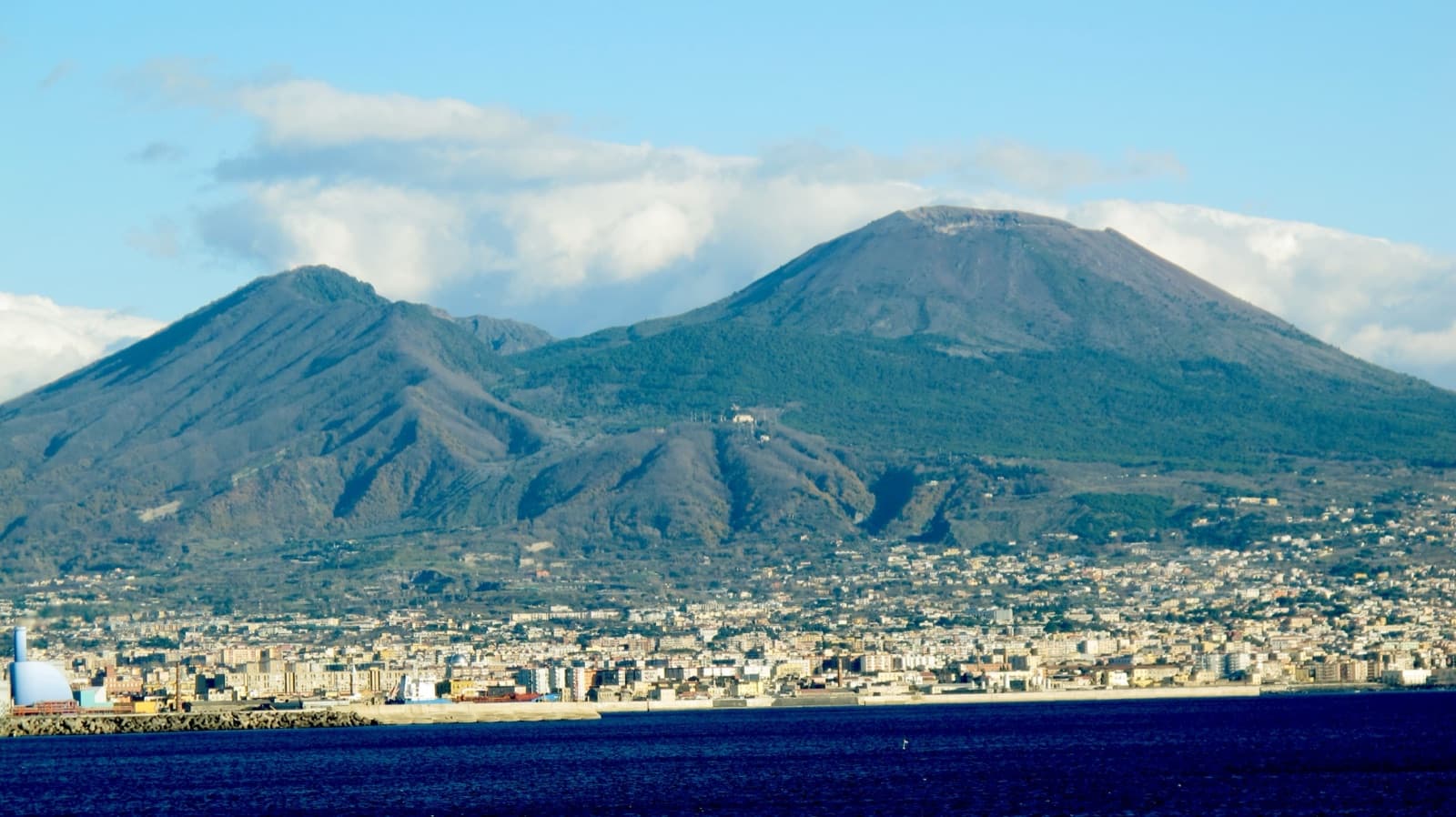
A volcano is a mountain with a special connection to the hot rock deep inside the Earth. Most of the time, Vesuvius looks like a quiet, friendly mountain with farms and vineyards on its slopes. But every few hundred years, melted rock from inside the Earth pushes its way up and the volcano erupts, sending up clouds of ash and rivers of lava.
Around 2,000 years ago, Vesuvius covered a nearby Roman town called Pompeii in a deep layer of volcanic ash. The town was lost for centuries. When people dug it up again, they found the streets, shops, mosaics and even bread rolls in the bakeries, all preserved like a frozen-in-time snapshot of Roman life. You can walk through Pompeii today.
Italy has several other active volcanoes. The biggest is Mount Etna on the island of Sicily, which erupts so often that the people who live nearby treat it like a moody neighbour. Etna is also Europe's tallest active volcano, at over 3,300 metres.
Volcanoes are not just dangerous - they are also brilliant for growing things. The soil around Vesuvius is some of the most fertile in Italy. Tomatoes grown on its slopes are famous for being especially sweet, and farmers have been planting on the same patches of land for a very long time.