
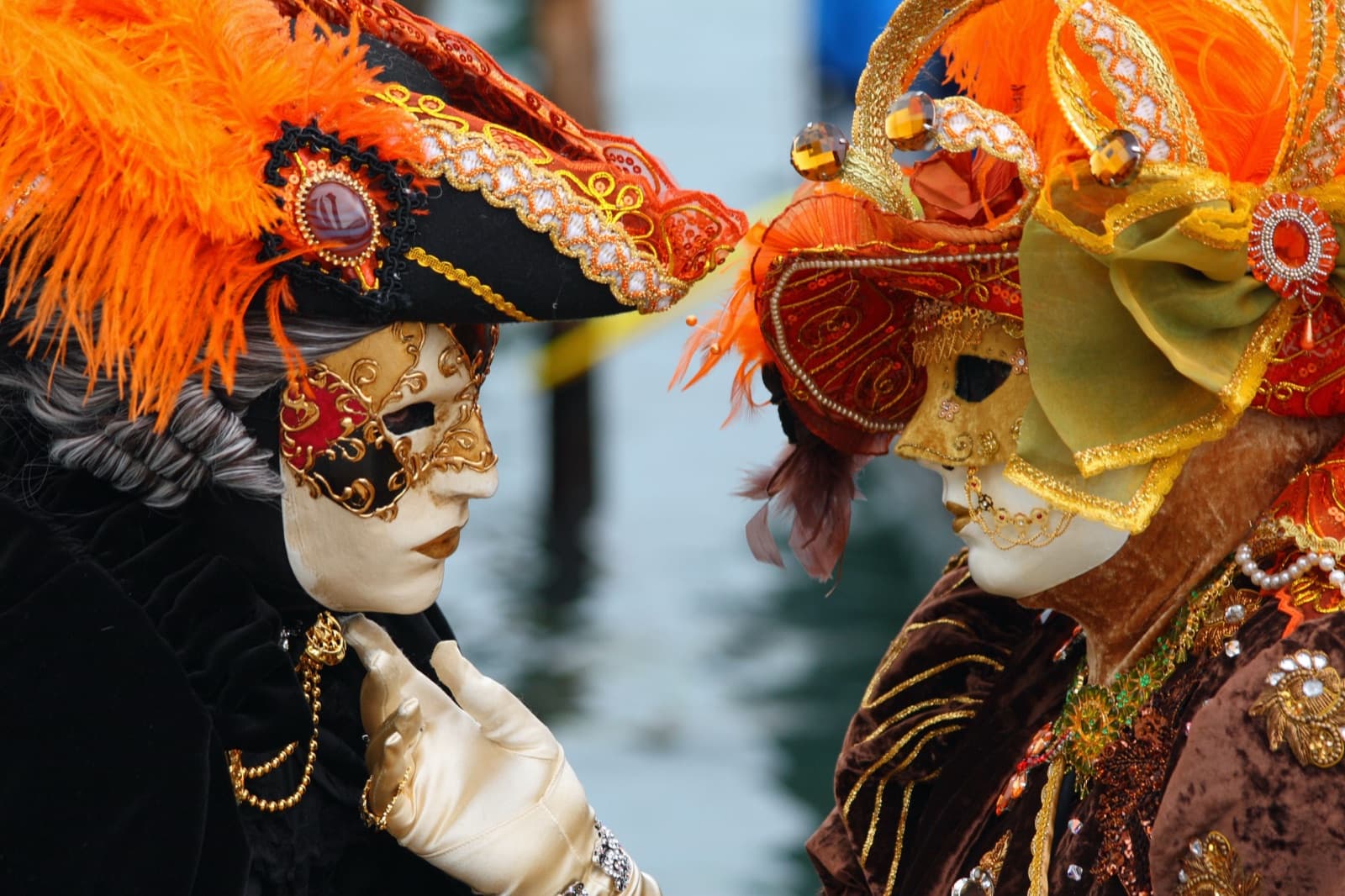
Carnevale started around 900 years ago. The idea was that for a few weeks in the year, everyone could put on a mask and become someone new. A baker could dress as a prince. A prince could dress as a fish. With a mask on, you couldn't tell who anyone was - so for those days, all the usual rules about who was important melted away.
Venetian masks are works of art. The most famous ones are made of papier-mâché (paper soaked in glue and shaped over a mould), then painted in gold and bright colours and decorated with feathers, beads and lace. Some masks cover the whole face. Others cover only the eyes, like a butterfly. Mask-makers in Venice still make them by hand in tiny workshops.
Venice is a city built on water. Instead of cars there are boats. Instead of streets there are canals. During Carnevale, the city becomes a giant outdoor party - musicians play in the squares, jugglers spin in the alleys, and people in incredible costumes glide along the Grand Canal in gondolas (Venice's long, slender boats).
Carnevale is also a big food festival. People eat fritters - little fried pastries dusted in sugar - called frittelle, and ribbon-shaped sweet pastries called galani. Every Venetian family has their own recipe, and lots of bakeries only sell these treats during Carnevale.