
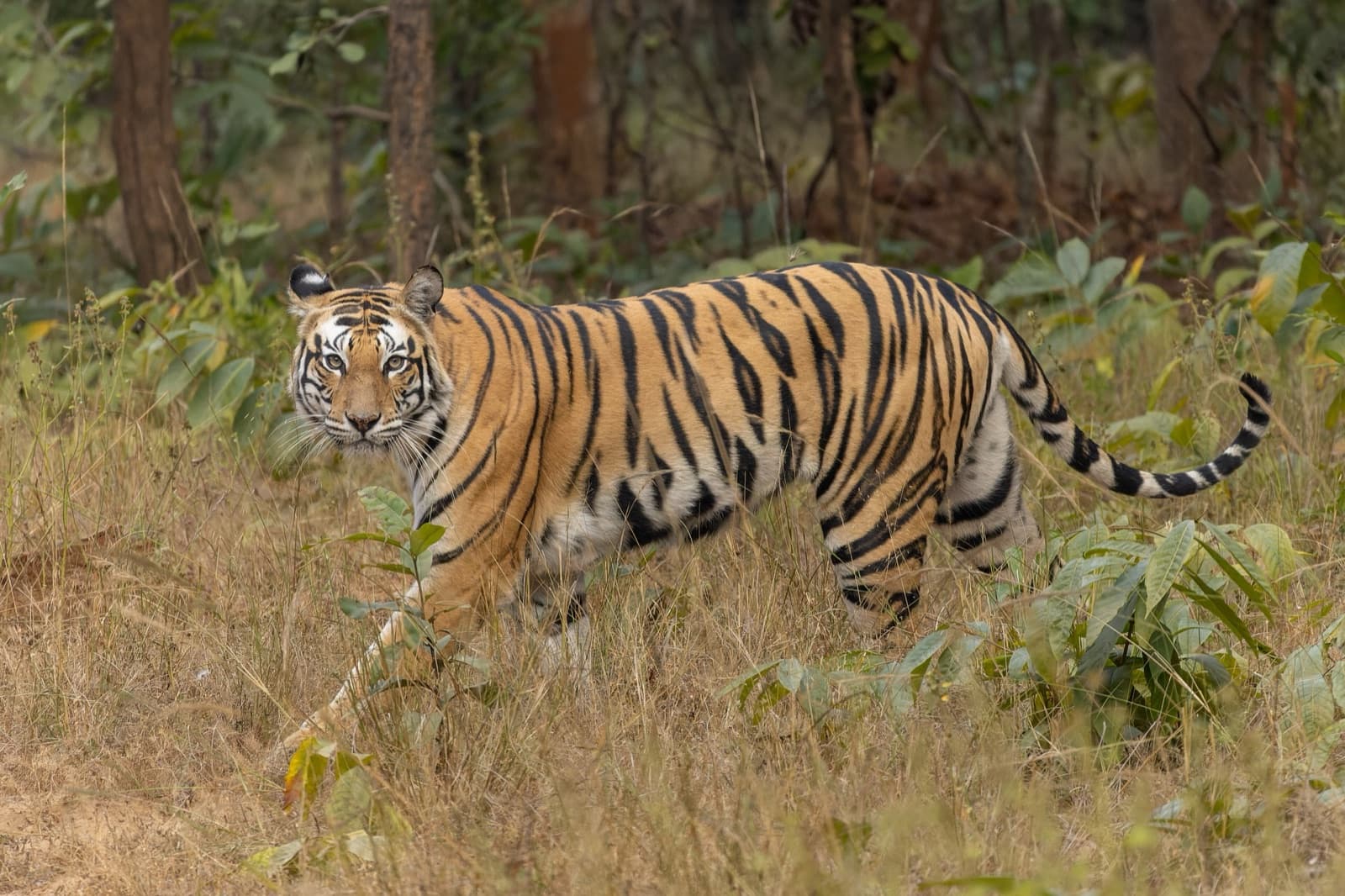
A grown male Bengal tiger can weigh more than 220 kilograms - about the same as three big adults. From nose to the tip of its tail it can be over 3 metres long. Despite their size, tigers are very quiet on their feet. The pads on their paws act like padded slippers, letting them creep up on prey without making a sound.
Every tiger has a unique pattern of stripes. Just like fingerprints in humans or stripes on a zebra, no two tigers share the same pattern. Park rangers in India use special hidden cameras in the forest. When a tiger walks past, its photo is taken and computers compare the stripes to find out exactly which tiger it is.
Tigers live alone for most of their lives. Each tiger has its own piece of forest - a 'territory' - which can be 50 to 100 square kilometres for a male. They mark the edges of their territory by scratching trees high up and by leaving scent so other tigers know to stay away. Mums and their cubs are the exception - the cubs stay with mum for about two years.
There used to be many more tigers across Asia. About 100 years ago there may have been 100,000 in the wild. By the 1970s there were just a few thousand. India started a programme called 'Project Tiger' in 1973, which created safe protected forests just for them. The number of wild tigers in India is now growing again.