
Classroom lesson 路 Highest peak馃嚠馃嚦 India

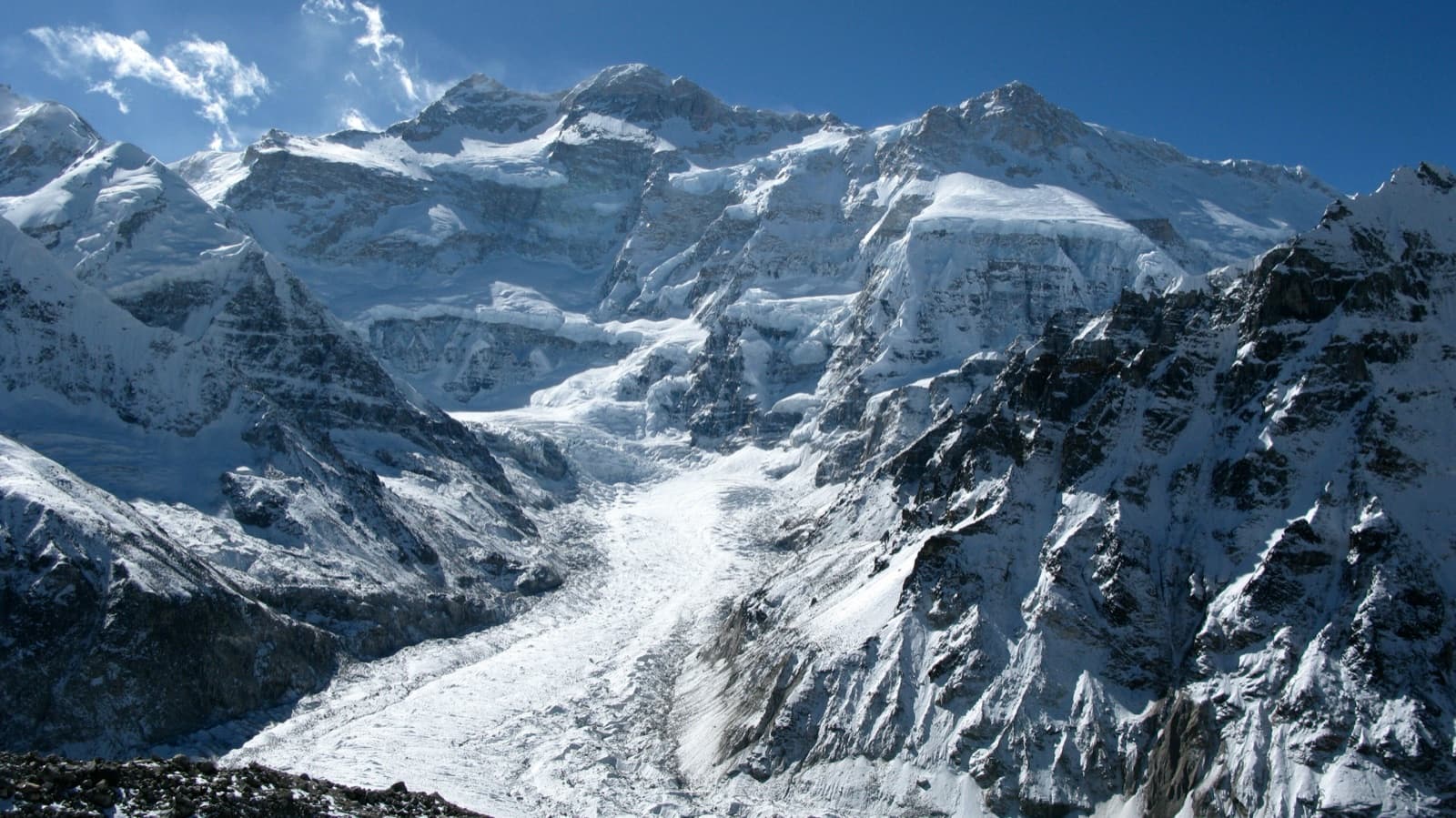
Kangchenjunga and the Himalayas

India's highest peak, in the tallest mountain range on Earth

The snowy peaks of Kangchenjunga rising above a glacier

Photo 路 Wikimedia Commons

What is it?

Kangchenjunga is the highest mountain in India and the third-highest mountain in the world. It sits on the border between India and Nepal, in the giant range of mountains called the Himalayas - which is sometimes called 'the roof of the world'.

Tell me more

Kangchenjunga is 8,586 metres tall. That is nearly 10 times the height of the tallest building most people have ever seen. The air at the top is so thin that even strong climbers have to carry tanks of oxygen with them to breathe.

The Himalayas are the youngest big mountains on Earth - only about 50 million years old, which sounds like a lot but is young for a mountain. They were made when two giant pieces of the Earth's crust crashed together and pushed the land upwards. The mountains are still growing by a few millimetres every year.

The Himalayas run along the top of India like a giant wall. They include Mount Everest (the highest mountain on Earth) and over a hundred peaks above 7,000 metres. Many of India's biggest rivers start as melted snow up in these mountains and flow all the way across the country.

People who live in the Himalayan villages are some of the best mountaineers in the world. The Sherpa people, for example, grow up walking and carrying things at very high altitudes. Their bodies are extra good at using the thin mountain air, and climbers from all over the world rely on them as guides.

In the classroom

Walk your class through this in 15 minutes.

Talk together

Discussion prompts

  1. 01Why do you think the air gets thinner the higher you go up a mountain?
  2. 02If two giant pieces of rock crashed together to make the Himalayas, what other landforms might that explain around the world?
  3. 03What would be the hardest thing about living halfway up a Himalayan mountain?
Try this

Classroom activity

On A3, draw the side view of Kangchenjunga (8,586 m) next to your school building. Use a scale (e.g. 1 cm = 100 m). Then add Mount Everest (8,849 m) and your local highest hill. How tiny does your school look?