
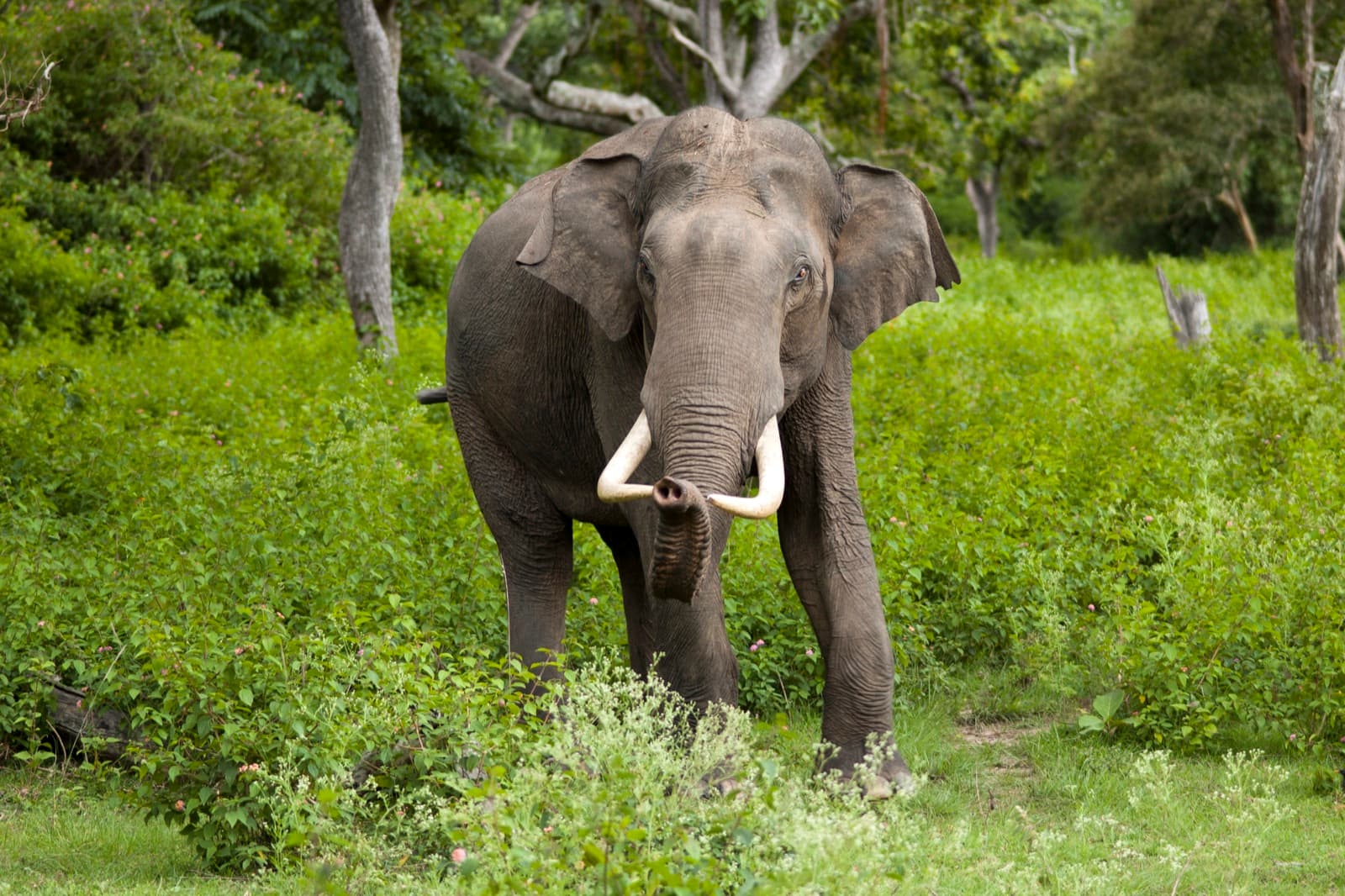
An Indian elephant weighs around 4,000 kilograms - that's the weight of a small lorry. They eat for about 16 hours a day. They have to: a single elephant gets through up to 150 kilograms of grass, leaves, fruit and bark every single day. That's like eating 600 apples for breakfast and then doing it again at lunch.
Their trunks are amazing tools. An elephant uses its trunk to drink (it can suck up 8 litres of water at once), to pick a single leaf from a tree, to greet a friend by touching trunks, and even as a snorkel when it swims across a river. Indian elephants love water - they will splash around and 'shower' themselves for hours.
Indian elephants live in family groups led by an older female - the matriarch. She remembers where to find water in dry months, which routes are safest, and which other families are friends. Babies are looked after by all the females together. An elephant calf walks just hours after being born and stays close to mum for years.
In many parts of India, elephants have been part of human life for thousands of years. They appear in stories, in art, and in temple parades wearing bright fabrics. Today, India works hard to protect them - many forests have special 'elephant corridors' so the herds can walk safely between protected areas.