
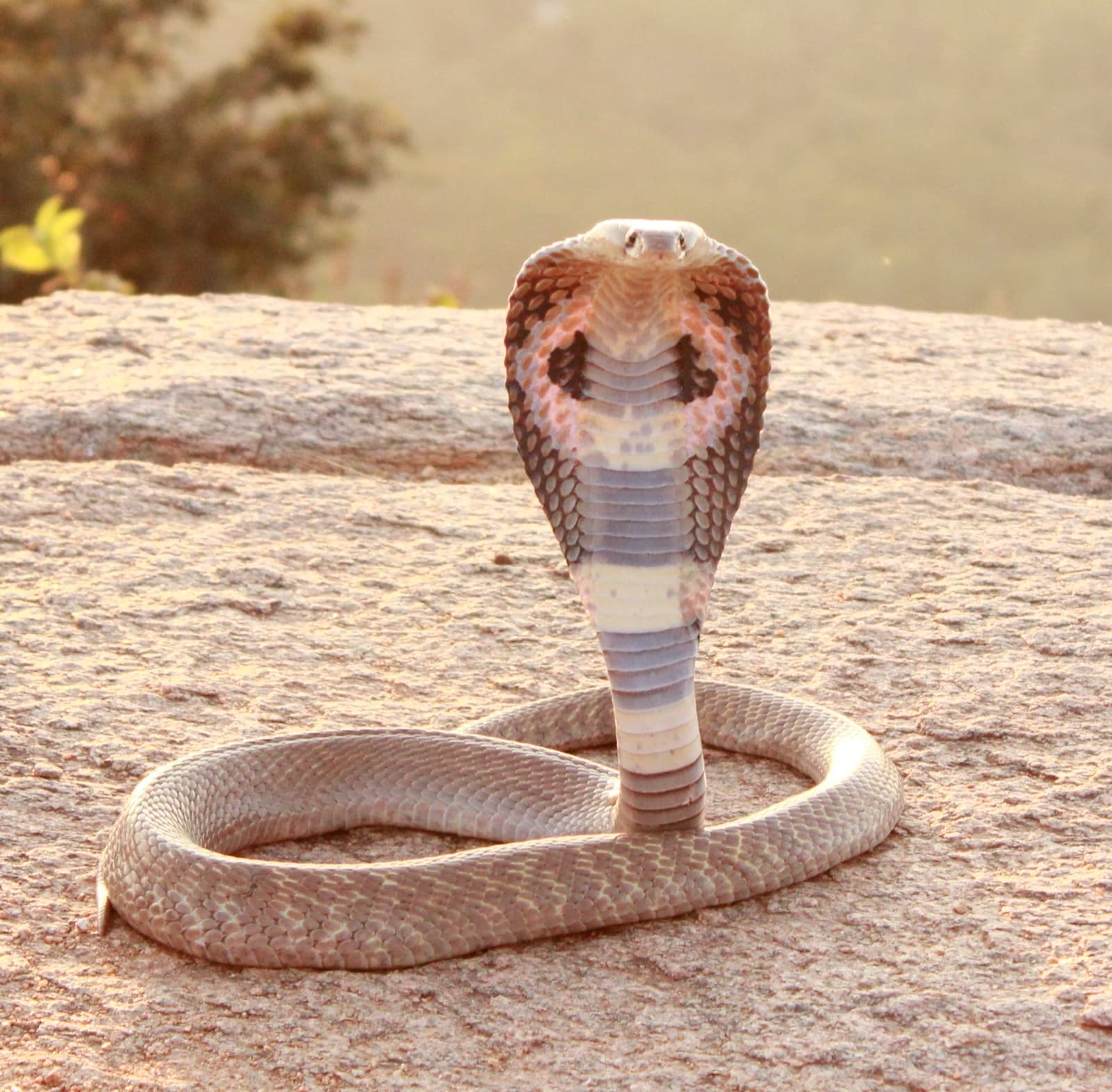
An Indian cobra is usually about 1 to 1.5 metres long - shorter than most adults are tall. They live across India in fields, forests, and even sometimes near villages. They feed mostly on rats and mice, which is actually very helpful: by eating rats, cobras help protect rice and grain stores.
Cobras don't want to bother people. If a cobra and a person meet on a path, the cobra will almost always slither away if it can. The hood comes out only when it cannot escape and feels cornered. The flat, open hood often shows a pattern on the back, a little like a pair of eyes - it makes the cobra look bigger and scarier from the front.
Snakes are an important part of nature. They eat smaller animals that would otherwise grow in big numbers. Without snakes, rat populations would explode, and farms would lose much more food. So even though cobras are dangerous to bother, they are extremely useful to leave alone in their habitat.
If anyone is bitten by a cobra in India, doctors have a medicine called 'antivenom' that can help. Antivenom is made by scientists who carefully collect a tiny bit of the snake's venom and use it to make a cure. The medicine is kept in hospitals across the country - just one of the clever ways humans and snakes share the same land.