
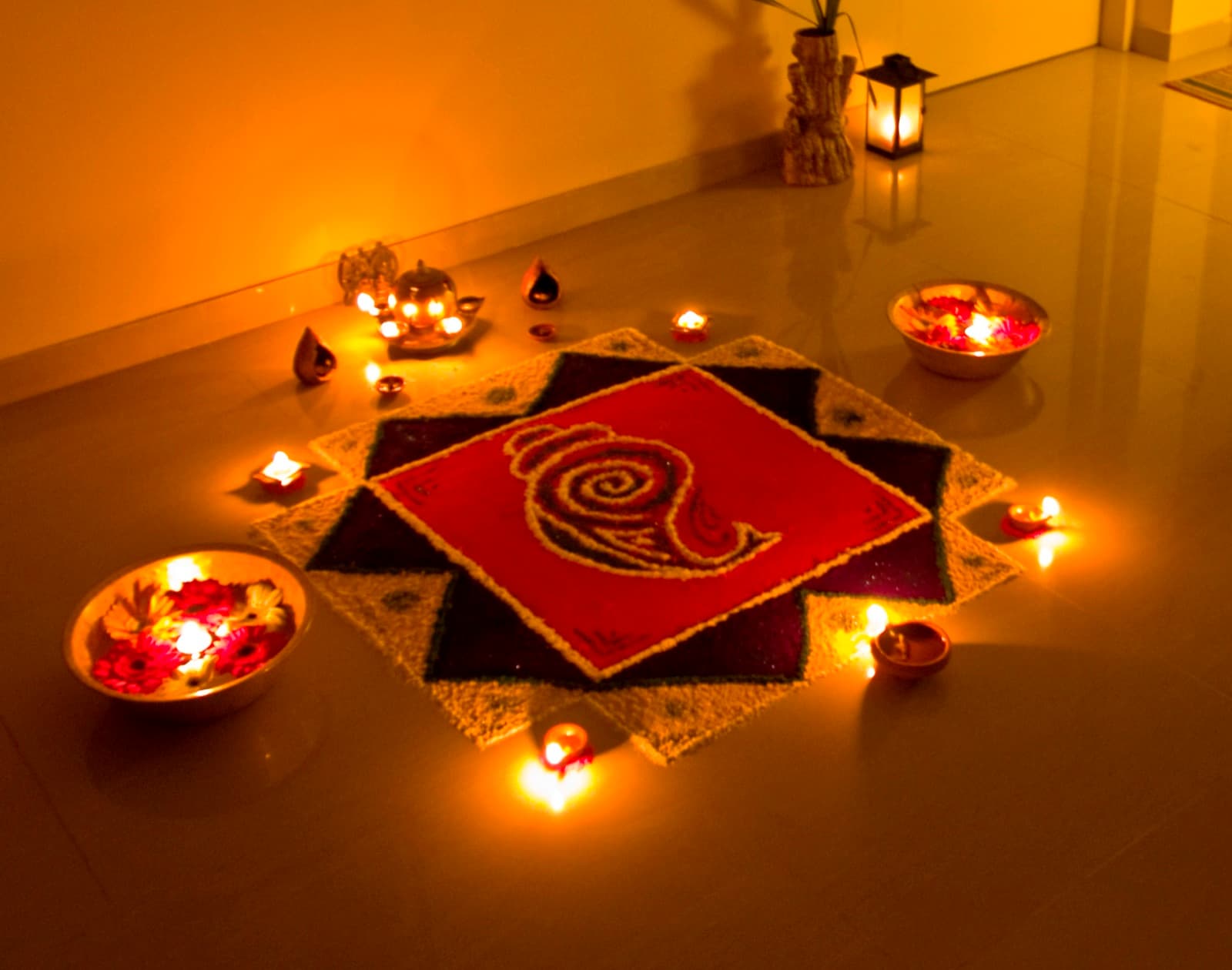
The word 'Diwali' comes from a phrase meaning 'a row of lights'. The little lamps people light are called 'diyas'. A diya is a small clay cup with oil and a cotton wick. When you place rows of them on your windowsills and along the path to your front door, your whole house seems to glow.
On the floor by the door, many families make beautiful patterns called 'rangoli'. They use coloured powder, rice, flower petals or sand. The patterns are often circles and flower shapes, in bright colours - pinks, oranges, greens, yellows. They are made fresh for the festival and brushed away afterwards.
Diwali is a time for sharing. Families clean their houses from top to bottom, put on new clothes, and visit their neighbours with boxes of sweets. The sweets are a big deal: little fudgy squares called barfi, syrupy spirals called jalebi, and round milk balls called gulab jamun. Most children get pocket money or small gifts.
After dark, fireworks light up the sky in every town and village across India. It is one of the most-fireworked nights in the world. Many cities now also have light shows and lantern displays to celebrate. Diwali is celebrated by people in many cultures, and you can find Diwali events in cities all around the world.