
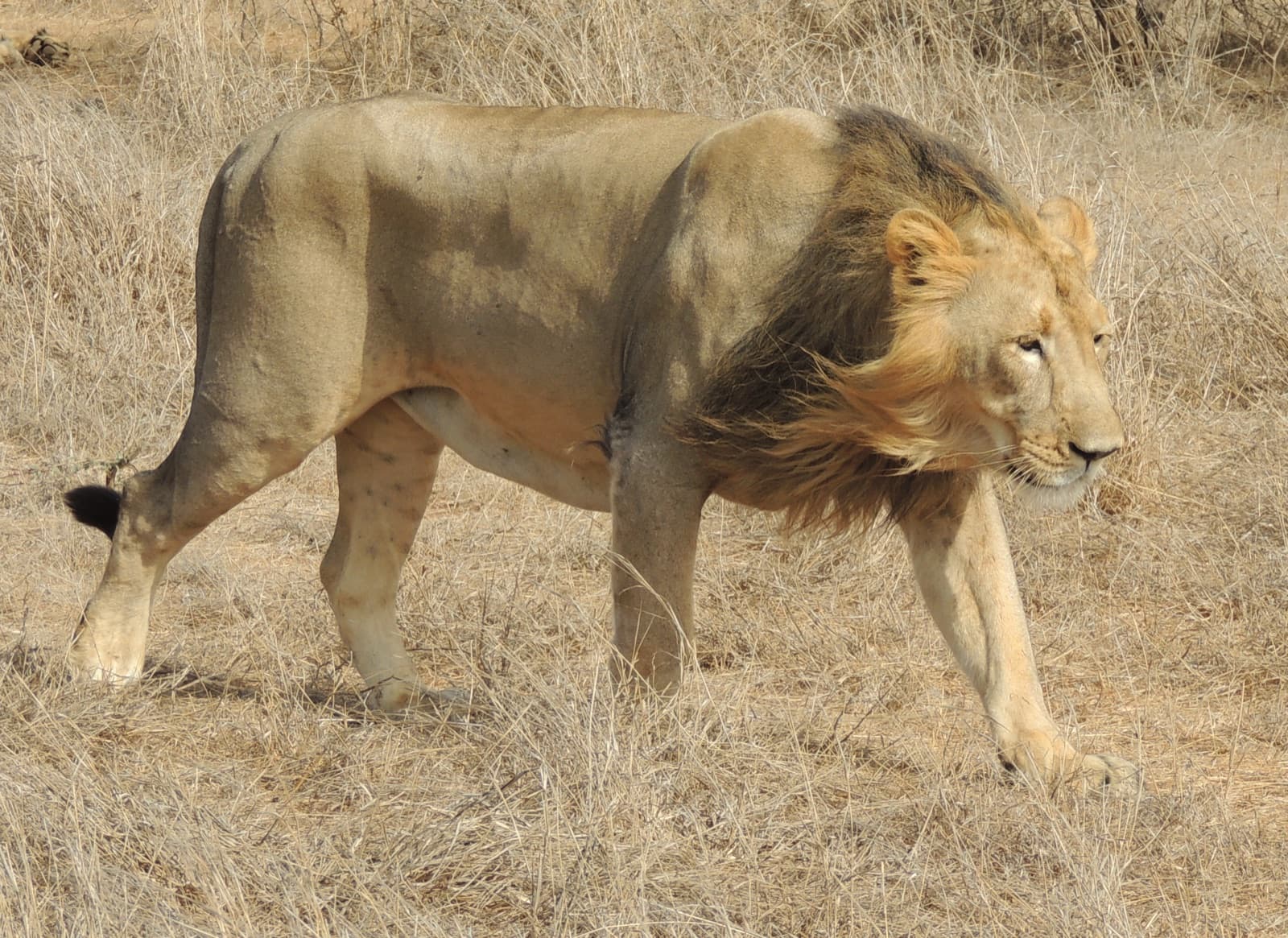
Asiatic lions are slightly smaller than African lions, and the males have a smaller mane - their ears usually stick out the top. They have a special fold of skin running along their belly that African lions don't have. Scientists can tell which kind of lion they are looking at by these little details.
About 100 years ago, there were only around 20 Asiatic lions left in the world. The forest where they lived was getting smaller and smaller. The Maharaja (ruler) of the area at the time made it illegal to hunt them - and the small population very slowly started to recover. Today there are over 600 wild Asiatic lions in Gir, and the number is still growing.
Just like African lions, Asiatic lions live in family groups, but their groups are usually smaller. Lionesses are the main hunters and the males defend the territory. Lion cubs are born small, fluffy and spotted - the spots fade as they grow up. The whole family looks after the cubs together.
Gir Forest is open and dry, with low trees and scattered grass. Many other animals live there too - deer, jackals, peacocks, and the same kind of leopard you might see in other parts of India. People who live in villages around Gir know to watch where they walk. The lions are usually shy of humans, but they are wild animals deserving plenty of space.