
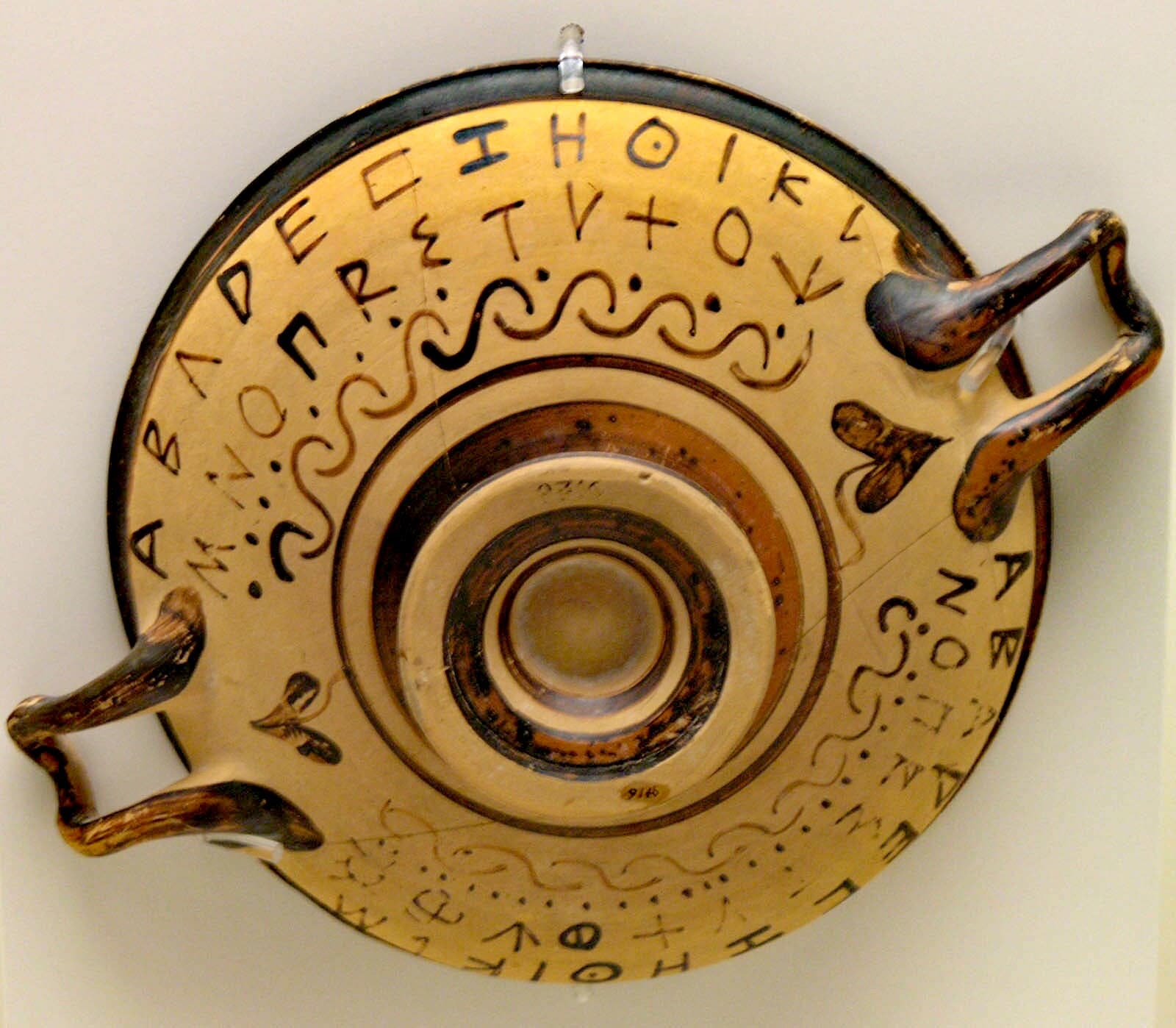
The Greek alphabet started around 2,800 years ago. The Greeks borrowed letter shapes from another ancient people called the Phoenicians, then added something nobody had done before - separate letters for vowels (the a, e, i, o, u sounds). That is a big deal, because it lets you spell out almost any sound.
The word 'alphabet' itself is Greek. The first two letters of the Greek alphabet are alpha (A) and beta (B) - alpha + beta = alphabet. The letters carry on: gamma, delta, epsilon, zeta, eta, theta... right through to omega at the end. Many of those names probably sound familiar - they get used in maths, science and even computer games.
Some Greek letters look exactly like English ones. A is A, M is M, Z is Z. Some look the same but make different sounds (a Greek P makes an 'R' sound; a Greek H makes an 'EE' sound). And some look totally different: Δ is a 'd' and Ω is an 'o'.
When the Romans came along, they borrowed the Greek alphabet, changed a few letters, and made what we now call the Latin alphabet - the one you use to read this. So every time you write a letter in English, you are using a shape with a Greek ancestor.