
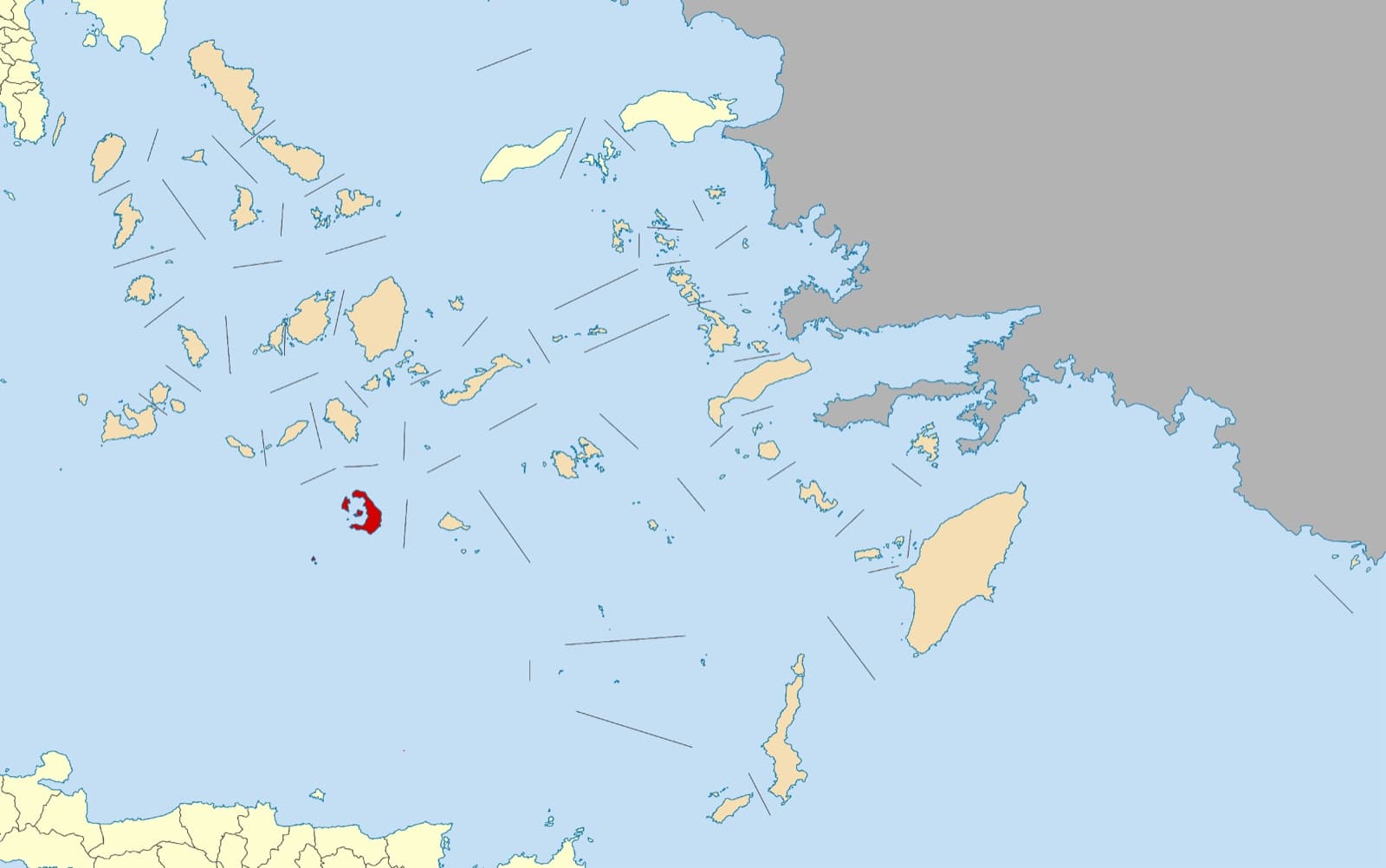
If you flew over Greece in a plane, you would see deep blue sea full of little patches of brown and green - each one an island. Some are huge, like Crete, which has snow-topped mountains and big cities. Others are barely bigger than a football pitch.
The most famous island for photographs is Santorini. Long ago, a huge volcano in the middle of the island exploded and the centre sank into the sea, leaving a giant curved cliff. People built their villages along the top of the cliff, painting the houses bright white and the church domes deep blue, so they shine like sugar cubes in the sun.
Another famous one is Mykonos, with windmills along the shore that used to grind flour from the wind. Crete is the biggest and has its own ancient palace, where the myth of the Minotaur in the maze was set. Each island has its own food, its own music, even its own special dance.
Because Greece is so spread out across the water, boats matter a lot. Many Greek families live on one island and travel by ferry to others to visit grandparents or go to bigger schools. Some of the smallest islands have just one school with five or six pupils in it.