
Classroom lesson · The Acropolis and the Parthenon · 🇬🇷 Greece

The Acropolis and the Parthenon

A 2,500-year-old marble temple on a rocky hill above Athens

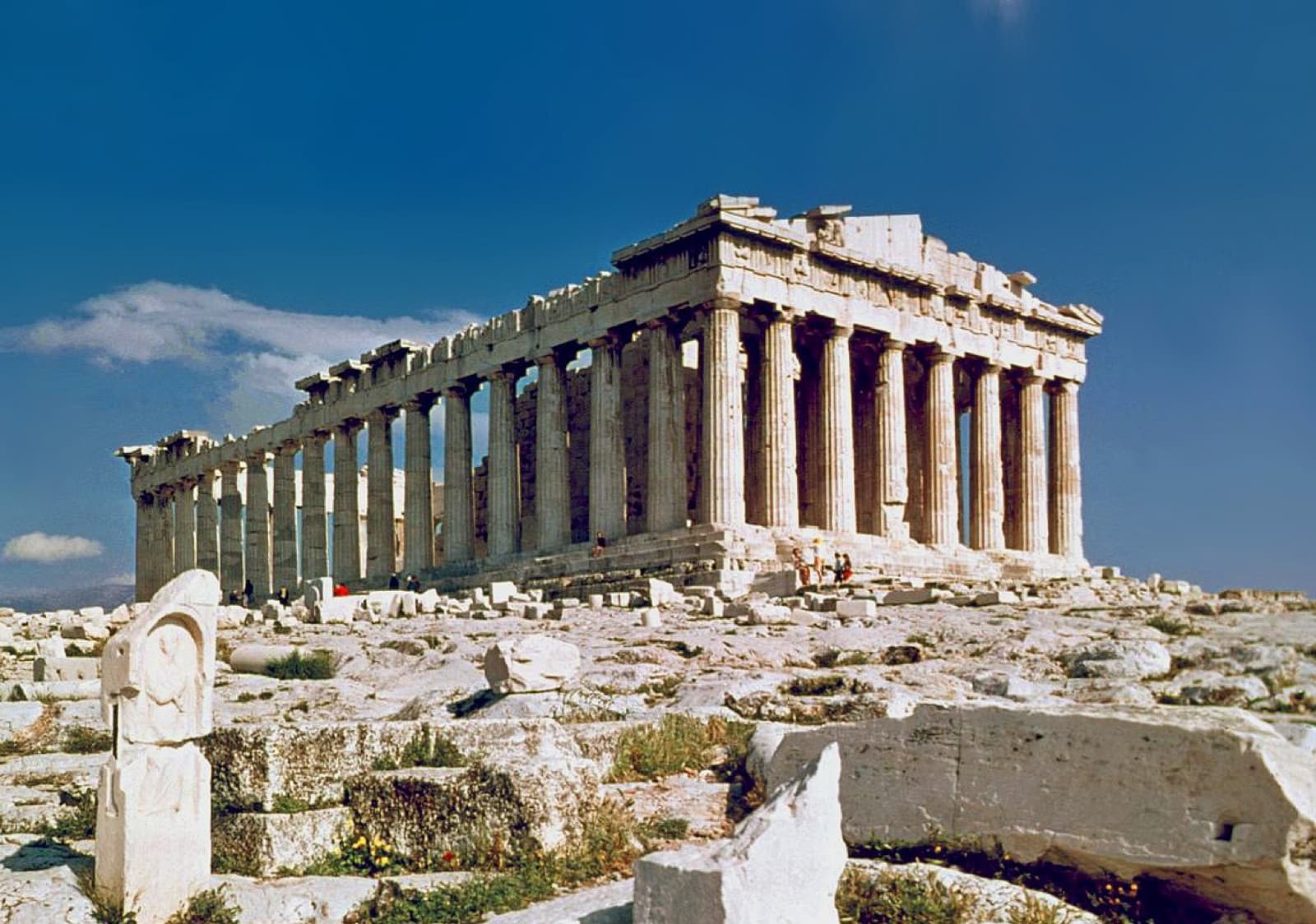
The Parthenon temple on the Acropolis hill in Athens

Photo · Wikimedia Commons

What is it?

The Acropolis is a flat-topped rocky hill that rises right out of the middle of Athens, the capital of Greece. On top of it sits the Parthenon - a beautiful temple made of white marble with tall pillars. It was built around 2,500 years ago, and it is still standing today.

Tell me more

The word acropolis simply means 'high city' in Greek. Many old Greek towns had one - a hill in the middle where people built their most important buildings, because hills are easier to defend and you can see them from a long way off. The Acropolis in Athens is the most famous one in the world.

The Parthenon was built between 447 and 432 BC - that is around 2,500 years ago. Imagine 25 great-grandparents standing one in front of another, and the one at the back was alive when it was being built. The Greeks used hammers and chisels and ropes; no cranes, no electricity, no power tools.

The whole temple is made of marble - shiny white stone quarried from a mountain ten miles away. Workers cut huge blocks weighing many tonnes and pulled them up the hill on wooden sledges. Every column is made of stacked stone drums, fitted so cleanly together that you can hardly see the joins.

The Greeks built the Parthenon to honour the goddess Athena, who in their old stories was the city's special protector. The city is even named after her. Today, no one worships there - it is a place that millions of visitors come to look at and learn from each year.

In the classroom

Walk your class through this in 15 minutes.

Talk together

Discussion prompts

  1. 01Why might people in the old days have built important buildings on a hill instead of on flat ground?
  2. 02The Parthenon was built without cranes or power tools. How do you think the builders moved tonnes of marble up a hill?
  3. 03What is a building near your school or home that you think might still be standing in 2,500 years? Why?
Try this

Classroom activity

On A3, draw the Parthenon as you imagine it looked when brand new. Don't forget the columns - count them: 8 on the short sides, 17 on the long sides. Then write one sentence next to it: what would you want a building you made to be remembered for?