
Classroom lesson · Wildlife · 🇬🇷 Greece

The Dalmatian pelican

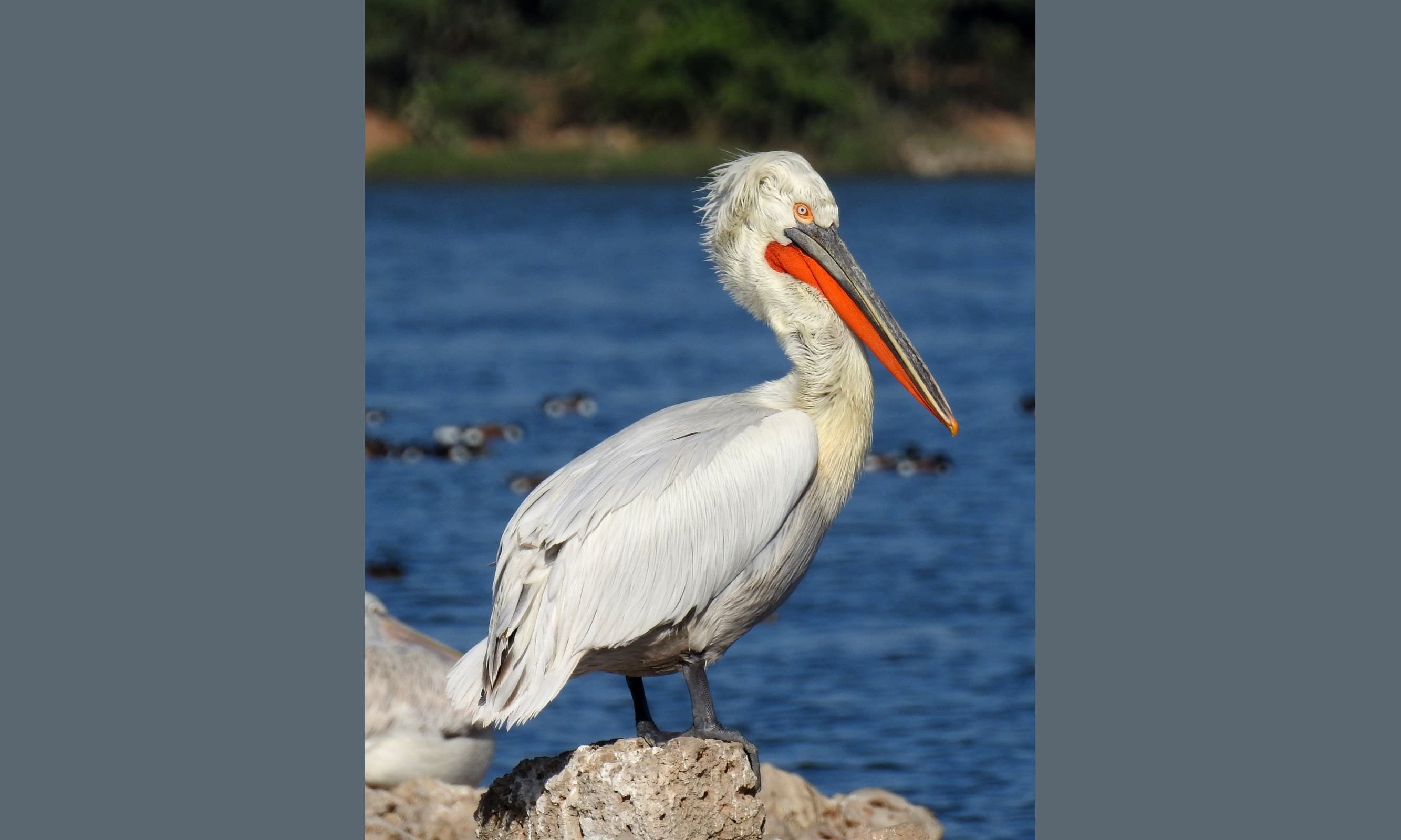
One of the biggest flying birds in the world, with a huge orange pouch

A Dalmatian pelican with its huge orange throat pouch on a Greek lake

Photo · Wikimedia Commons

What is it?

The Dalmatian pelican is one of the biggest birds in the world that can still fly. It has a wingspan of up to 3.5 metres - that's about as wide as a small car. It has silvery-grey feathers, a curly tuft on the back of its head, and a huge bright orange pouch under its beak. Big groups of them live on Lake Kerkini in northern Greece.

Tell me more

Pelicans use that big pouch like a fishing net. They scoop it through the water, catching a mouthful of fish and water at the same time, then they tilt their head, let the water drain out, and swallow the fish. The pouch can hold up to three times more than the bird's stomach.

Lake Kerkini, in the north of Greece, is one of the most important spots in Europe for Dalmatian pelicans. Hundreds of pairs nest there. The lake was made bigger by humans about 80 years ago, and the pelicans loved the change - more shallow water meant more fish.

Pelicans are surprisingly graceful in the air for such big birds. They glide on warm rising air called thermals, hardly flapping their wings at all, sometimes flying high enough to almost disappear. When they land on water, they put their feet out like skis and skim across the surface.

Volunteers in Greece have built special floating wooden platforms in the middle of Lake Kerkini to give the pelicans safe places to nest, away from foxes and other animals on the shore. Each platform fits several pairs of pelicans and their fluffy white chicks - the chicks look like tiny grumpy clouds with beaks.

In the classroom

Walk your class through this in 15 minutes.

Talk together

Discussion prompts

  1. 01Pelicans use their beak pouch as a fishing net. Can you think of other animals that have a built-in tool?
  2. 02Big birds like pelicans glide instead of flapping. Why might that save energy?
  3. 03Floating wooden platforms help pelicans nest safely. How else can humans help wildlife by changing what we build?
Try this

Classroom activity

On A3, draw your own oversized bird. Decide: how wide are its wings, what does it eat, and what 'tool' is built into its body (a pouch, hooked beak, long legs, sticky feet)? Compare with a classmate - whose bird could fly the furthest?