
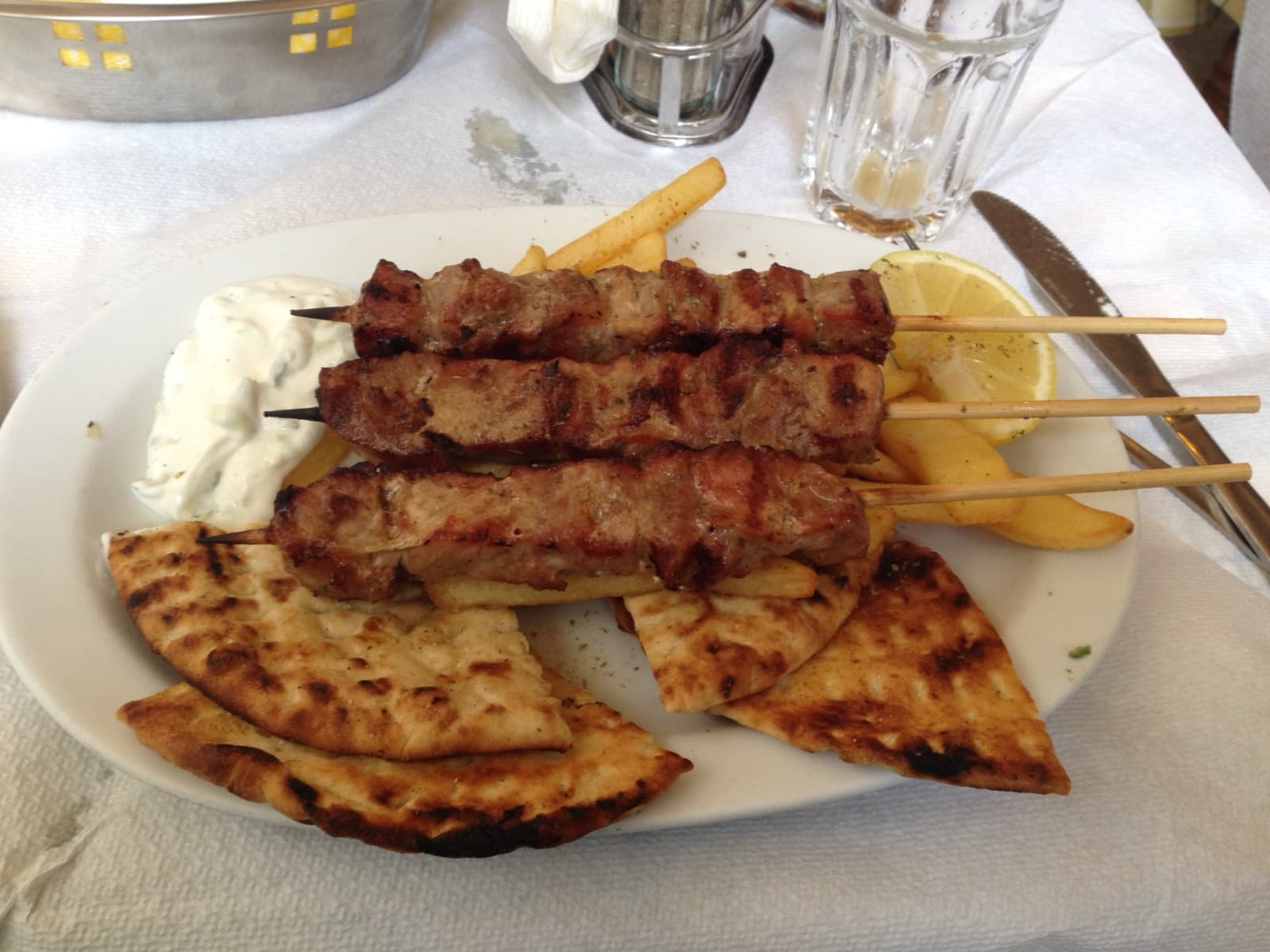
The word souvlaki means 'little skewer' in Greek. You can buy souvlaki from street stalls in every Greek town - the smell of charcoal and grilling meat is a huge part of how a Greek street feels in the evening. A cook turns the skewers above hot coals so the meat is brown on the outside and juicy in the middle.
Alongside souvlaki, there is almost always a Greek salad - 'horiatiki' in Greek, which means 'village salad'. It is just six things: chunks of tomato, cucumber, green pepper, red onion, black olives, and a big slab of feta cheese on top. A drizzle of olive oil, a sprinkle of dried oregano, and that's it. No lettuce. No dressing in a bottle.
Feta cheese is one of Greece's most famous foods. It is white, salty and crumbly, made from sheep's milk (or sometimes sheep's plus a little goat's milk). Each block is stored in salty water to keep it fresh. It has been made in Greece for so long that the European Union has a rule: only cheese made in certain parts of Greece can be called 'feta'.
A typical Greek dinner is shared in the middle of the table. The souvlaki and salad arrive on big plates, and everyone helps themselves. Meals last a long time - Greek families often sit at the table for two hours, talking, picking at food, laughing. Eating is one of the main ways people spend time together.