
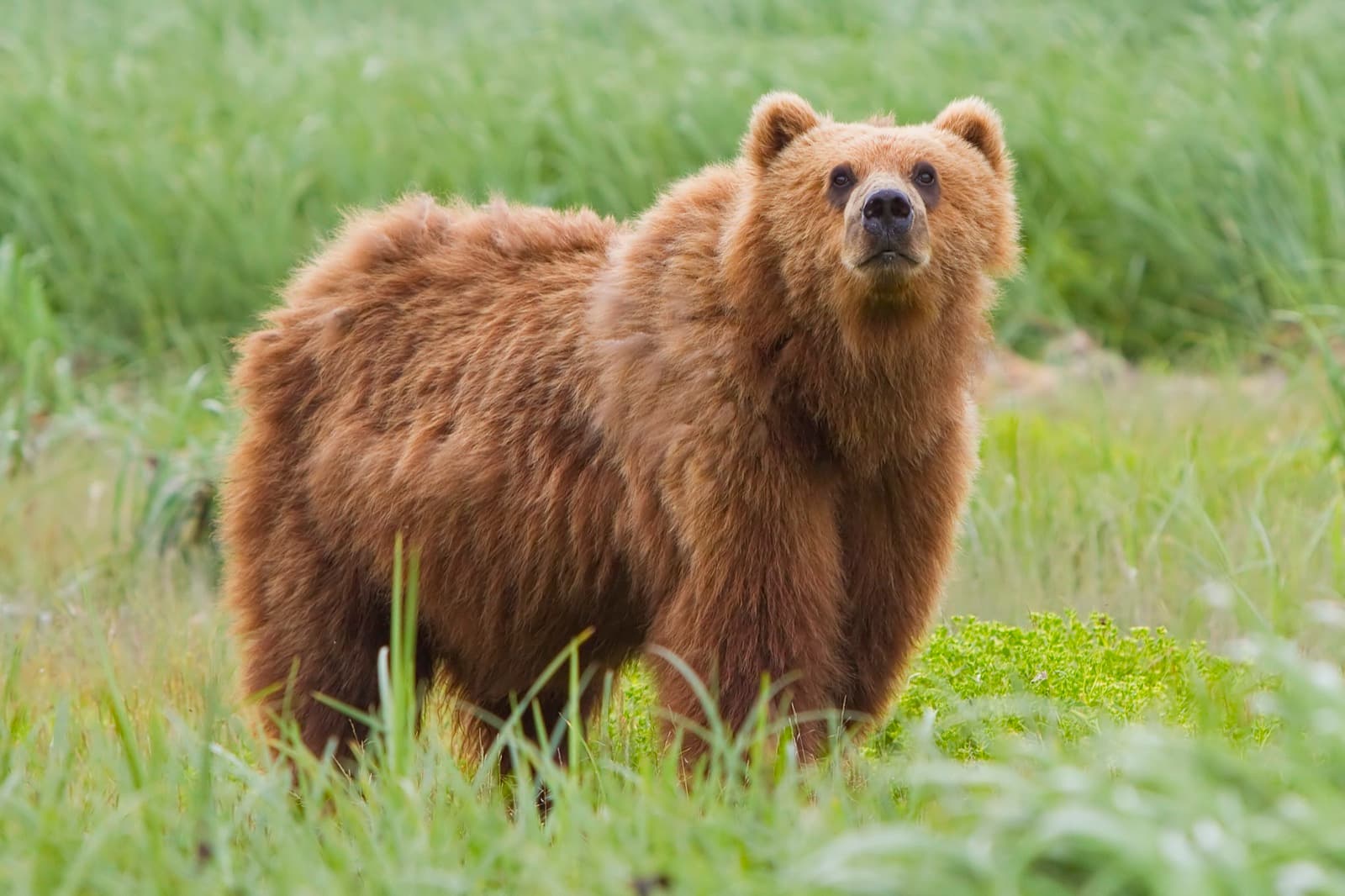
A brown bear can be huge - the biggest males weigh around 300 kilograms, the same as a small motorbike. They mostly eat plants, berries, nuts, fish from streams, and insects. Despite the cartoon image of bears hunting people, brown bears in Greece are shy and try hard to avoid humans.
In winter, Greek bears go into something called 'hibernation' - a deep, deep sleep that can last for several months. They find a den (a cave or a hole under a big tree) and they slow their bodies down so much that they hardly breathe. They don't eat or drink the whole time. When spring comes, they come out skinny and hungry.
Mother bears often have one or two cubs - tiny, blind, the size of a tea mug at birth. The cubs stay with their mum for about two and a half years, learning every important bear skill: which berries to eat, where the salmon swim, how to climb a tree if a wolf comes near, how to find a good den.
Greek conservationists work in the mountains to keep bears safe. They put GPS collars on a few bears to track where they go, build special bridges so bears can cross busy roads safely, and teach villages how to store food in bear-proof bins so the bears stay wild and don't come too close to people.