
Classroom lesson 路 Wildlife馃嚞馃嚟 Ghana

Mona monkeys

Bright-cheeked monkeys that hop through Ghana's forests

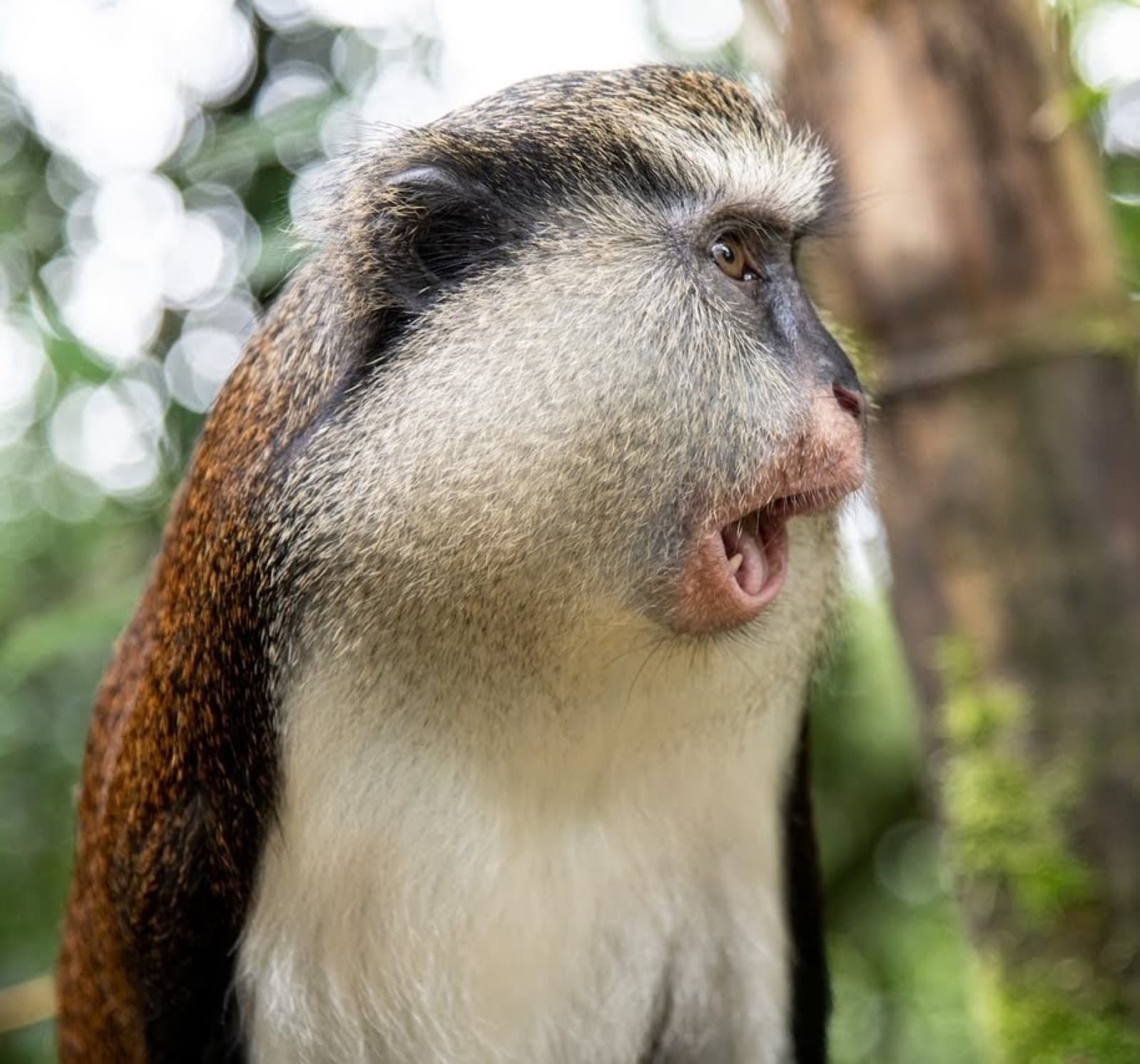
A mona monkey sitting in a tree

Photo 路 Wikimedia Commons

What is it?

The mona monkey is one of the most common monkeys in Ghana's forests. It is small - about the size of a house cat - with bright white cheek-puffs, a chestnut-brown back and a long tail for balancing in the trees. In some Ghanaian villages, mona monkeys are looked after as part of the community.

Tell me more

Mona monkeys live in groups, called 'troops', of about 12 to 30 monkeys. The troop moves together through the trees, eating fruit, leaves and the occasional insect. Each monkey has its own job - some watch for danger, some look after the babies, some lead the way to the next fruit tree.

Their cheek-puffs are not just decoration. Mona monkeys can stuff their cheeks full of food - like little squirrel-pouches - and carry the food away to eat somewhere safer. A monkey with stuffed cheeks looks a bit like a child with too many sweets in their mouth.

In one famous Ghanaian village called Boabeng-Fiema, the mona monkeys are treated as friends. The villagers protect them, and the monkeys are so used to people that they walk through the village and even into people's gardens. When a mona monkey dies in Boabeng-Fiema, the villagers give it a proper burial.

Mona monkeys talk to each other with lots of calls. There are different sounds for 'food over here', 'danger from a snake', 'danger from a bird of prey', and 'just saying hello'. A scientist who knows the calls can tell exactly what is happening in the forest without seeing the monkeys.

In the classroom

Walk your class through this in 15 minutes.

Talk together

Discussion prompts

  1. 01Why do you think the people of Boabeng-Fiema have chosen to protect the monkeys for so long?
  2. 02What might it feel like to live in a village where monkeys walk through your garden?
  3. 03Mona monkeys have different calls for different dangers. What 'calls' do humans use to warn each other?
Try this

Classroom activity

As a class, invent your own 'troop language'. Pick five short sounds (whistles, claps, hums) and decide what each one means. Practice them. Then try a game in the playground where you use only your troop language - no words.