
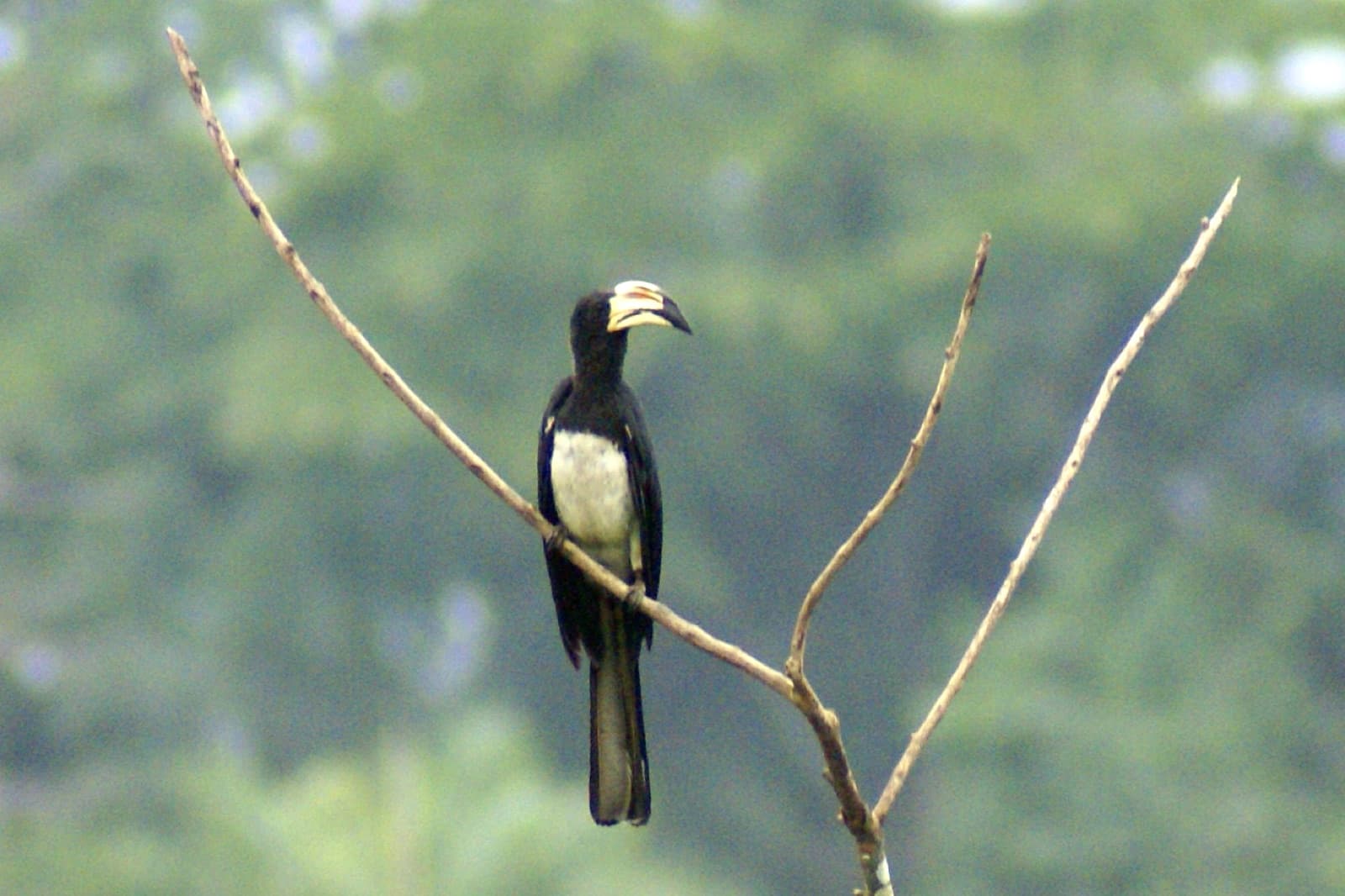
A hornbill's beak looks heavy, but it is mostly hollow. The casque on top is filled with air - light as a sponge - so the bird can still fly. The big beak is brilliant for reaching deep into fruit, for picking off insects, and sometimes for catching small lizards. Some hornbills even use their beak like a hammer.
Hornbills nest in tree holes - but they do something amazing. The mother bird climbs inside the hole and the father seals her in with mud, leaving only a tiny slit. She stays inside, safe from snakes and monkeys, while he brings her food through the slit for weeks until the eggs hatch. Then both parents work hard to feed the chicks.
When a hornbill flies, its wings make a sound like rushing wind - 'whoosh-whoosh-whoosh' - because of gaps between the feathers. In a quiet forest, you can hear a big hornbill coming long before you see it. Some Ghanaian people say a flying hornbill sounds like a small train.
Hornbills are important for the forest. Like elephants and parrots, they eat lots of fruit, and the seeds inside the fruit later grow into new trees - often far from where the parent tree stood. A hornbill flying through the canopy is a little gardener, planting new trees wherever it goes.