
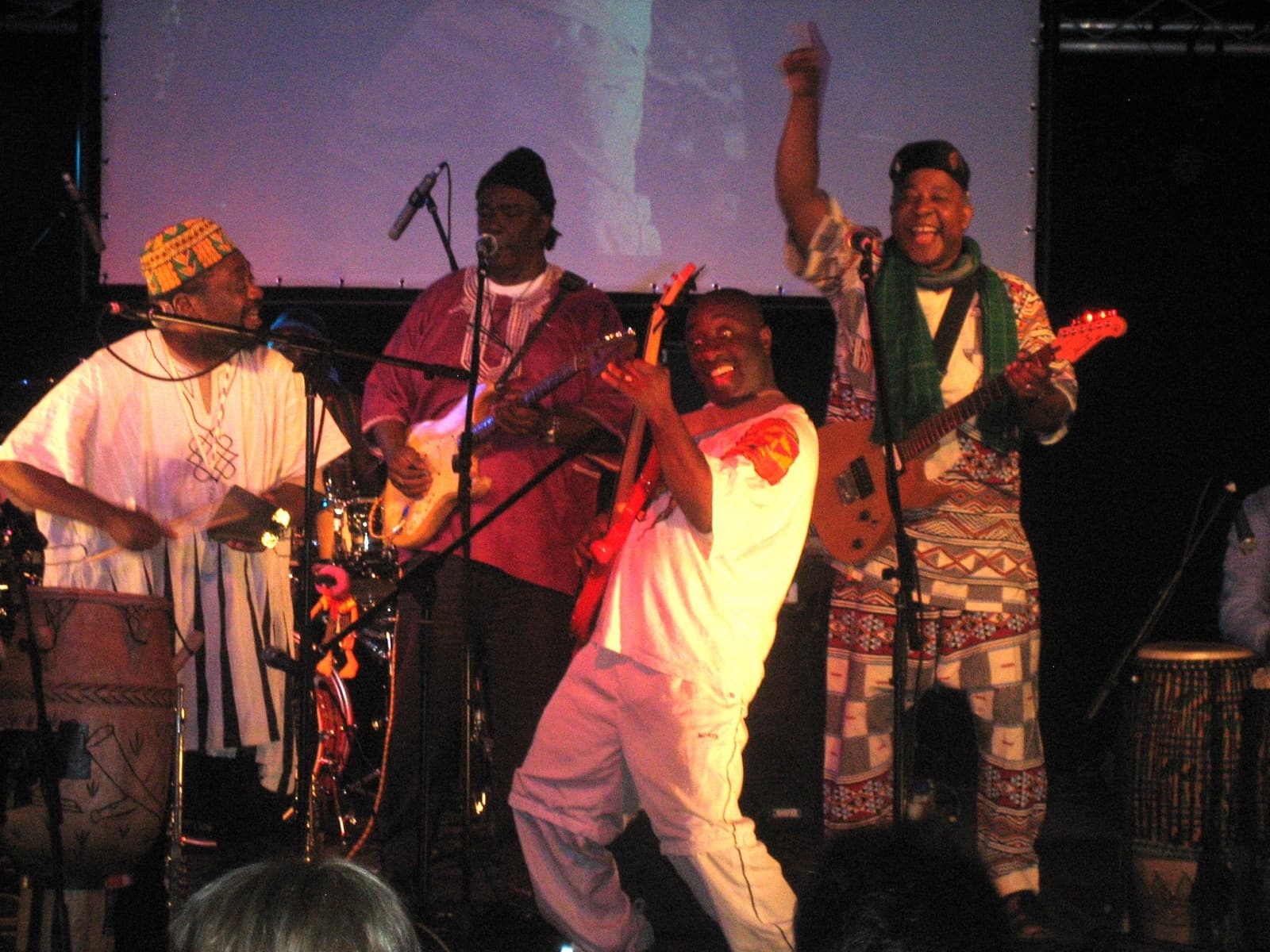
Highlife got its name in the early 1900s. Bands would play it at fancy dancehalls in Accra, and people walking past outside would say that the dancers inside were enjoying the 'high life'. The name stuck, and the music kept growing.
Early highlife was guitar-driven - a sound called 'palm-wine highlife', because the musicians often played outside palm-wine bars under the trees. Later, big-band highlife added trumpets, saxophones and drums, and could fill huge dance halls. Both styles use rhythms from older Ghanaian music as their heartbeat.
Highlife travelled. It became popular across West Africa, into Nigeria, into Sierra Leone, even into the Caribbean. Many of today's African music styles - including hiplife (a mix of highlife and hip-hop, born in Ghana in the 1990s) and Afrobeats - have roots in highlife.
What makes highlife special is its mood. The songs are usually warm and hopeful. The lyrics talk about love, family, hard work and everyday life. Whether you're sitting on a porch or dancing under a string of lights, a highlife song is the kind of music that makes everyone smile and nod along.