
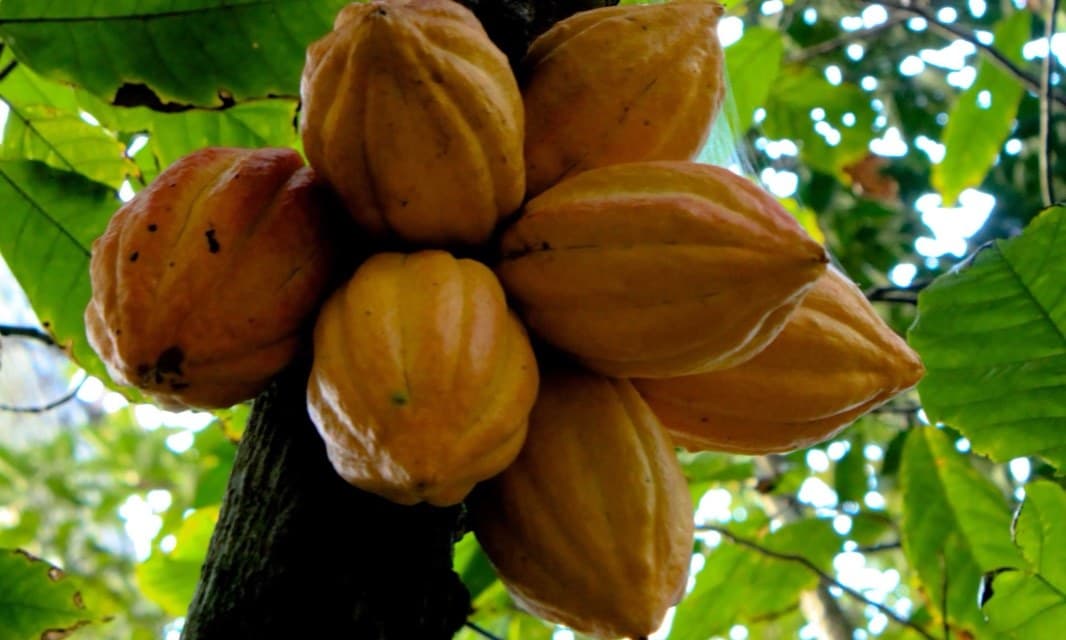
Cocoa pods come in colours that surprise people - bright yellow, orange, deep red, even purple. When a pod is ripe, a farmer cuts it down carefully with a long pole or a knife. Inside are 30 or 40 white beans, wrapped in a sweet, slimy pulp. The pulp is so sweet that some people eat it like fruit.
The beans are scooped out and left to 'ferment' in piles under banana leaves for about a week. Then they are spread out in the sun to dry. Only after fermenting and drying do the beans start to smell anything like chocolate. They are still brown and bitter - they have to be roasted later, in a factory, to become the chocolate you might know.
Cocoa didn't always grow in Ghana. It comes originally from rainforests in South America. The story goes that a young man named Tetteh Quarshie travelled to another island in the late 1800s, and quietly brought a few cocoa beans home in his pocket. He planted them in his back garden in Ghana - and from those few beans, a huge industry grew.
Today, more than 800,000 families in Ghana grow cocoa. Many of the farms are very small - just a few cocoa trees in a clearing in the forest. When you eat a chocolate bar, the cocoa inside almost certainly came from a small family farm somewhere in West Africa.